The Core Question: Why Do Tectonic Plates Move?
When middle school students look at a world map, they often notice how neatly the eastern coast of South America seems to fit against the western coast of Africa. Explaining that continents drift is one thing, but answering why do tectonic plates move requires looking thousands of kilometers beneath our feet. Solid rock does not simply slide across the planet on its own; it requires a massive, continuous engine powered by both thermal energy and gravity.
When I designed the Volcano Island simulation laboratory for Praxos Learning, I wanted students to move beyond memorizing vocabulary terms like lithosphere and asthenosphere. Under NGSS MS-ESS2-2, students must construct an explanation based on evidence for how geoscience processes have changed Earth's surface at varying time and spatial scales. Understanding why do tectonic plates move is the foundational mechanism behind every earthquake, mountain range, and volcanic arc on the planet.
In this 3D Earth science investigation guide, I break down the three primary forces that drive plate tectonics: mantle convection, slab pull, and ridge push. I also share how I model these invisible subsurface forces inside Volcano Island so students can manipulate thermal gradients, crustal density, and subduction angles in real time.
1. Mantle Convection: Earth's Internal Heat Engine
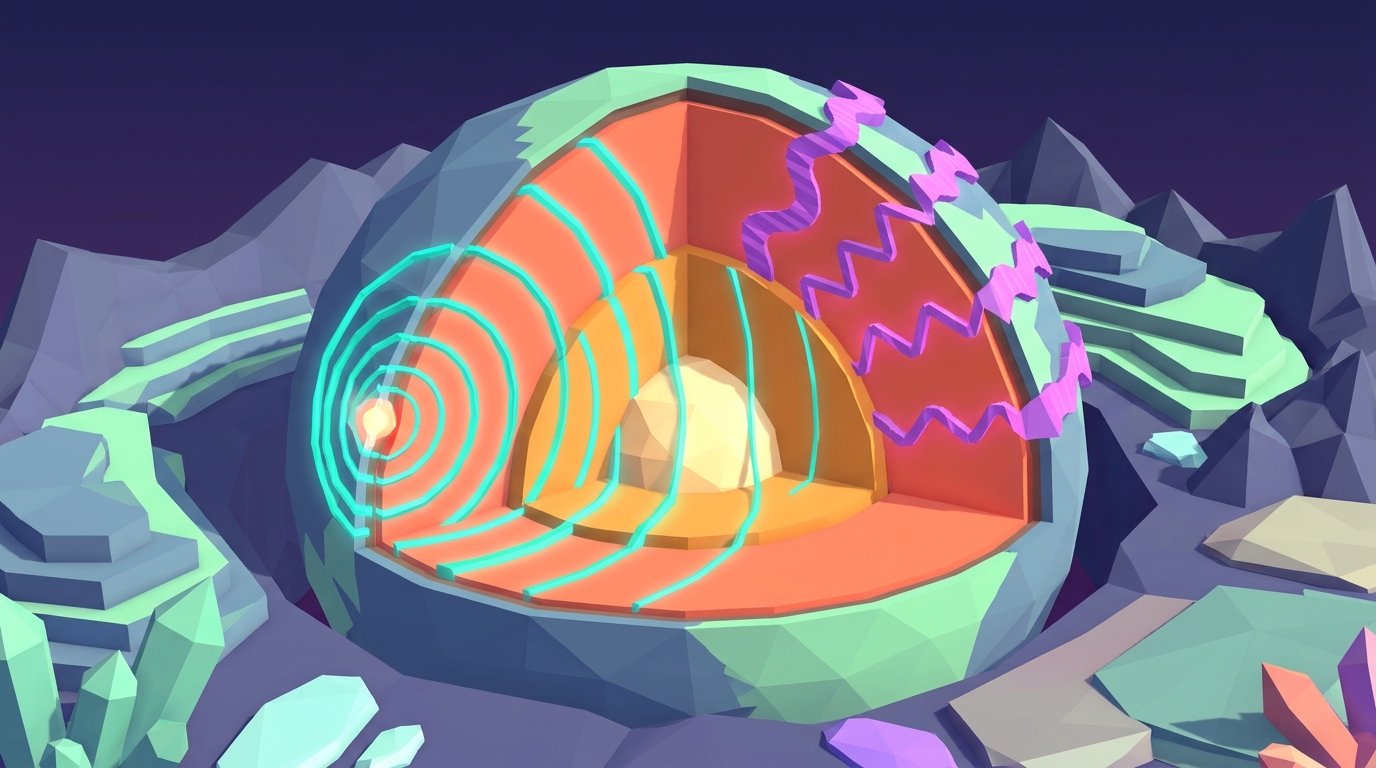
To understand why do tectonic plates move, students first need to grasp how heat behaves inside Earth. Deep within the core, temperatures rival the surface of the sun, fueled by residual heat from planetary formation and the ongoing radioactive decay of elements like uranium, thorium, and potassium. This thermal energy radiates outward into the mantle, a thick layer of silicate rock that behaves like an ultra-viscous fluid over millions of years.
As rock near the lower mantle heats up, it expands, becomes less dense, and slowly rises toward the surface. When this rising mantle material reaches the base of the rigid lithosphere, it spreads horizontally, cools down, and eventually sinks back toward the core. This continuous circular motion is called mantle convection. For decades, textbooks taught that mantle convection acts like a giant conveyor belt, dragging the overlying tectonic plates along for the ride.
While mantle convection is essential for transferring heat and initiating rifting, modern geophysics shows it is only part of the story. When I teach this concept, I ask students to imagine trying to drag a heavy wooden raft across a tub of thick honey. The friction at the base of the plate matters, but gravitational forces acting directly on the plates themselves actually provide most of the driving power.
2. Slab Pull: Gravity's Dominant Driving Force
If you ask a geophysicist today why do tectonic plates move, the single most important answer they will give you is slab pull. As newly formed oceanic crust moves away from a mid-ocean ridge over tens of millions of years, it cools down. Cooling causes the rock to contract and become denser than the hotter, more ductile asthenosphere beneath it.
Eventually, this old, cold, dense oceanic plate collides with a lighter continental plate or another oceanic plate. Because it is heavier, the dense oceanic slab bends and sinks into the mantle at a deep ocean trench, a process known as subduction. Once the leading edge of the plate begins sinking into the mantle, gravity pulls the rest of the trailing plate downward behind it, much like a heavy tablecloth sliding off a table once enough of it hangs over the edge.
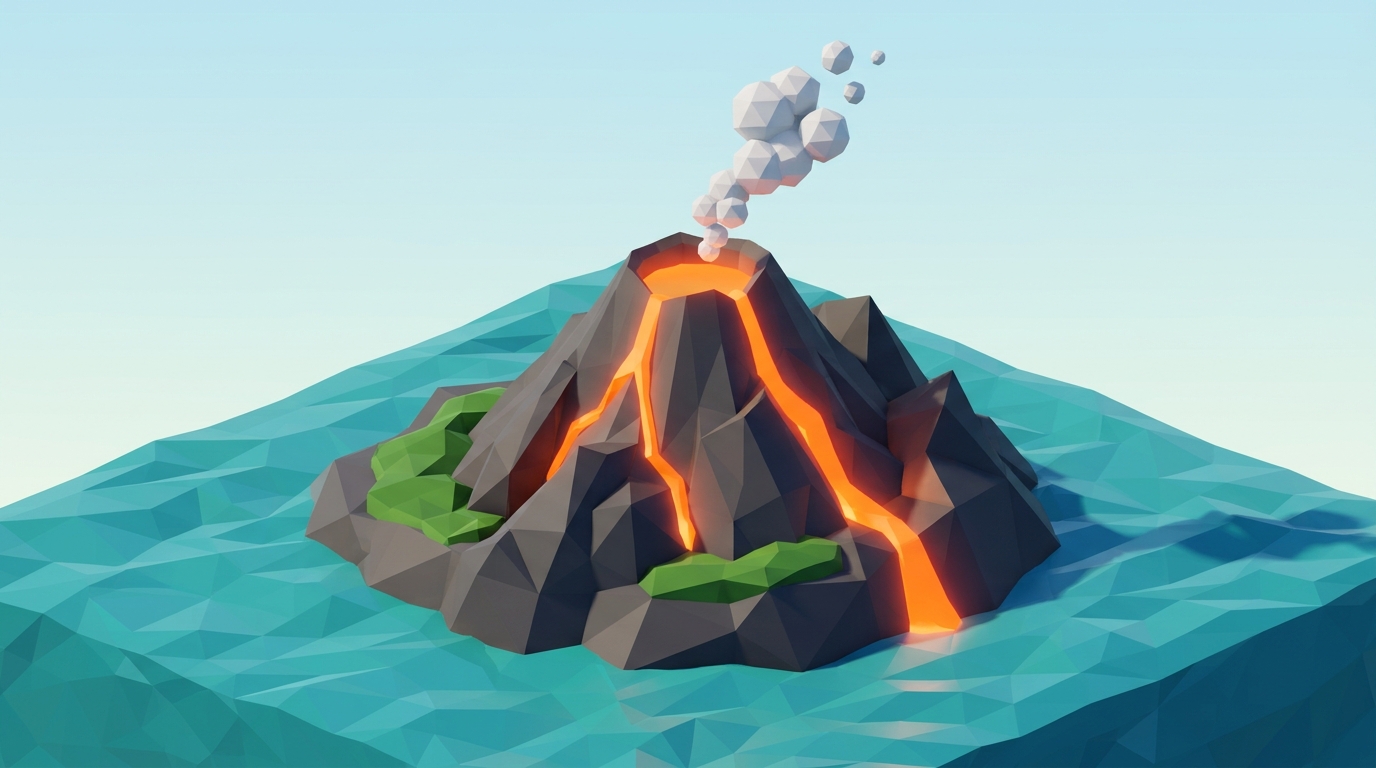
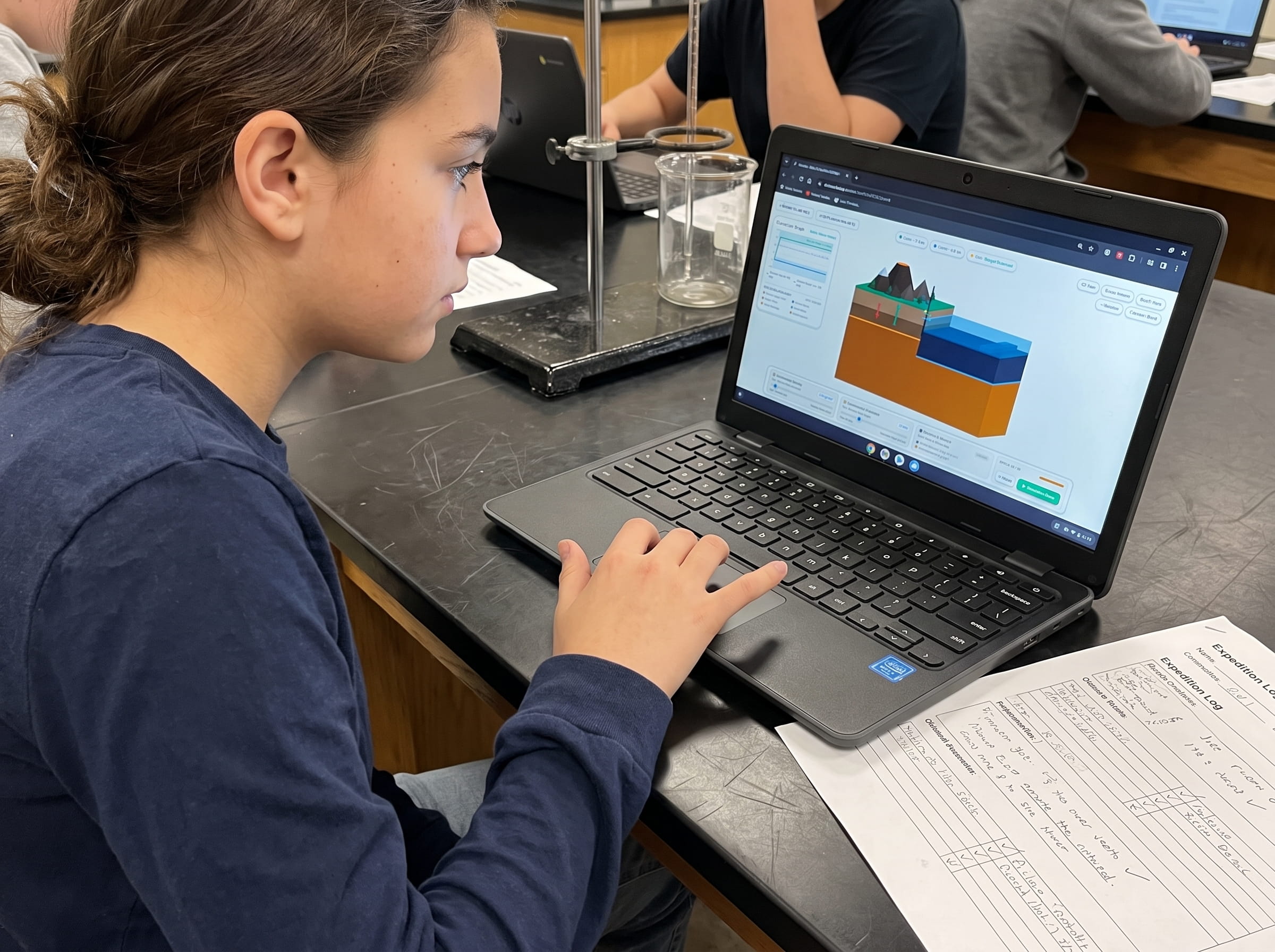
Inside Volcano Island, students can directly observe how slab pull accelerates plate motion and triggers volcanic arcs. By adjusting the age and density of the subducting oceanic plate, learners watch the subduction angle steepen, pulling water-rich minerals deep into the mantle. This water lowers the melting point of the surrounding mantle rock, generating buoyant magma that rises to build explosive stratovolcanoes along the overriding plate.
Test Plate Driving Forces in Volcano Island
Manipulate mantle heat, crustal density, and subduction angles in 3D to see how thermal energy and gravity drive tectonic plate motion.
Teaching this topic tomorrow? Download the Free NGSS Student Lab Sheet (Printable PDF)
Printable NGSS MS-ESS2-2 student investigation sheet with prediction tables, cross-section diagramming prompts, and slab pull analysis questions.
3. Ridge Push: Sliding Down from Mid-Ocean Ridges
Alongside slab pull and mantle convection, a third force called ridge push helps keep tectonic plates in motion. At divergent boundaries, such as the Mid-Atlantic Ridge, hot mantle material wells up to fill the gap between separating plates. This upwelling heat causes the lithosphere at the ridge to expand and sit much higher in elevation than the older, cooler seafloor farther away.
Because the mid-ocean ridge forms a broad, elevated underwater mountain chain, gravity pulls the newly formed lithosphere down the gentle slope away from the ridge axis. Scientists call this gravitational sliding ridge push. Although ridge push is weaker than slab pull, it works in tandem with it: ridge push nudges the plate away from the divergent boundary, while slab pull yanks the opposite end down into a subduction trench.
Classroom Investigation: Modeling Plate Forces in 3D
Static diagrams in a textbook make plate tectonics look frozen in time, which is why students often struggle to connect deep-Earth heat to surface landforms. When I built the 3D plate boundary sandbox in Volcano Island, I focused on making time scales and invisible forces tangible. Students can speed up geological time, slice open the crust in cross-section, and test what happens when they alter mantle temperature or crustal density.
A productive classroom investigation starts with a prediction. Before students touch any sliders, I ask them to hypothesize what will happen to plate velocity if they cool down the subducting slab or shut off the mantle heat source entirely. When they run the simulation, they immediately see that cooling the oceanic plate increases its density, accelerating slab pull and speeding up the entire plate. Conversely, lowering the mantle heat gradient slows convection and reduces volcanic activity.
By connecting these quantitative variables to real-world geography, students build a systems-level understanding of Earth science. They see that the Pacific Plate moves much faster than the North American Plate precisely because the Pacific Plate is ringed by active subduction zones generating massive slab pull, whereas the North American Plate lacks a major subducting slab along its trailing edge.
Frequently Asked Questions About Plate Motion
Educators and students often bring up the same core questions when exploring why do tectonic plates move. Below are clear, evidence-based answers you can use to anchor classroom discussions.
How fast do tectonic plates move?
Which force is strongest: mantle convection, slab pull, or ridge push?
What would happen if Earth's interior cooled down completely?
Tectonic Plate Forces Investigation Workbook
Printable NGSS MS-ESS2-2 student investigation sheet with prediction tables, cross-section diagramming prompts, and slab pull analysis questions.