Understanding Symbiosis Examples in Ecosystems Across Natural Biomes
Living organisms never survive in complete isolation. In every biome on Earth, species form close physical associations over long periods of evolutionary time. Studying symbiosis examples in ecosystems reveals how living networks maintain balance, exchange nutrients, and adapt to changing environmental pressures.
The term symbiosis, derived from the Greek words for 'living together,' was coined in 1879 by German botanist Heinrich Anton de Bary when investigating lichens. Rather than being a single plant, a lichen is an inseparable partnership between a photosynthetic alga or cyanobacterium and a supportive fungal structure.
In middle school life science (NGSS MS-LS2-2), students learn to categorize these interspecies interactions based on their net effect on each organism's survival and reproductive fitness. When I built the population dynamics engine in the Ecosystem Simulator, integrating symbiotic links demonstrated to learners why wiping out a seemingly insignificant partner species can destabilize an entire food web.
The Three Core Types of Symbiosis: Mutualism, Commensalism, and Parasitism
Ecologists classify symbiosis into three primary functional categories based on positive, neutral, or negative outcomes for the participants:
1. Mutualism (+/+ Interaction). Both participating species derive measurable biological benefits, such as nutritional access, protection from predators, or reproductive dispersal. A classic example is the relationship between flowering plants and bumblebees: the bee gathers nectar and protein-rich pollen for food, while transferring pollen grains between flowers to enable plant fertilization.
2. Commensalism (+/0 Interaction). One organism benefits significantly from the relationship, while the other host organism experiences neither measurable benefit nor harm. Cattle egrets following grazing bison feed on insects stirred up by the herd's hooves, gaining an easy meal while the bison remain completely unaffected.
3. Parasitism (+/- Interaction). One organism, the parasite, lives on or inside another host organism, deriving nutrients and shelter at the direct physiological expense of the host. Unlike predators that kill their prey immediately to consume a meal, parasites typically keep their host alive for extended periods to maximize energy extraction.
Comparative Symbiosis Matrix with Real-World Ecosystem Case Studies
Review this comprehensive matrix comparing the net outcomes, physiological mechanisms, and classic biome examples across the three symbiotic modes:
| Symbiosis Type | Net Outcome | Participant 1 Role | Participant 2 Role | Classic Real-World Example |
|---|---|---|---|---|
| Mutualism | + / + | Benefits (Food / Nutrition) | Benefits (Pollination / Protection) | Clownfish and Sea Anemone (Coral Reef) |
| Mutualism | + / + | Benefits (Sugars from Photosynthesis) | Benefits (Water & Mineral Absorption) | Mycorrhizal Fungi and Pine Tree Roots |
| Commensalism | + / 0 | Benefits (Transportation & Food Access) | Unaffected (Neutral impact) | Barnacles attached to Humpback Whales |
| Commensalism | + / 0 | Benefits (Structural Shelter & Sunlight) | Unaffected (Neutral impact) | Bromeliad Epiphytes growing on Rainforest Trees |
| Parasitism | + / - | Benefits (Nutrients extracted) | Harmed (Loss of blood / Energy deficit) | Deer Ticks on White-Tailed Deer |
| Parasitism | + / - | Benefits (Internal host resources) | Harmed (Tissue damage / Weakened immunity) | Tapeworms in Mammalian Digestive Tracts |
Interactive Ecosystem Simulator
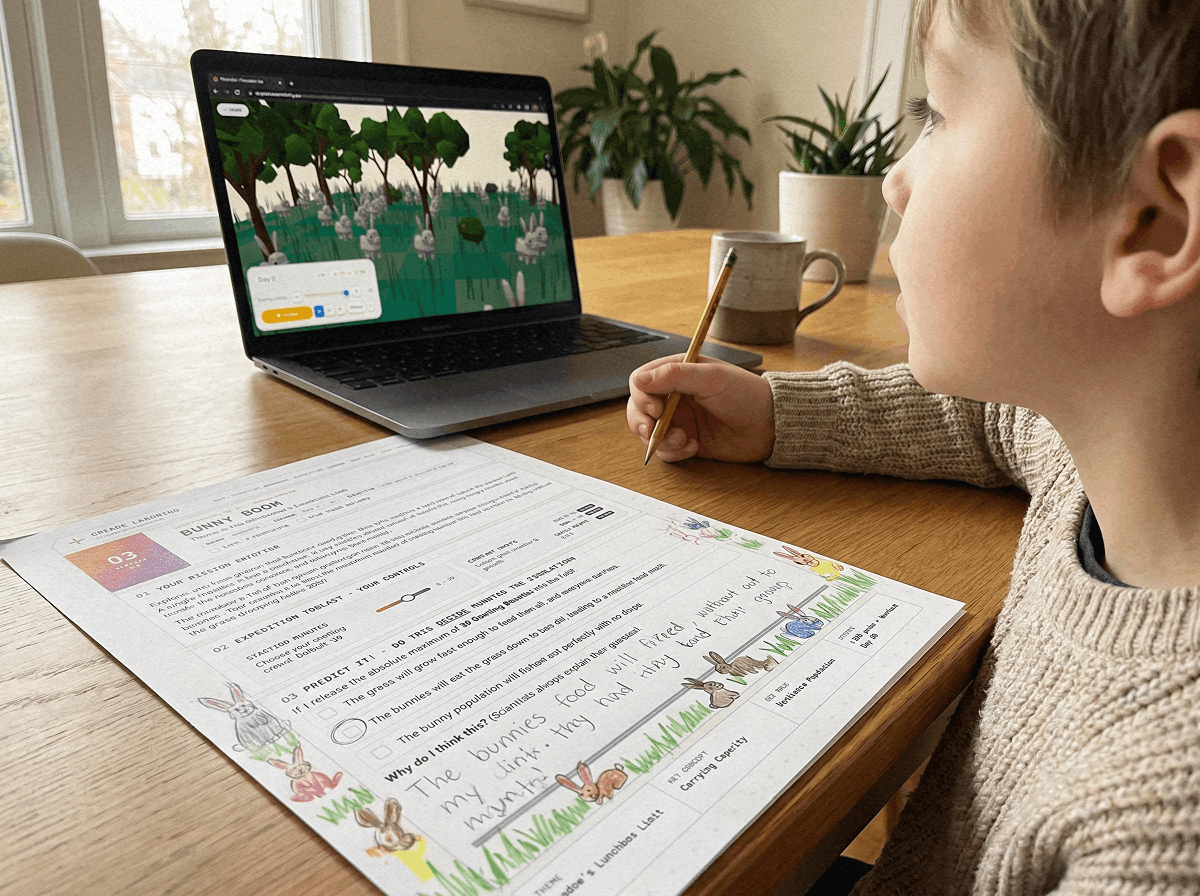
Experiment with symbiotic networks in living 3D. Introduce pollinators, monitor parasite transmission rates, and observe how mutualistic relationships protect biomes from sudden collapse.
Teaching this topic tomorrow? Download the Free NGSS Student Lab Sheet (Printable PDF)
Includes printable symbiosis identification cards, host-parasite dynamic graphing activities, and NGSS MS-LS2-2 ecological interaction lab rubrics.
Real-World Case Studies: Classic Symbiosis Examples in Ecosystems
Let us investigate three profound ecological partnerships that illustrate how symbiosis shapes entire natural biomes:
Case Study A: The Coral Polyp and Zooxanthellae (Mutualism). Shallow tropical coral reefs, the most biodiverse marine ecosystems on our planet, owe their existence to an obligate mutualistic symbiosis. Microscopic dinoflagellate algae called zooxanthellae reside inside the transparent cells of coral polyps. The algae photosynthesize, providing up to 90% of the polyp's metabolic energy in the form of glucose and amino acids. In return, the coral provides a protected alkaline environment and metabolic waste products (carbon dioxide and nitrogen) needed for algal photosynthesis.
Case Study B: Remora Fish and Sharks (Commensalism). Remora fish possess a specialized dorsal fin modified into an oval suction cup. They hitch rides on the skin of large sharks, feeding on discarded scraps of food when the shark attacks prey. The remora gains effortless transportation and nutrition, while the large shark remains completely unhindered.
Case Study C: The Strangler Fig (Parasitic Shift). In tropical rainforests, strangler fig seeds germinate high in the canopy canopy branches of host trees. The young fig drops roots down to the forest floor, gradually encasing the host tree trunk in a woody mesh. Over decades, the fig steals sunlight and strangles the host's vascular system, eventually killing the host tree.
Symbiosis is not static. Partners constantly co-evolve: parasites develop better stealth mechanisms to bypass host immunity, while hosts evolve stronger immune defenses to suppress parasitic drain.
Systems Thinking and Feedback Loops: Modeling Symbiotic Shocks in 3D
In Level 05 of the Ecosystem Simulator, students explore what happens when symbiotic feedback loops are disturbed by environmental shocks. For example, when water temperature rises by just 1.5 degrees Celsius in the marine sandbox, corals expel their zooxanthellae in a stress response known as coral bleaching.
Without their photosynthetic partners, the coral skeletons turn stark white and begin starving. Students watch the cascading shock wave: as the coral reef habitat degrades, fish populations lose breeding crevices, predator numbers decline, and the entire simulated reef ecosystem collapses into a low-diversity algal wasteland.
Launch Level 05: Symbiotic Networks
Open the Interactive Ecosystem Simulator in your web browser. Observe the baseline population balance between flowering producers and insect pollinators.
Introduce a Pollinator Decline Shock
Use the environmental slider to reduce pollinator abundance by 60%. Watch how primary producer seed set drops, reducing grass yield for herbivores.
Test a Parasite Outbreak Intervention
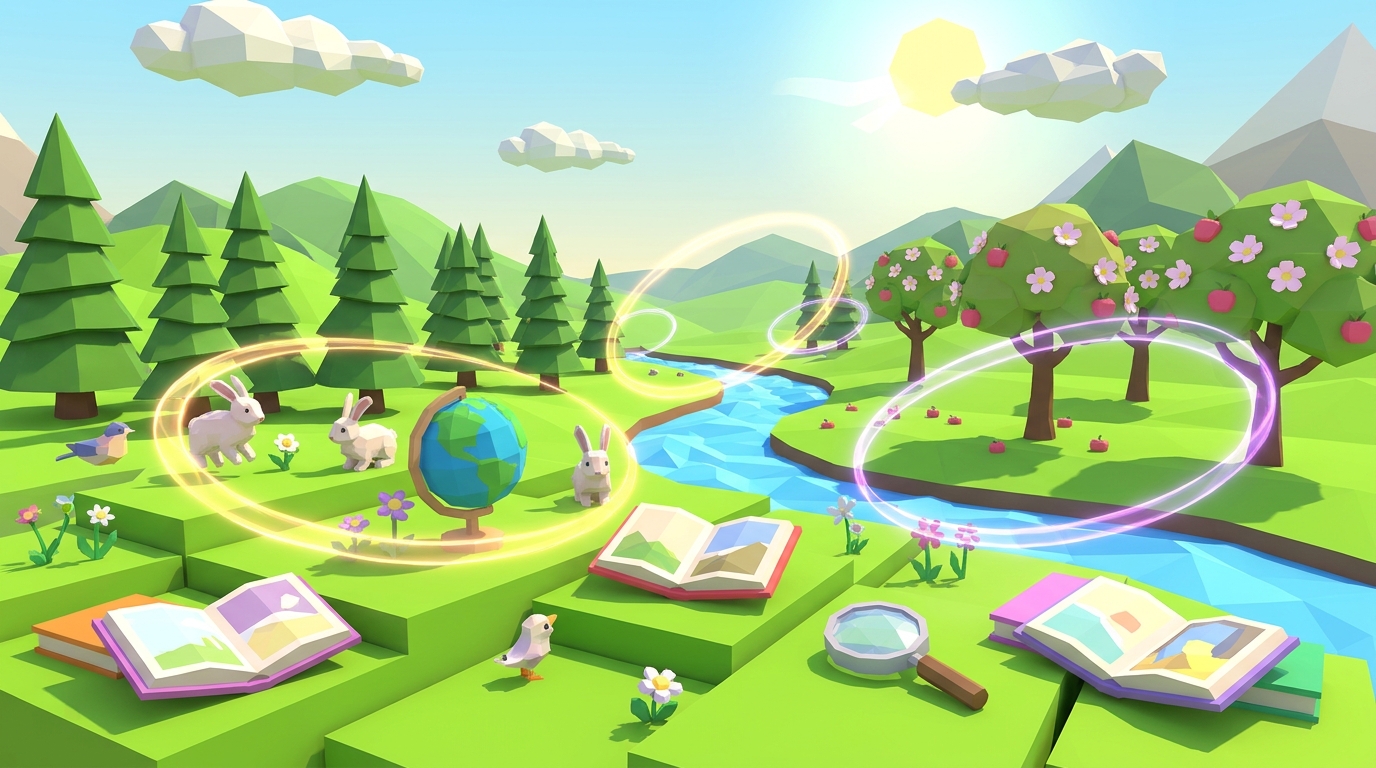
Introduce a density-dependent parasitic mite into the rabbit population. Observe how the parasite dampens explosive herbivore booms, preventing overgrazing of meadow grass.
Graph Feedback Loops in the Logbook
Record the cyclical oscillation curves in your 10-Mission Printable Ecology Logbook, explaining how mutualism and parasitism collectively stabilize population equilibriums.
Frequently Asked Questions About Symbiosis Examples in Ecosystems
Common questions students and science educators ask about biological interactions and symbiosis:
Is predation considered a form of symbiosis?
Can a commensal relationship ever change into a parasitic relationship?
What is the difference between obligate and facultative mutualism?
How does our 3D Ecosystem Simulator teach symbiosis?
Download the Free 10-Mission Ecology Logbook
Includes printable symbiosis identification cards, host-parasite dynamic graphing activities, and NGSS MS-LS2-2 ecological interaction lab rubrics.