The Homeschool Science Dilemma: Why 90-Minute Messy Labs Cause Burnout
For many homeschooling families, science is simultaneously the most anticipated and most dreaded subject on the weekly schedule. Parents envision lively kitchen table discoveries, yet reality frequently devolves into a 90-minute ordeal of hunting down obscure supplies, managing messy spills, and coaxing reluctant children through tedious textbook comprehension questions.
When science blocks drag out past the 45-minute mark, cognitive fatigue sets in. Children lose track of the core scientific concept, focusing instead on procedural frustration. Parents feel pressured to buy bulky, expensive science kits packed with single-use plastic components that end up collecting dust in closet shelves.
The solution is not abandoning rigor or hands-on inquiry; it is condensing the learning block into a focused, highly predictable 30-minute daily routine. By establishing clear temporal boundaries and pairing tactile paper tracking with interactive 3D digital labs, homeschooling parents can deliver elite STEM comprehension without kitchen chaos.
The 10-10-10 Framework: A Turnkey 30-Minute Daily Routine
The cornerstone of an effective homeschool science routine is the 10-10-10 Rule. This architecture divides the 30-minute block into three distinct cognitive stages, ensuring active engagement while eliminating open-ended screen drift.
By separating hypothesis formulation, experimental execution, and analytical reflection into dedicated 10-minute windows, children develop rigorous scientific habits and disciplined time management.
Minutes 0-10: Physical Hypothesis & Variable Planning (Off-Screen)
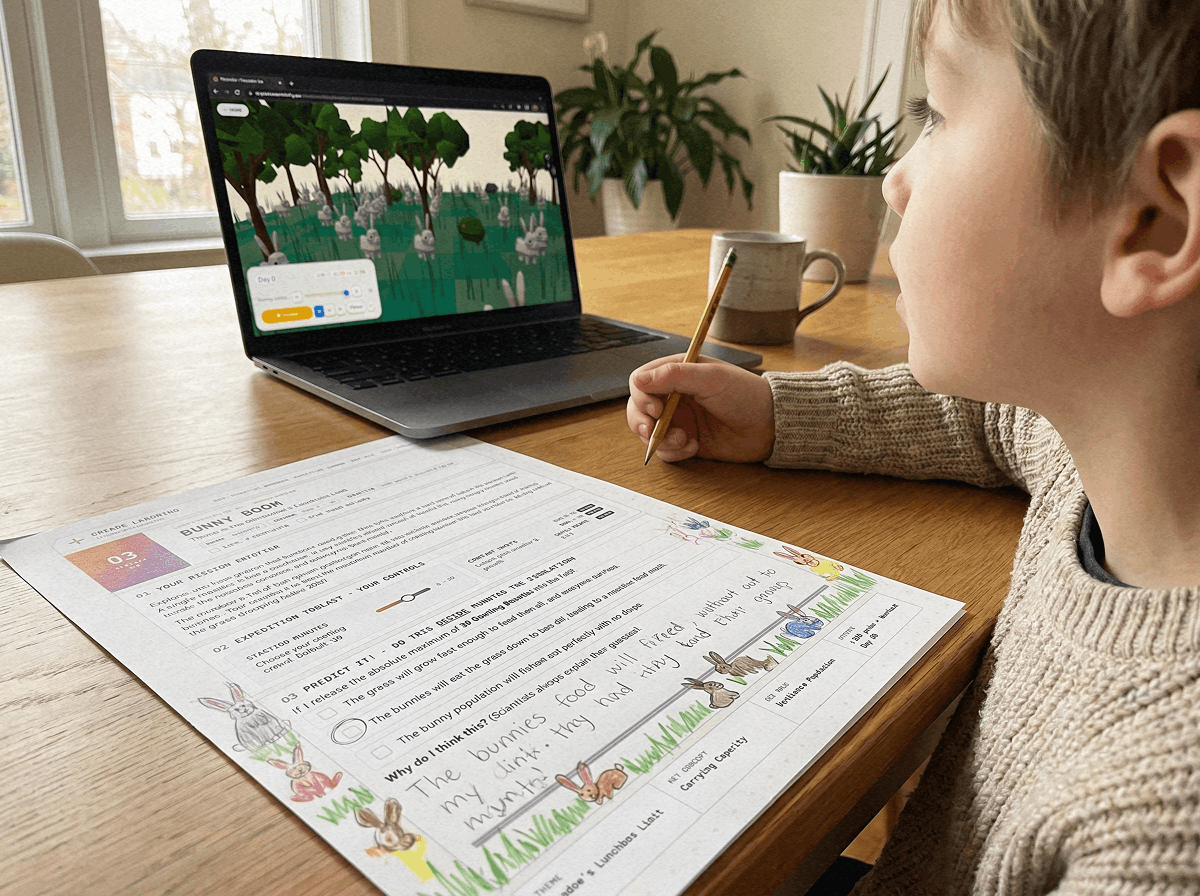
Before touching any digital device or lab equipment, students open their physical science notebook. The parent poses a single driving question (for example: "If we double the primary producer biomass, how will the primary consumer population respond?"). The student sketches a predicted population curve, identifies independent and dependent variables, and writes down a concrete numerical hypothesis.
Minutes 10-20: Active Digital Simulation Experimentation (On-Screen)
The student opens the 3D simulation lab (such as Praxos Ecosystem Level 1 or Level 3). With a 10-minute timer running visibly on the desk, the student executes exactly 3 controlled experimental trials. In each run, they adjust only the target variable, observing organism behaviors, energy transfer rates, and system feedback in real time while jotting raw output numbers in their journal.
Minutes 20-30: Socratic Debrief & Systems Reflection (Off-Screen)
The screen is closed immediately when the timer sounds. The student compares their initial paper prediction with the empirical simulation data. The parent leads a 5-minute Socratic dialogue asking: "Where did your prediction deviate from reality?" and "What feedback loop caused the unexpected overshoot?" The student finishes by writing a one-sentence scientific takeaway.
Hands-On Science Curriculum: Why the Physical Component Anchors Digital Models
A common misconception among educators is that digital learning and hands-on tactile learning are opposing philosophies. In reality, the best hands-on science homeschool curriculum deliberately blends physical motor engagement with computational modeling.
When a child writes data points by hand onto coordinate graph paper or sketches organism interactions with colored pencils, fine motor neural pathways activate, anchoring abstract concepts in working memory. Digital simulations provide the dynamic variable speed that physical table-top experiments cannot match; however, physical logbooks provide the cognitive friction necessary for deep reflection.
This dual-format architecture ensures that screen time remains strictly purposeful. The digital simulation serves as a high-powered laboratory tool, while the printed expedition logbook remains the student permanent scientific portfolio.
| Dimension | 10-10-10 Daily Science Routine | Traditional 90-Minute Science Kit |
|---|---|---|
| PRAXOS METHODDaily Prep Time | Zero prep (browser lab + printed logbook) | 30-45 minutes gathering obscure materials |
| Active Inquiry Ratio | 85% active prediction & testing | 25% active; 75% setup, cleanup & waiting |
| Repetition & Iteration | 3-5 full multi-generational trials per block | 1 single trial with high risk of procedural failure |
| Cost & Storage | 100% free digital access + standard paper | $150-$400/year for single-use consumable kits |
| Screen-Time Quality | Active, timed, hypothesis-driven instrument | Often degrades into passive video tutorials |
Weekly 5-Day Homeschool Science Block Schedule
To maintain consistency without overwhelming the broader homeschool curriculum, structure your 30-minute daily science block around a weekly thematic progression:
• Monday (Concept Introduction & Physical Modeling): Read a short foundational science prompt, introduce key vocabulary, and diagram physical system relationships in the lab logbook.
• Tuesday (Baseline Variable Simulation): Launch Praxos Ecosystem Level 1 or Level 2 to run baseline calibration trials and record equilibrium data points.
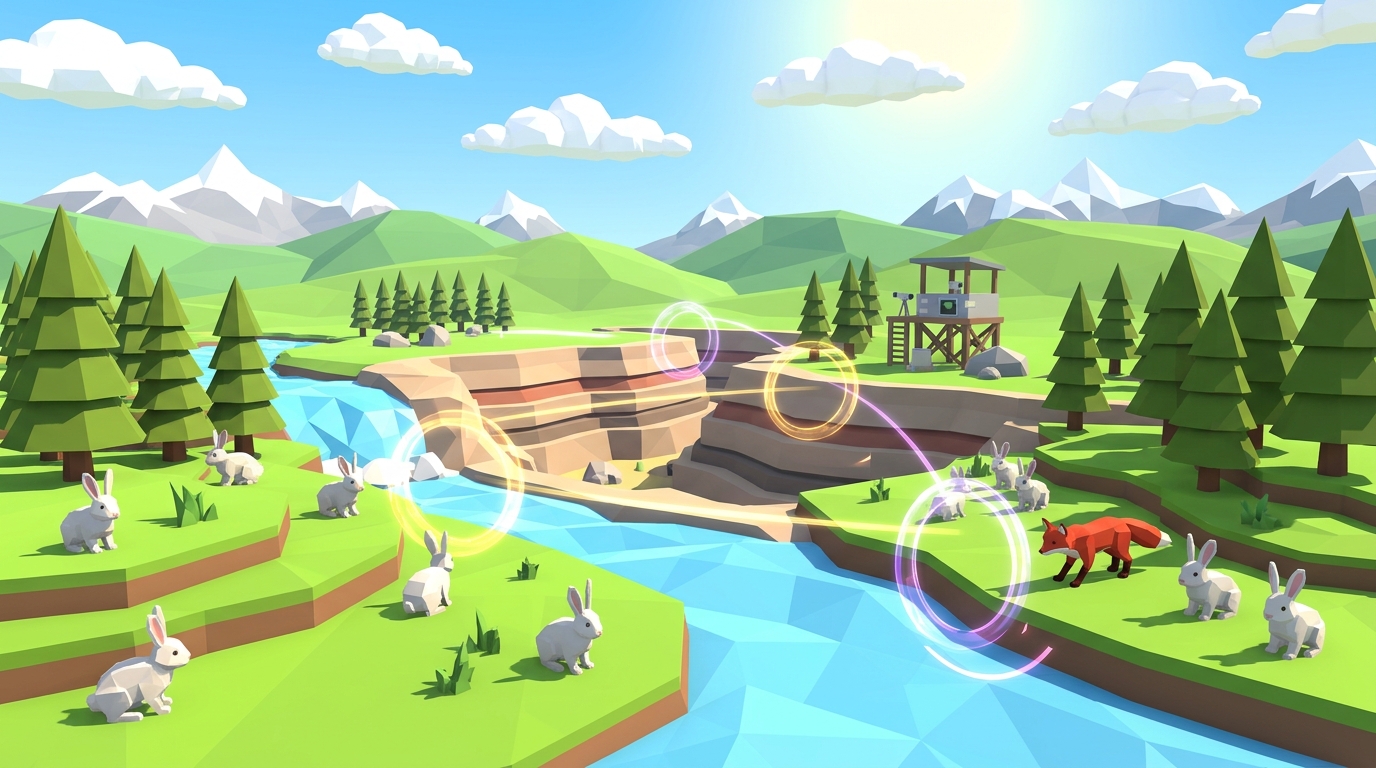
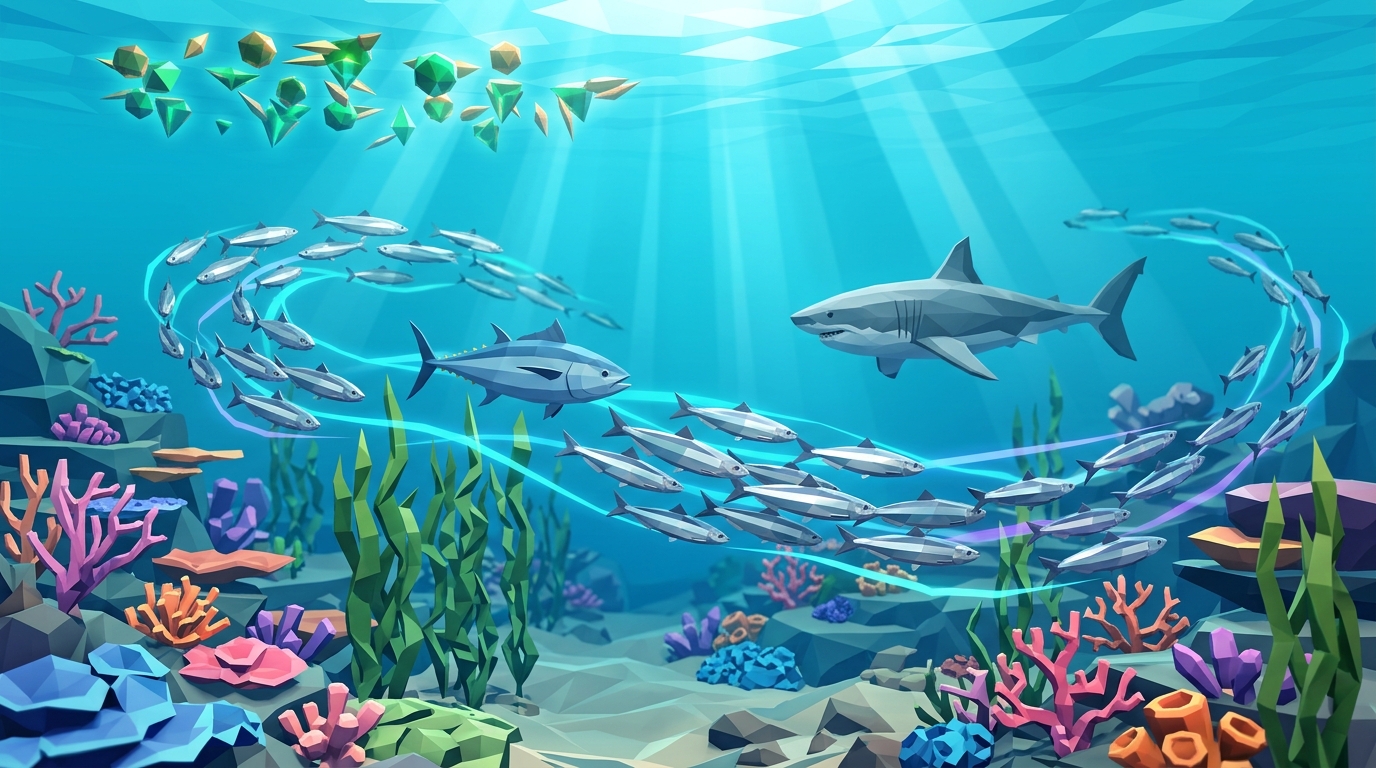
• Wednesday (System Perturbation & Stress Testing): Introduce external disruptions (such as drought, apex predator introduction, or resource scarcity) and model trophic cascades.
• Thursday (Mathematical Graphing & Data Analysis): Translate recorded digital trial counts into hand-drawn bar graphs, scatter plots, and rate-of-change calculations.
• Friday (Socratic Presentation & Synthesis): The student delivers a 3-minute oral presentation explaining their experimental findings to the family or co-op group.
Troubleshooting Common Roadblocks: Screen Meltdowns and Multi-Age Teaching
Homeschool parents frequently ask how to manage device transitions when screen time ends. The secret lies in the visual physical timer. When children know from minute one that the simulation window is strictly 10 minutes, the expectation is set before engagement begins.
For families teaching multiple grade levels simultaneously (for example, a 3rd grader and a 6th grader), assign differentiated roles during the 10-minute digital trial. The younger student operates the environmental controls (adjusting sunlight or producer counts), while the older student tracks multi-variable rates of change and calculates percentages.
On days when energy is low or schedule conflicts arise, completing just the 10-minute physical prediction and 10-minute simulation trial ensures that scientific momentum never stalls.
Frequently Asked Questions About Daily Homeschool Science Routines
Here are clear, practical answers to the most common questions about structuring a daily elementary and middle school STEM block at home.
Is 30 minutes a day really enough time to cover elementary and middle school science standards?
How do I prevent my child from treating the simulation like an arcade game?
What equipment do I need for this 30-minute routine?
Are all simulation levels free to use for homeschool families?
Start Your 30-Minute Daily Science Routine Today
Transform your homeschool science block from a stressful chore into the most engaging 30 minutes of your day.
Level 1 is available instantly in your browser with zero account setup. Unlock all 10 simulation levels and download the complete 24-page Expedition Science Journal 100% free with email.
Experience the 10-10-10 homeschool science block with our zero-prep interactive 3D ecology lab.
START LEVEL 1 FREE30-Minute Homeschool Science Schedule & Lab Log (PDF)
A complete 24-page student lab journal featuring daily inquiry checklists, hypothesis tables, variable tracking logs, and trophic level coordinate graphing templates.