Why Ocean Food Chains Captivate 4th Grade Learners
Fourth grade is a transformative milestone in elementary science education. Students transition from simply identifying animals to analyzing structural relationships, energy transformations, and environmental interdependencies aligned with NGSS standards (such as 4-LS1-1 and 5-PS3-1).
The ocean provides the ultimate laboratory for teaching food chains. From microscopic floating algae that produce half the oxygen on Earth to titanic apex predators like great white sharks and killer whales, marine ecosystems make abstract ecological concepts vivid and memorable.
By exploring both simple 3-step food chains and comprehensive 5-step aquatic webs, 4th graders learn to categorize organisms as producers, consumers, or decomposers while understanding how living things rely on energy from the sun.
Differentiated Ocean Food Chains: 3-Step vs 5-Step Examples
When teaching 4th grade science, differentiation is essential. Some students benefit from direct 3-step linear sequences, while advanced learners thrive by tracing 5-step multi-trophic connections.
Simple 3-Step Ocean Food Chain: Algae -> Krill -> Blue Whale
Sunlight fuels microscopic green phytoplankton (producers). Tiny shrimp-like krill (primary consumers/herbivores) graze on the phytoplankton in swarms. A massive blue whale (secondary consumer/carnivore) filters tons of krill through its baleen plates in a single mouthful.
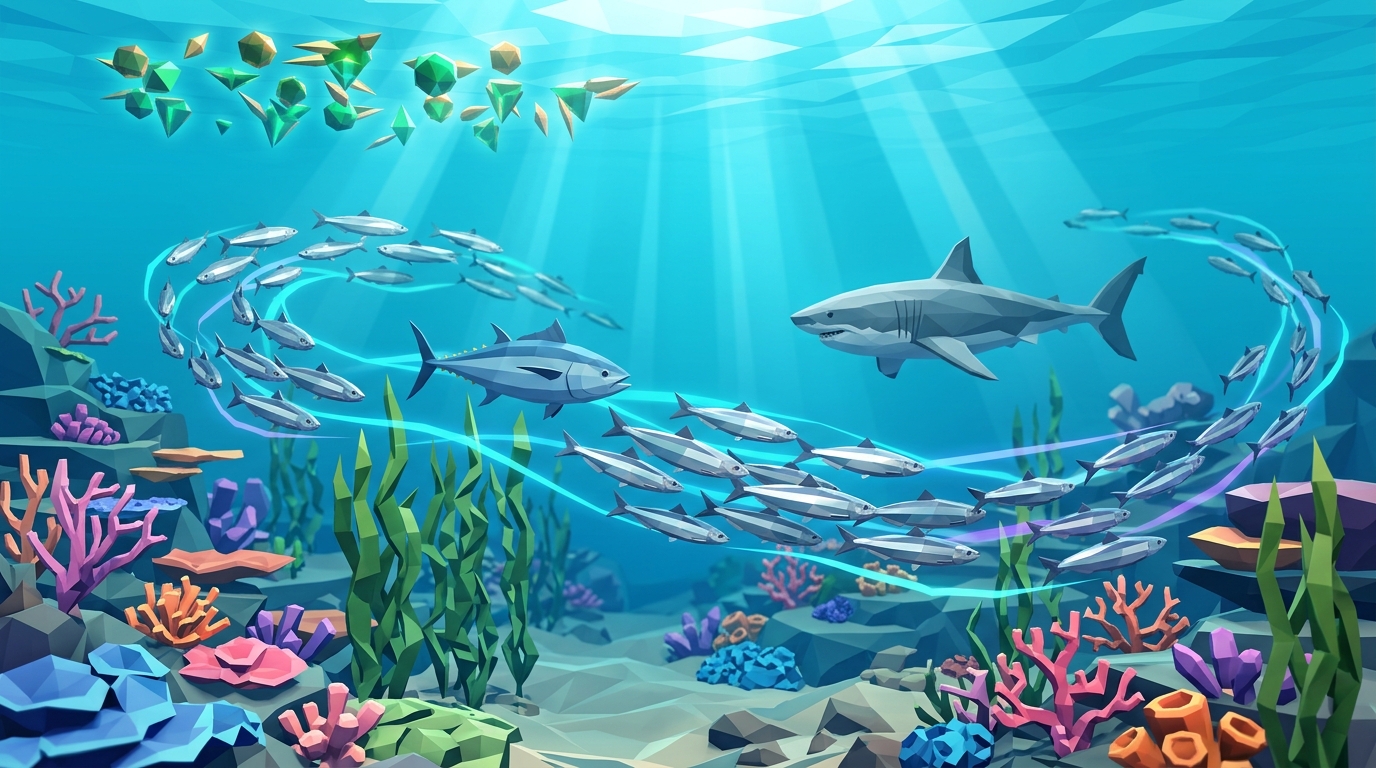
Expanded 5-Step Ocean Food Chain: Phytoplankton -> Zooplankton -> Herring -> Tuna -> Shark
Phytoplankton capture solar energy via photosynthesis. Microscopic animal zooplankton eat the phytoplankton. Schooling silver herring eat the zooplankton. Fast-swimming tuna hunt the herring. Finally, a great white shark preys upon the tuna as an apex carnivore.
4th Grade Marine Organism Classification Table
Use this reference matrix to help 4th grade students classify common ocean creatures into their ecological roles and trophic categories:
| Ocean Creature | Trophic Level | Ecological Role | What It Eats |
|---|---|---|---|
| PRODUCERPhytoplankton & Kelp | Level 1 (Primary Producer) | Autotroph (Makes food from sunlight) | Sunlight, Water & Dissolved Nutrients |
| Krill & Copepods | Level 2 (Primary Consumer) | Herbivore (Plant-eater) | Microscopic Phytoplankton |
| Herring, Anchovy & Clownfish | Level 3 (Secondary Consumer) | Carnivore / Omnivore | Zooplankton & Small Invertebrates |
| Tuna, Seals & Sea Turtles | Level 4 (Tertiary Consumer) | Mid-tier Carnivore | Secondary Fish, Squid & Crustaceans |
| Great White Shark & Orca | Level 5 (Quaternary Consumer) | Apex Predator | Tuna, Seals, Rays & Large Fish |
| Sea Cucumbers & Marine Bacteria | Decomposer / Detritivore | Recycler of Organic Matter | Dead Organisms (Marine Snow) |
The Most Common 4th Grade Mistake: Arrow Directions
When 4th graders draw food chains, nearly 80% initially draw arrows pointing to what the animal eats (for example: Shark -> Tuna -> Fish). This is a common misconception.
Always teach students the Golden Rule of Science Arrows: The arrow represents the movement of energy. Because the tuna gives its energy to the shark, the arrow must point from the tuna toward the shark (Tuna -> Shark).
A helpful classroom mnemonic is: "The arrow goes into the belly of the eater!"
Hands-On 4th Grade Science Activity: Build a Paper Plate Food Web
To reinforce energy transfer without complex lab equipment, try this 20-minute hands-on activity with your 4th grade classroom or homeschool co-op:
1. Give each student 5 circular index cards or paper plates labeled: Sun, Phytoplankton, Krill, Fish, and Shark.
2. Have students illustrate each organism and color the border (Green for Producer, Blue for Herbivore, Red for Carnivore).
3. Connect the plates using lengths of colored yarn, placing arrowheads with masking tape to verify correct energy direction.
4. Introduce a disruption scenario (such as an oil spill that reduces sunlight by 50%) and have students physically snip the yarn to observe how higher levels are impacted.
Frequently Asked Questions About 4th Grade Ocean Food Chains
Answers to common questions from 4th grade teachers and homeschooling parents.
What is the difference between an ocean food chain and an ocean food web for 4th graders?
Why are decomposers important in an ocean food chain?
How does Praxos help 4th graders understand food chains?
Are all simulation levels and printables free for 4th grade students?
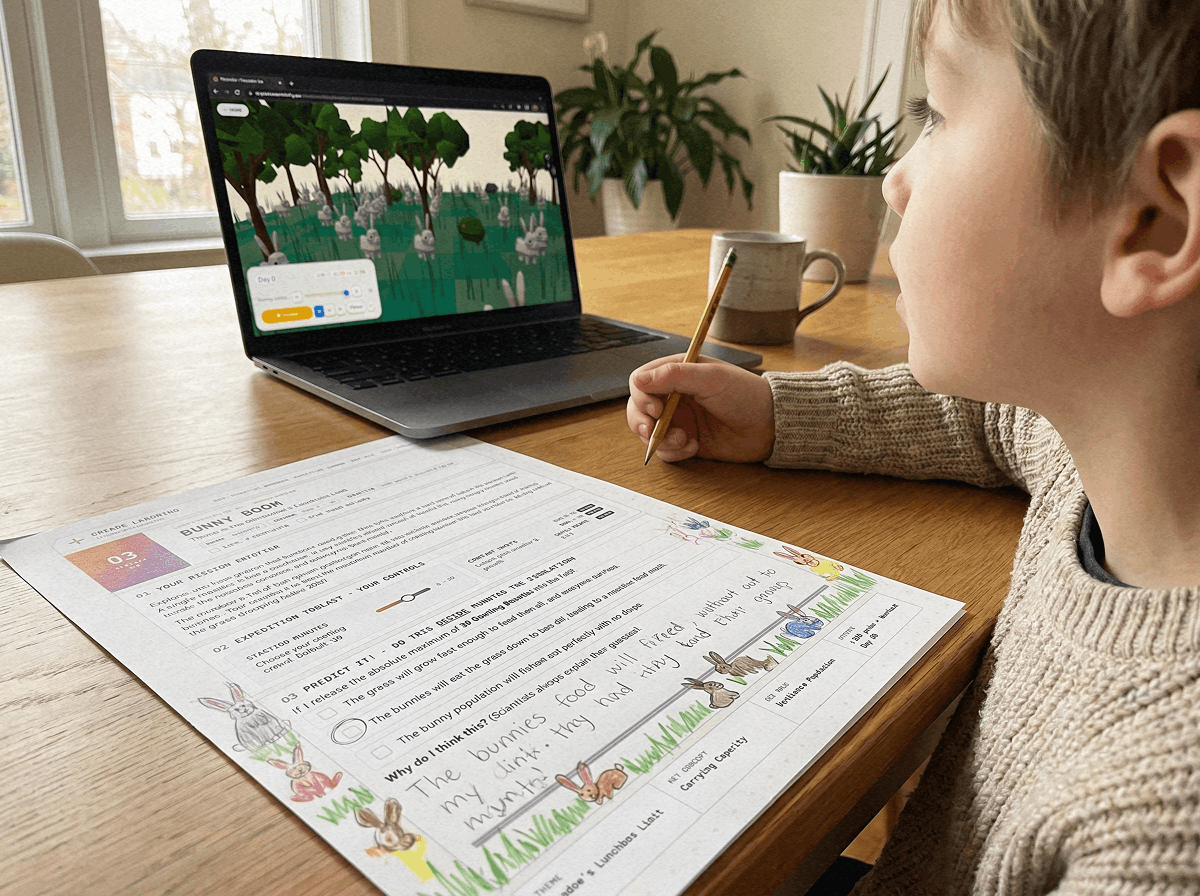
Explore Ocean Food Chains in 3D with Praxos
Give your 4th grade students an unforgettable science experience that transforms food chains from flat diagrams into living systems.
Start Level 1 instantly in your browser with no account setup. Unlock all 10 simulation missions and the complete 24-page Expedition Science Journal 100% free with email.
Put 4th grade food chains into practice with our interactive browser-based simulation.
START LEVEL 1 FREE4th Grade Ocean Food Chain Activity Pack (PDF)
A complete 24-page printable student lab journal with cut-and-paste marine food chain strips, arrow direction practice sheets, and organism role sorting tables.