Why a Volcano Activity Worksheet Needs Interactive Experimentation
In many middle school earth science units, the traditional volcano activity worksheet consists of a photocopied cross-section diagram where students write labels into blank boxes. While memorizing terms like magma chamber, conduit, and vent has educational value, static labeling fails to teach the physics that makes volcanoes erupt. Students can label every anatomical part of a volcano without understanding why some eruptions produce gentle lava fountains while others obliterate entire mountain summits.
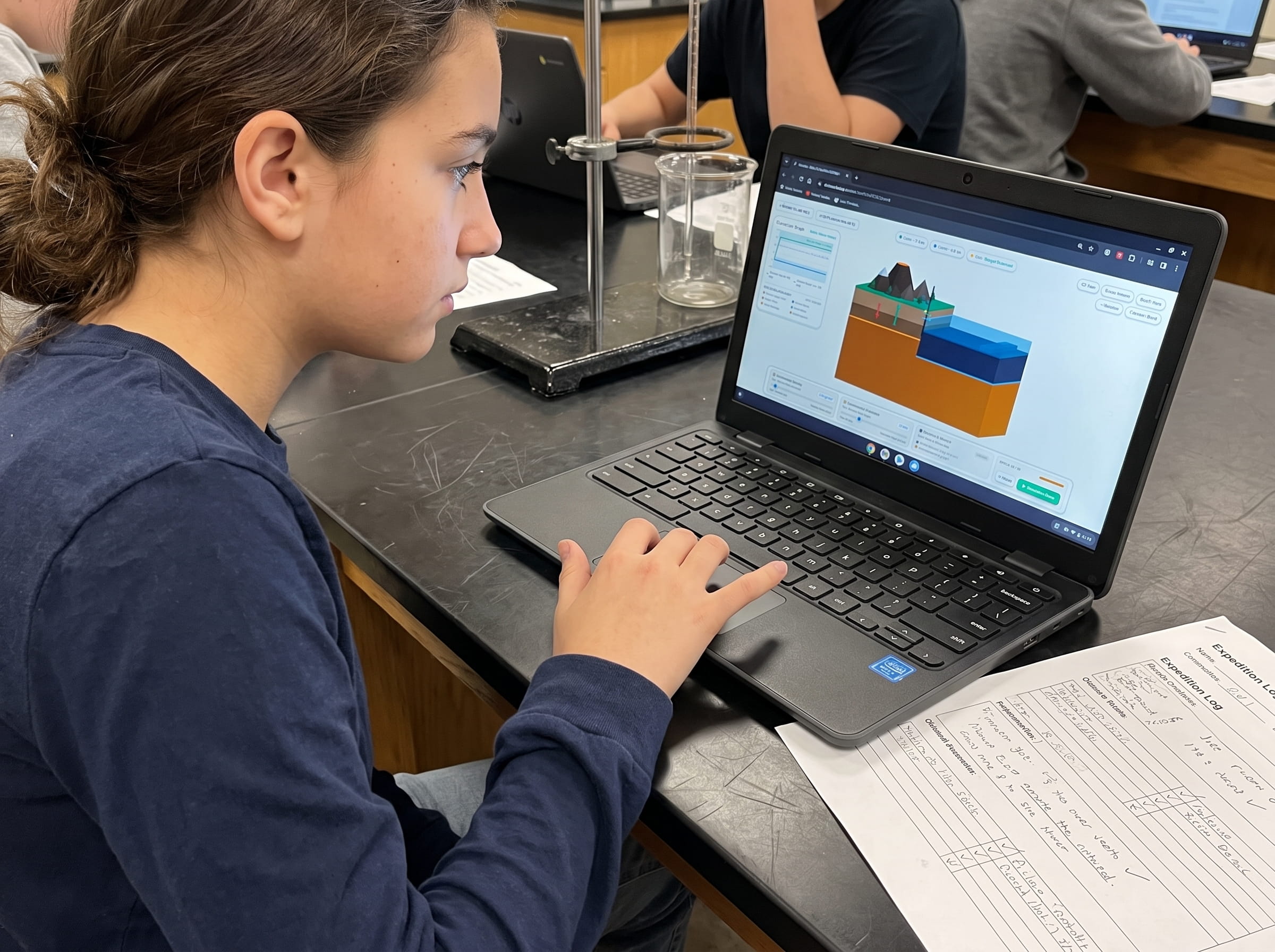
When I designed our science learning tools at Praxos Learning, I embraced a dual-format approach: pairing tactile handwriting on paper with real-time 3D geophysics modeling. When students manipulate physical liquids on their desks and simultaneously test thermal variables in a digital simulator, abstract concepts like viscosity, volatile expansion, and lithostatic pressure become intuitive.
This guide provides a comprehensive framework for educators seeking free volcano worksheets that stimulate genuine inquiry. Below, you will find our labeled anatomical breakdown, a kitchen viscosity experiment, and a 4-step classroom pacing guide designed for grades 4 through 8.
Volcano Anatomy Breakdown: The Core Diagramming Features
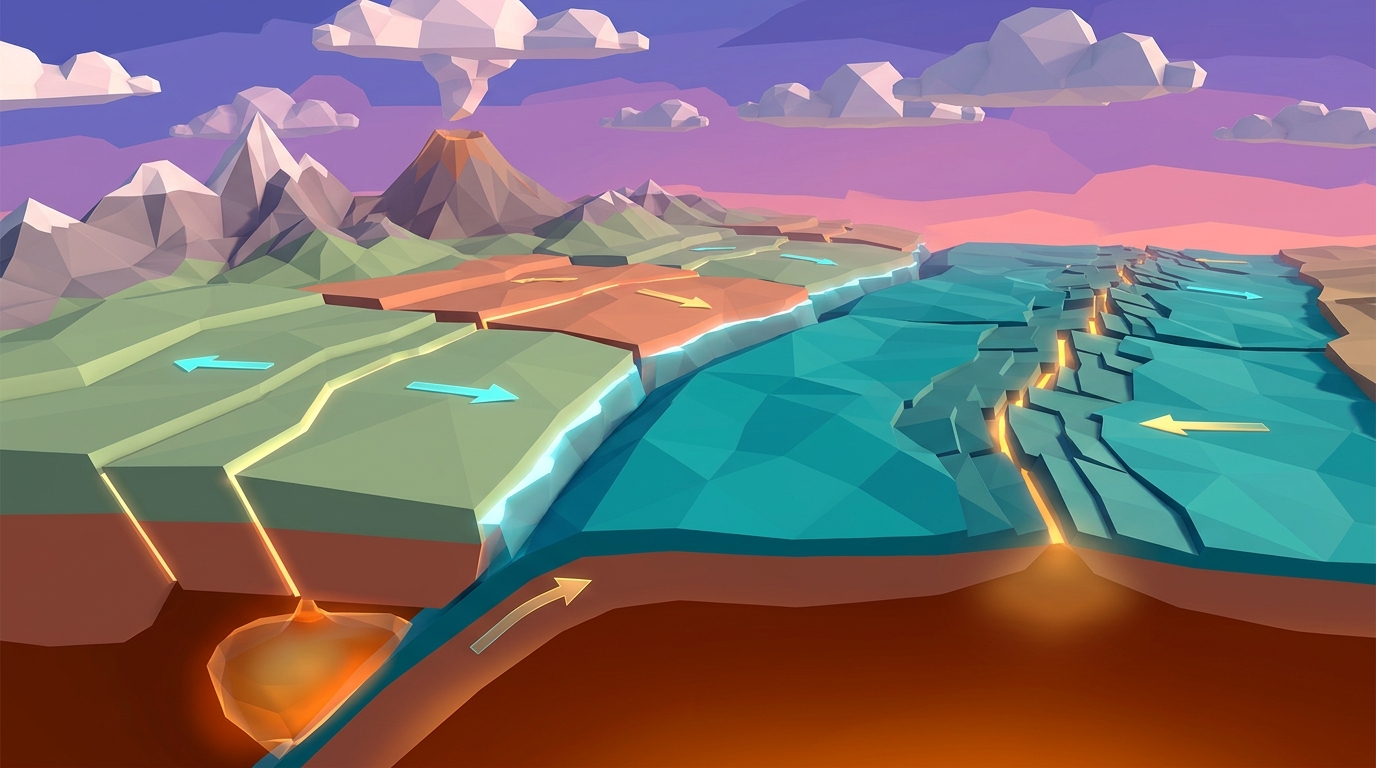
Before conducting experiments, students need a clear conceptual model of subterranean volcanic plumbing. When completing a volcano cross section worksheet, students must recognize that the visible mountain peak represents only a fraction of the complete volcanic system.
Magma originates deep within the upper mantle and lower crust, ascending through fractures due to its lower density relative to surrounding solid rock. As it rises, it accumulates in localized reservoirs before finding pathways to the surface.
The following reference guide highlights the critical structures students should identify and define on their volcanoes activity sheet:
| Anatomical Feature | Subterranean Location | Physical Characteristics | Geological Function & Role |
|---|---|---|---|
| Primary ReservoirMagma Chamber | Deep Subsurface (2 to 10 km) | Large pool of molten rock under high lithostatic pressure | Collects rising melt; allows magma differentiation and gas buildup |
| Main Conduit (Pipe) | Central Vertical Shaft | High-pressure cylindrical passage connecting chamber to crater | Primary chimney through which ascending magma and gases travel |
| Sill & Dike Intrusions | Lateral & Transverse Fractures | Horizontal sheets (sills) and vertical cracks (dikes) of cooling magma | Feed secondary flank eruptions and alter structural stability of volcano |
| Secondary (Parasitic) Vent | Flanks & Slopes | Smaller relief outlets branching off the central pipe | Vents trapped gas when central conduit is plugged by viscous lava domes |
| Crater & Caldera | Summit Basin | Bowl-shaped depression formed by explosive ejection or structural collapse | Direct interface where volcanic gases, lava, and pyroclastic debris vent |
| Eruption Column & Plume | Atmosphere (0 to 30 km) | Vertical pillar of ash, pumice, superheated gas, and tephra | Distributes fine ash across global air currents; causes volcanic winter |
The Kitchen Viscosity Lab: A Physical Volcano Experiment for Kids
Nothing makes fluid dynamics clearer than a hands-on physical demonstration. To complement the digital simulation, I developed a simple kitchen-safe volcano experiment for kids that demonstrates how fluid viscosity dictates eruption explosive power.
By comparing three household liquids with vastly different viscosities, water (low viscosity), cooking oil (medium viscosity), and corn syrup or blackstrap molasses (high viscosity), students observe how resistance to flow directly impacts gas entrapment.
When students blow bubbles through a straw into each fluid, water releases bubbles effortlessly with minimal splashing. In contrast, heavy syrup traps the gas pocket until internal pressure builds sufficiently to rupture violently, sending droplets outward. This simple observation models why high-silica rhyolitic magma creates catastrophic explosive eruptions like Krakatoa, whereas low-silica basaltic magma produces the gentle flowing rivers of Kilauea.
The deadliness of an eruption is not determined by heat alone; it is determined by viscosity. High-viscosity magma prevents dissolved volcanic gases from escaping gently. As the magma ascends and confining pressure drops, trapped gases expand exponentially until the entire conduit shatters in an explosive blast.
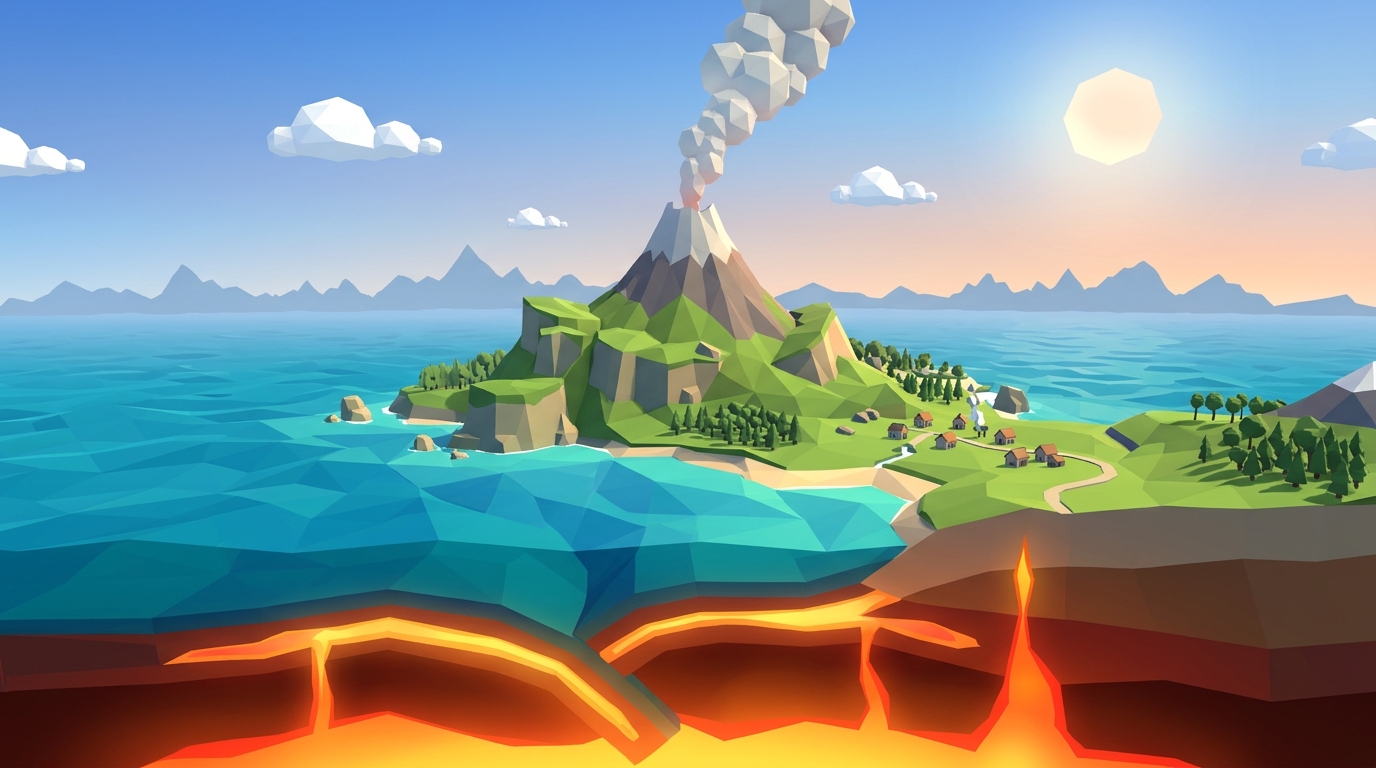
Simulate Viscosity in Volcano Island
Test how magma silica percentage and dissolved gas concentrations transform effusive Hawaiian lava into catastrophic Plinian eruptions in real-time 3D.
Teaching this topic tomorrow? Download the Free NGSS Student Lab Sheet (Printable PDF)
Get the complete printable volcano activity worksheet pack, eruption observation sheets, and NGSS-aligned grading rubric in a single high-resolution PDF.
How to Structure a 45-Minute Volcano Activity Worksheet Lab
To make the most of your instructional time in a homeschool setting or standard classroom period, follow this four-phase guided inquiry routine. It seamlessly transitions students from physical hypothesis formation to digital testing.
Here is the recommended 45-minute lab pacing schedule using our volcano worksheets:
Pre-Lab Prediction & Structural Diagramming (10 Minutes)
Distribute the printable volcano activity worksheet. Have students label the cross-section diagram and record their initial hypotheses regarding which magma type produces the tallest ash column.
Hands-On Fluid Viscosity Testing (10 Minutes)
Students set up an inclined ramp using cardboard or plastic trays. They race equal droplets of water, oil, and cold corn syrup down the incline, timing each fluid with a stopwatch and recording the travel speeds in their logbook tables.
Interactive 3D Testing in Volcano Island (15 Minutes)
Students open Volcano Island Level 5 on their devices. They adjust the silica slider from 45% (basalt) to 72% (rhyolite), observing how magma viscosity and gas accumulation transform an effusive shield vent into an explosive composite stratovolcano.
Synthesis, Analysis & Formative Reflection (10 Minutes)
Students transcribe their digital findings into their physical logbooks, answering analysis questions that connect the kitchen lab results with planetary geophysics.
The Science of Magma: Why Viscosity Dictates Volcano Shape
A key question that emerges during this lab is: why do volcanoes come in such drastically different shapes? The answer lies directly in the viscosity values students measure on their volcano activity worksheet.
Shield volcanoes, like those forming the Hawaiian Islands, are built from hundreds of successive layers of low-viscosity basaltic lava. Because this magma is fluid and hot (exceeding 1,100 degrees Celsius), it flows for tens of kilometers before solidifying, creating broad, gently sloping mountains resembling a warrior shield laid upon the ground.
In contrast, composite volcanoes (stratovolcanoes), such as Mount Rainier or Mount Fuji, erupt high-silica andesite and dacite magmas. Because these lavas are stiff and sluggish, they cannot travel far from the vent, piling up around the crater along with pyroclastic ash layers to create steep, towering volcanic cones.
In Volcano Island Level 5 and Level 6, students adjust these exact geochemical ratios, witnessing the immediate architectural consequences on the 3D terrain.
Take control of the subterranean laboratory. Adjust silica levels, control dissolved sulfur and water vapor ratios, and watch how viscosity alters volcanic geometry in real time.
Launch Free Volcano LabFrequently Asked Questions About Volcano Worksheets and Activities
Here are answers to the most frequent questions educators and parents ask when integrating our volcano activity worksheet into their STEM curriculum:
What makes this volcano activity worksheet different from standard printables?
What grade levels is this volcano lab guide suitable for?
Do I need expensive lab equipment to run this volcano experiment?
How do I download the complete 24-page Field Geologist Logbook?
Download the Free 24-Page Field Geologist Logbook
Get the complete printable volcano activity worksheet pack, eruption observation sheets, and NGSS-aligned grading rubric in a single high-resolution PDF.