
Small Biomass, Giant Impact: The Science of Keystone Species
In medieval stone arches, master masons placed a single wedge-shaped stone at the very crown of the archway. This stone was called the keystone. It carried no more weight than the stones beside it, but if a builder pulled that single stone out, the entire cathedral arch collapsed into rubble.
In 1966, American marine ecologist Robert Paine noticed an identical dynamic in nature. While studying the rocky tidal pools of Makah Bay in Washington State, Paine manually removed a single species of predatory purple starfish (Pisaster ochraceus) from a stretch of shoreline. Within a few months, common blue mussels multiplied unchecked, crowding out barnacles, limpets, and algae. Total species diversity plummeted from 15 species to just one.
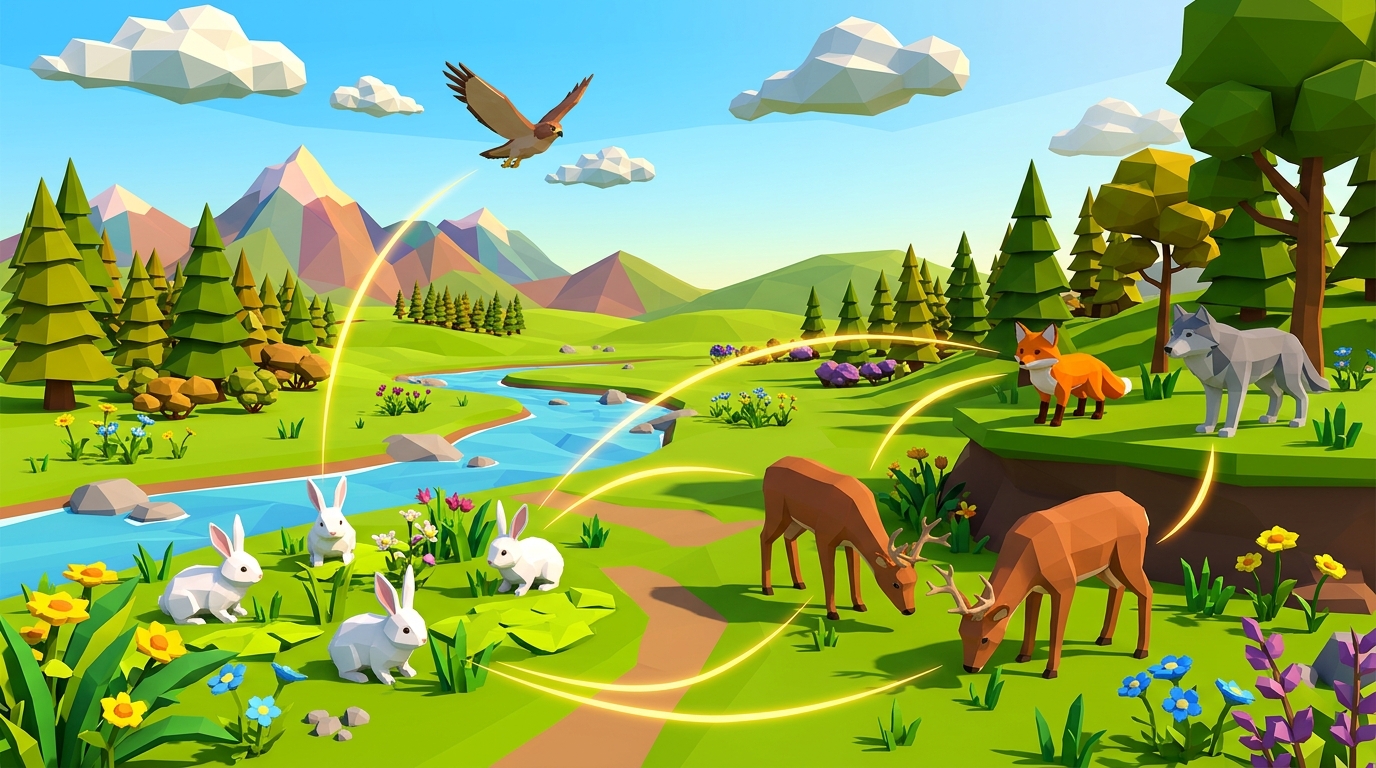
Paine coined the term keystone species to describe organisms that play an irreplaceable architectural role in their communities. A keystone species is fundamentally different from a dominant species. Giant redwood trees in California have massive ecological influence simply because they make up 90% of the forest biomass. A keystone species, by contrast, has relatively small total biomass, but exercises massive leverage over the whole ecosystem.
Among keystone organisms, none alter the physical Earth more dramatically than ecosystem engineers: species that physically modify, maintain, or destroy physical habitats.
In Level 17 of the Praxos 3D simulation ("The Keystone"), students explore the greatest freshwater engineer on Earth: the North American beaver.
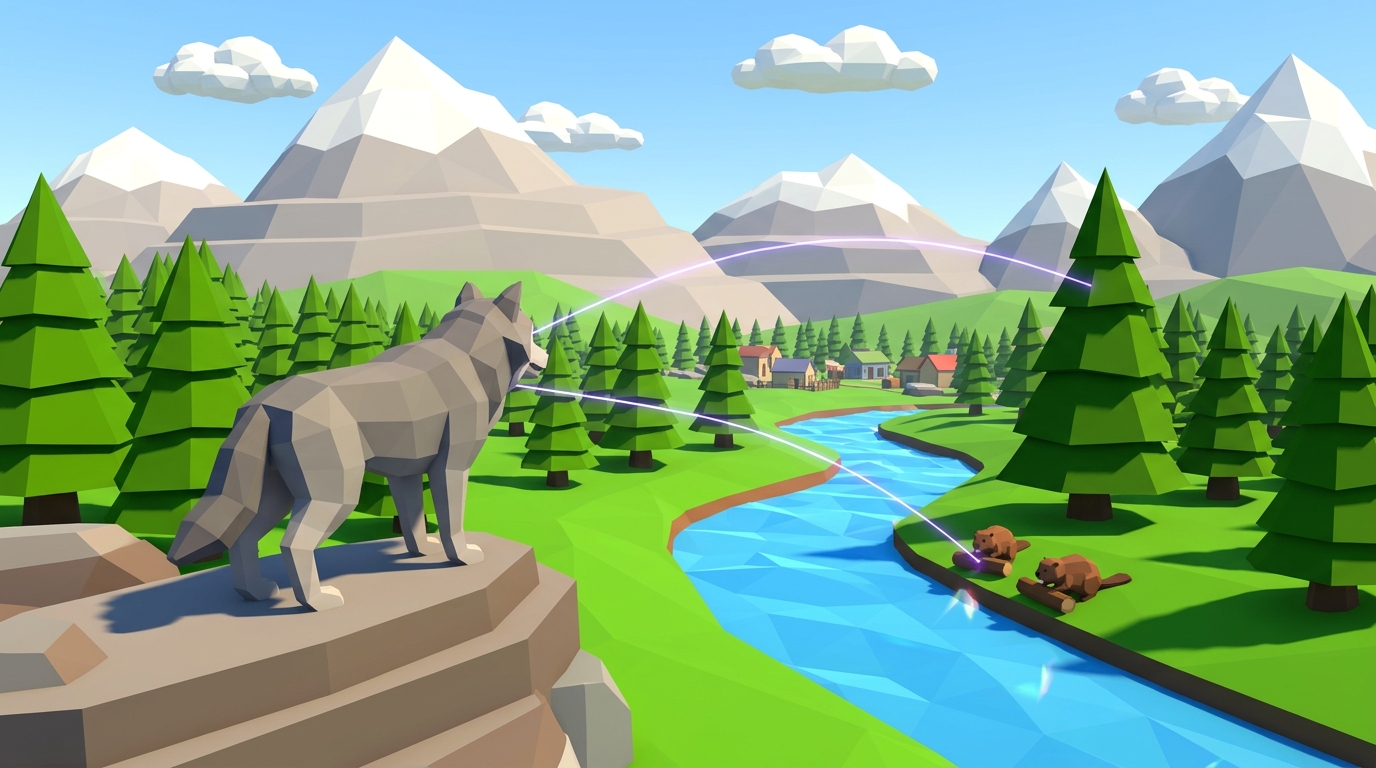
Load Level 17. Use the Flow Velocity Tool on the central mountain stream and note its speed: 8.2 meters per second. Notice the dry, cracked dirt lining both banks. Then introduce two beavers and watch what happens as they lock logs across the canyon neck: water speed plummets by 95% and groundwater rises.
Launch Level 17 LabNature's Civil Engineers: How Beaver Dams Rewire Earth Hydrology
Ecologists divide ecosystem engineers into two groups: autogenic engineers (organisms that modify the environment using their own bodies, such as coral reefs and kelp) and allogenic engineers (organisms that transform materials from one state to another using external objects).
Beavers are the ultimate allogenic engineers. Using their self-sharpening, iron-reinforced orange teeth, a pair of beavers can fell a 15-centimeter willow tree in under twenty minutes. They strip the branches for bark food and weave the trunks, stones, and river mud into watertight dams spanning running creeks.
The physics of what happens next reshapes entire watersheds:
1. Kinetic Energy Dissipation: Rushing mountain creeks carry immense erosive power, scouring sediment down to bedrock and carving deep, dry gullies. When water hits a beaver dam, kinetic velocity drops from a raging torrent to a gentle glide ($<0.4$ m/s).
2. Aquifer Sponge Coupling: Instead of water rushing to the ocean in forty-eight hours, the dam pools water into wide, deep wetland reservoirs. Water hydrostatic pressure forces water deep into the surrounding soil, recharging underground aquifers. In dry summer months when rain stops, these underground sponges slowly feed cool, filtered water back into the stream, keeping rivers flowing through droughts.
3. Silt and Carbon Sequestration: Slowed water can no longer carry heavy suspended particles. Fine organic silt settles to the pond bottom, turning rocky gravel into thick, nutrient-packed muck that fosters water lilies, cattails, and microscopic rotifers.
A remarkable real-world anchor phenomenon occurred during Western US drought restoration programs in Idaho, Nevada, and Utah. Ranchers who spent decades exterminating beavers found their streams drying up by mid-June. When conservation biologists reintroduced beaver pairs in 2015, the new dams restored year-round creek flows within three seasons, reviving riparian willow corridors and providing life-saving water for cattle and elk.
| Hydrological Dimension | Unengineered Creek (High Erosion) | Beaver-Engineered Wetland (Keystone Oasis) | Ecological & Systems Consequence |
|---|---|---|---|
| HYDROLOGYFlow Velocity | High kinetic speed ($>8.0$ m/s); rapid storm runoff | Gentle slow glide ($<0.4$ m/s); energy absorbed by wood complex | Erosion prevention; stabilizes banks and prevents catastrophic flash floods |
| AQUIFER RECHARGEWater Table Elevation | Deep underground ($-4.0$ m); parched topsoil and desiccated roots | Shallow high saturation ($-0.3$ m); creates spongy hyporheic zone | Regional drought resilience; trees stay green during zero-rain months |
| CARBON TRAPSediment & Nutrients | Washed downstream to oceans; bare rocky riverbed | Trapped in still pool beds; deep organic carbon muck deposits | Fertile nursery beds for aquatic flora, larvae, and insect larvae |
| BIODIVERSITYVertebrate Richness | Low (1 to 2 specialized fast-water organisms) | Extremely high (12 to 50+ species across birds, fish, and amphibians) | Disproportionate biodiversity multiplication from a single keystone animal |
Inside Simulation Level 17: Hands-On Wetland Engineering from Day 0 to Day 80
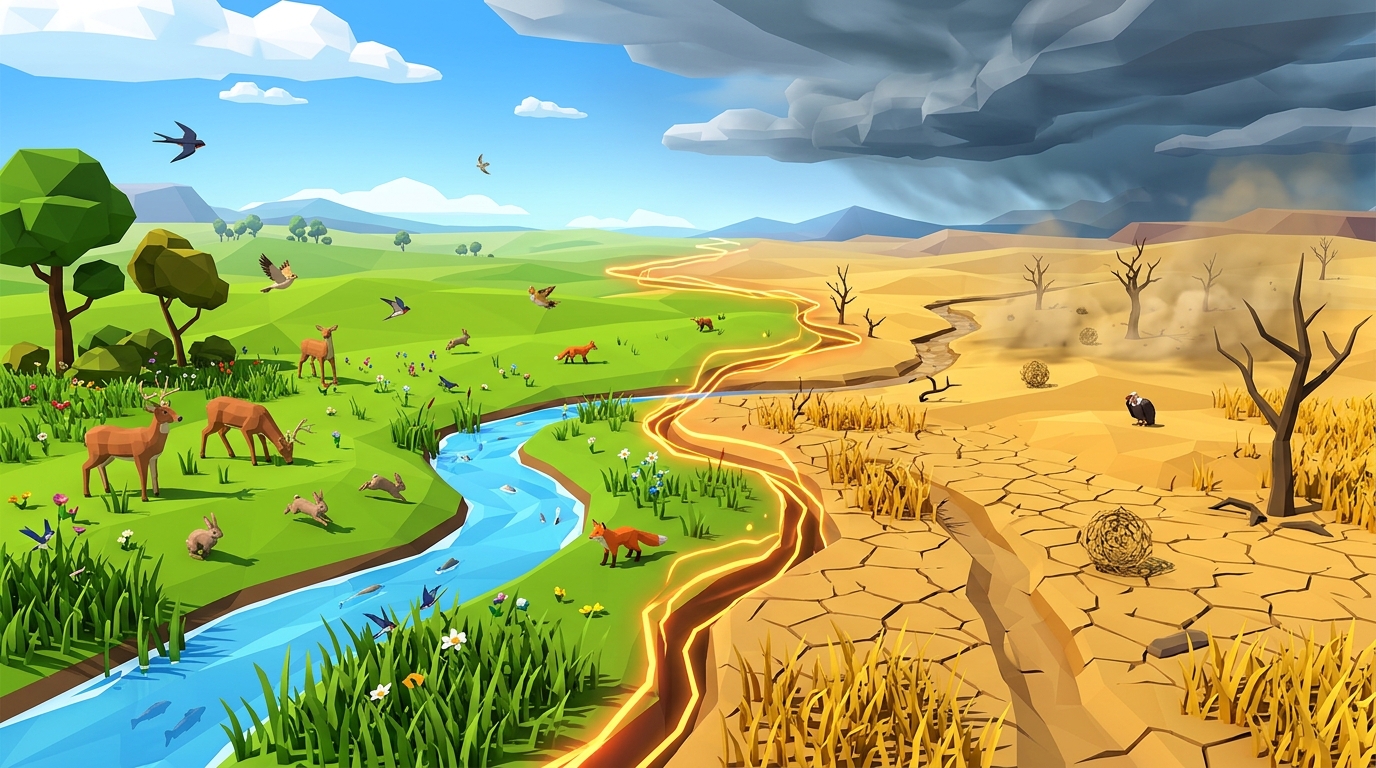
In Level 17, students take command of an arid canyon watershed. At Day 0, a rocky river tears diagonally across dry, cracked earth. The groundwater table sits at -4.0 meters, vegetation is sparse, and the water contains zero fish.
Students have a specialized wildlife management toolbar:
First, the Beaver Pair Introducer. Placing two adult beavers near an aspen grove starts their autonomous construction routine. Students watch low-poly beavers fell trees, transport timber downriver, and weave logs across the narrowest canyon chokepoint.
Second, Spillway Height & Dam Crest Sliders. Students can fine-tune dam height to regulate upstream pool depth without causing overtopping bank failure.
Third, Groundwater Table Heatmap. As the dam completes on Day 15, students toggle the subsurface moisture view, observing the blue aquifer ring expand outward across 8 surrounding land tiles.
By Day 30, the transformation is breathtaking: cattails, duckweed, and water lilies sprout along shoreline edges. Mallard ducks land on the pond surface, dragonflies hunt mosquitoes, and brook trout spawn in the gravel beds behind the dam. By Day 80, the canyon supports 14 coexisting animal species, proving the power of a single keystone engineer.
Analyze Stream Runoff Speed and Water Table Deficits
Inspect the canyon stream on Day 1, recording an 8.2 m/s flow rate and a -4.0 m groundwater level beneath dry bank tiles.
Deploy the Mated Beaver Pair at the Canyon Neck
Introduce beavers near deciduous timber stands and observe autonomous tree-felling and dam construction across the channel.
Monitor Reservoir Pooling and Aquifer Saturation
Track how pool depth deepens to 2.5 meters while subsurface soil saturation rises to -0.3 meters across adjacent acreage.
Sustain 12 Diverse Wetland Species Through Day 80
Ensure adequate wood stocks for dam maintenance and verify that fish, waterfowl, and amphibian populations thrive through Day 80.
Common Student Misconceptions About Keystone Engineers
Educators frequently observe three common misunderstandings when teaching keystone engineering:
Misconception 1: "A keystone species must always be a fierce apex predator." While wolves and sea otters are indeed keystone carnivores, keystone species can also be gentle rodents (beavers), burrowing tortoises (gopher tortoises whose burrows house 350 other species), or even tiny pollinators like fig wasps.
Misconception 2: "Beavers harm forests by destroying beautiful trees." When beavers gnaw down willows and aspens, they do not kill the root system; they coppice the plants. Stumps resprout with fresh, tender shoots that provide enhanced browse for deer and elk, creating a mosaic of multi-aged forest stands.
Misconception 3: "Beaver dams cause downstream rivers to dry up." Because beaver dams are leaky composite structures made of sticks and mud, they do not block river flow like concrete dams. Instead, by storing high-volume spring snowmelt and releasing it gradually through summer, they keep downstream rivers flowing during blistering droughts.
You do not need massive physical size to shape an entire planet. Find the critical leverage point that links moving water and living soil, and an entire biological universe will spring up around your work.
Frequently Asked Questions About Level 17
Reference questions and answers for science classrooms, homeschool parents, and budding field biologists:
What NGSS standards does Level 17 satisfy?
What is the difference between an autogenic and an allogenic engineer?
What printable activity accompanies Level 17 in the Expedition Science Journal?
Level 17 Mission Log & Beaver Dam Hydrology Map (PDF)
A printable 24-page Expedition Science Journal activity charting water runoff velocity, aquifer saturation depth, and biodiversity index before and after beaver dam construction.