The Missing Link in Traditional Homeschool Zoology Curricula
Zoology is consistently one of the most beloved science topics for homeschool families. Children possess an instinctive fascination with animals, from flying birds and deep-sea invertebrates to ferocious apex predators.
However, many standard homeschool zoology spines suffer from a significant pedagogical flaw: they treat animals as static encyclopedia entries. Students color diagrams of skeletal structures, memorize taxonomic phyla (Kingdom, Phylum, Class, Order, Family, Genus, Species), and read descriptive fact sheets about habitats, yet they rarely explore how animals function within dynamic living systems.
When animal science is taught in isolation, students miss the foundational principles of modern biology: energy transfer, carrying capacity, natural selection, and multi-species feedback loops. By bridging classical zoology with computational ecosystem simulations, parents can deliver a modern, rigorous STEM experience.
The 4 Pillars of a Modern Homeschool Zoology Program
A complete elementary and middle school zoology framework combines four core biological disciplines:
Taxonomy & Classification (How Animals Are Grouped)
Students learn Linnaean classification, distinguishing between vertebrates (mammals, birds, reptiles, amphibians, fish) and invertebrates (arthropods, mollusks, cnidarians, annelids) based on structural anatomy and evolutionary characteristics.
Comparative Anatomy & Physiology (How Animal Bodies Work)
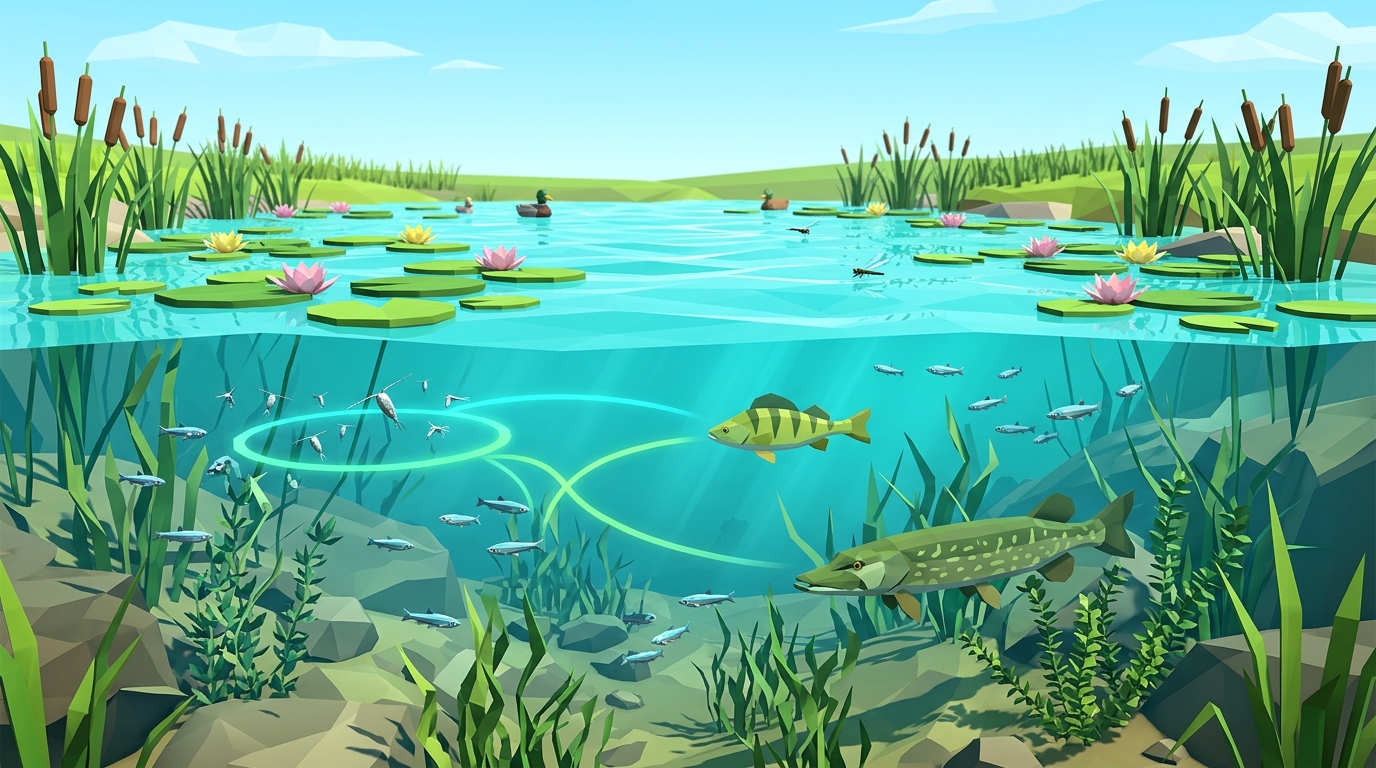
Investigate how specialized organ systems enable animal survival: herbivore vs. carnivore dentition, avian respiratory air sacs, and aquatic gill gas exchange.
Behavioral Ecology & Ethology (How Animals Interact)
Analyze foraging strategies, territorial defense, mating rituals, social hierarchies, and predator-avoidance behaviors in native habitats.
Population Biology & Ecosystem Modeling (How Animals Shape Habitats)
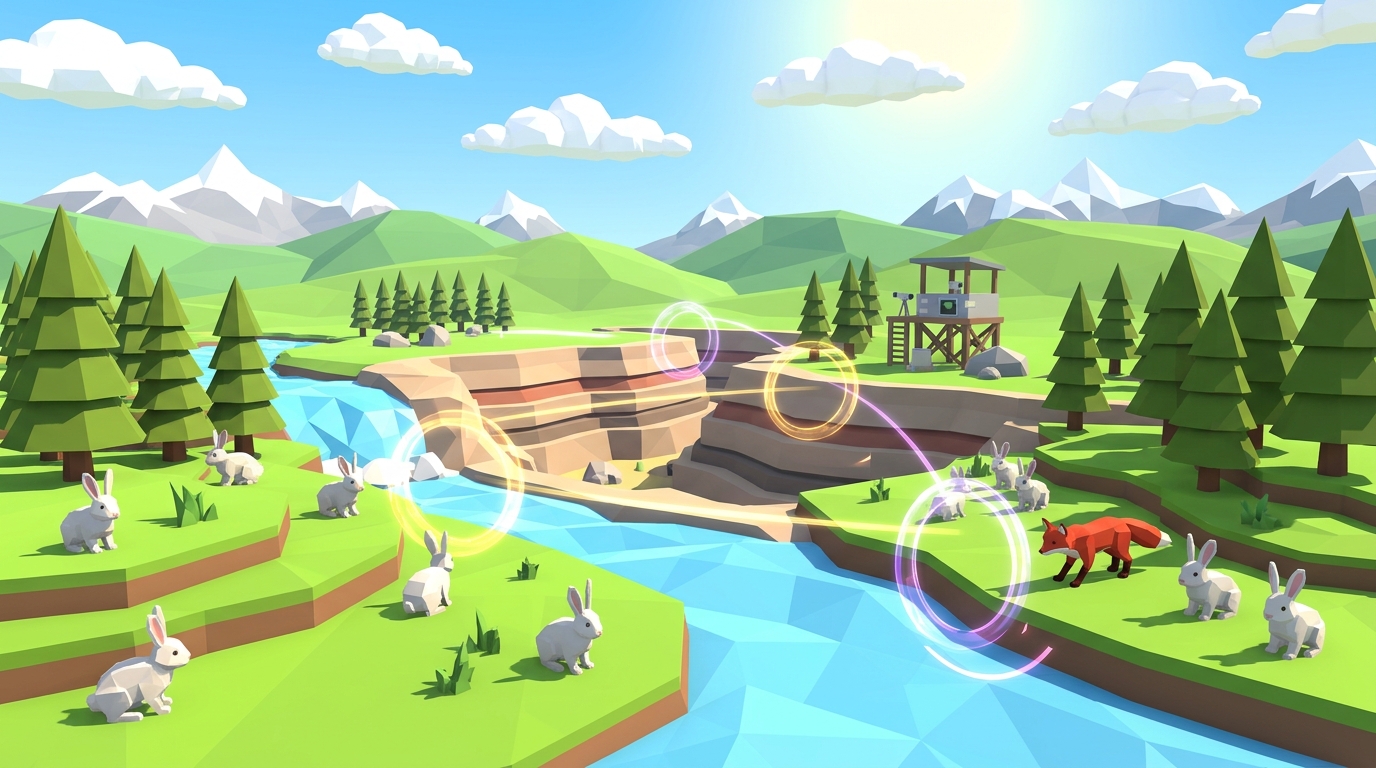
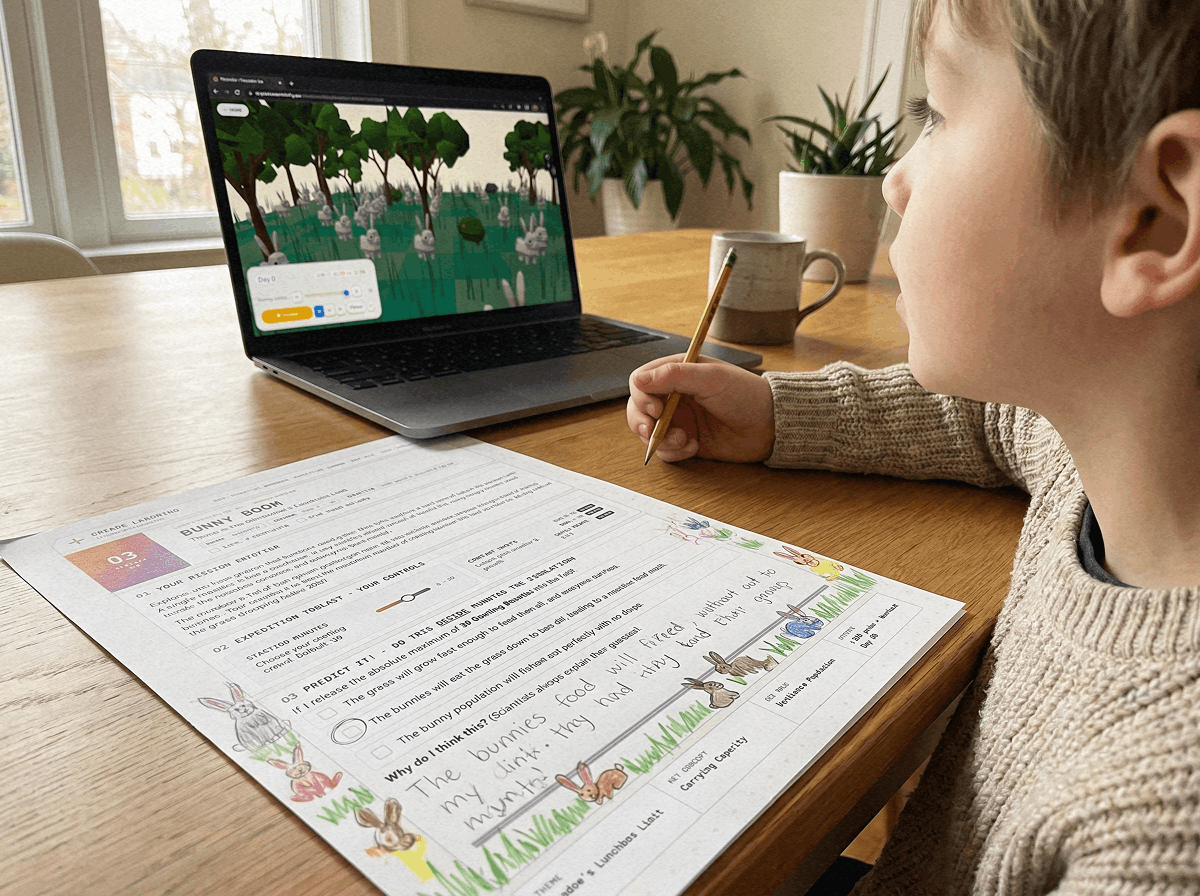
Students use digital 3D simulations (such as Praxos Ecosystem) to model how animal populations grow, overshoot resources, and stabilize at environmental carrying capacity.
Zoology Homeschool Curriculum Comparison Matrix
Evaluate how integrating interactive ecosystem simulations enhances traditional zoology curricula across key learning outcomes:
| Educational Dimension | Integrated Zoology + Praxos 3D Lab | Traditional Textbook Zoology Spines |
|---|---|---|
| PRAXOS INTEGRATED METHODLearning Engagement | High-frequency interactive testing & live modeling | Passive reading & memorization worksheets |
| Ecology & Systems Thinking | Direct observation of predator-prey oscillations | Brief text chapter with static food web diagrams |
| Quantitative Data Skills | Graphing multi-generation population curves | Fill-in-the-blank comprehension questions |
| Cost & Supplies | 100% Free digital access + printed journal | $80-$200 for textbook sets & single-use kits |
| Multi-Age Usability | Scalable from grades 2 through 8 seamlessly | Fixed grade-band reading levels |
How to Pair Praxos Ecosystem with Any Zoology Curriculum Spine
Regardless of which core zoology spine you use (such as Apologia Flying Creatures / Swimming Creatures / Land Animals, Sassafras Science, or Master Books), Praxos Ecosystem acts as your turnkey laboratory component.
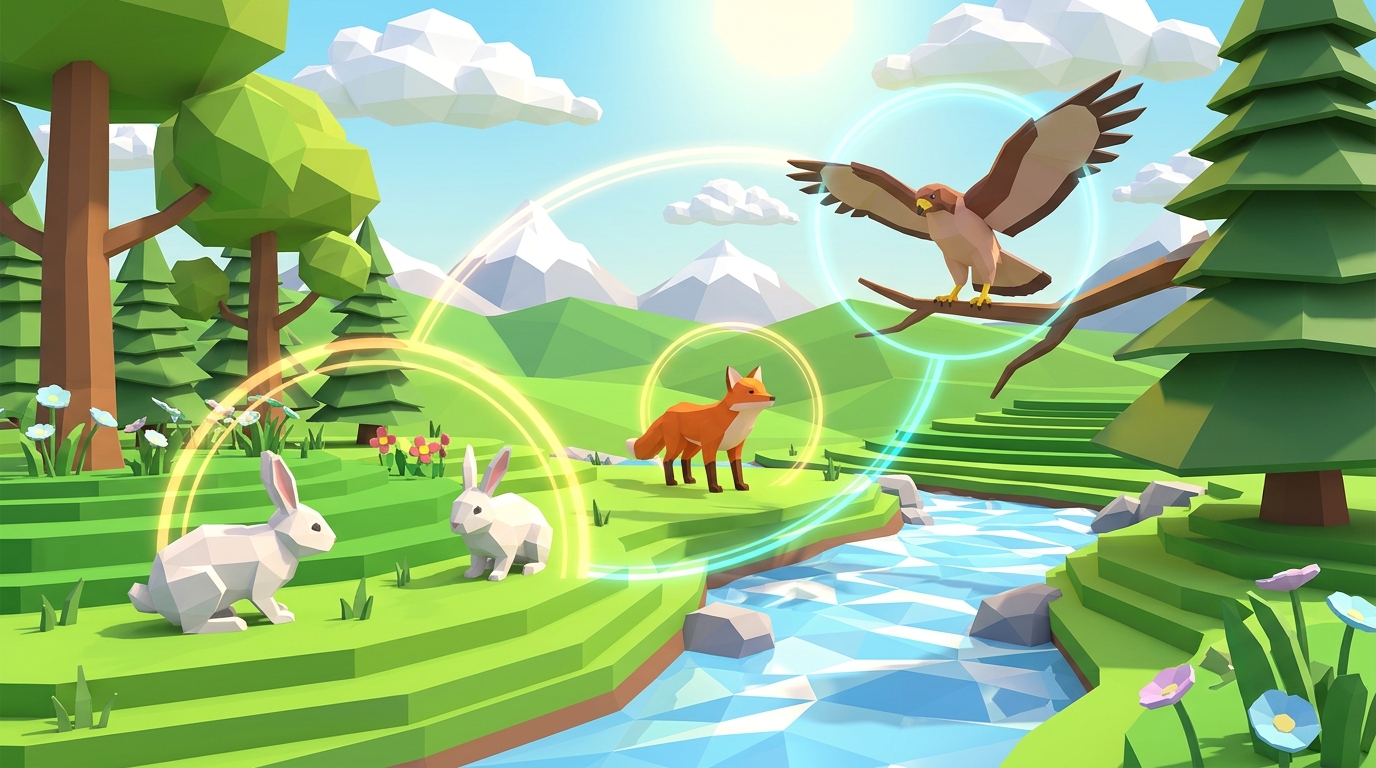
When your curriculum covers mammals and herbivores, run Praxos Level 1 (Primary Producers & Consumers) to let students test how rabbit reproduction rates impact vegetation cover. When you reach carnivores, launch Level 2 and Level 3 to test apex predation pressure and carrying capacity thresholds.
Students record their empirical observations in the free 24-page Expedition Science Journal, creating a comprehensive portfolio of both zoological facts and quantitative lab data.
Frequently Asked Questions About Homeschool Zoology
Answers to common questions from homeschooling parents designing biology and animal science units.
What grade levels are best suited for homeschool zoology?
Do I need expensive dissection kits to teach zoology effectively?
How much time should we devote to zoology per week?
Are all 10 Praxos simulation levels free for homeschoolers?
Bring Animal Science to Life with Praxos Lab
Transform your homeschool zoology studies into a hands-on, living investigation of animal behaviors, predator-prey dynamics, and ecosystem balance.
Start Level 1 instantly in your browser with zero registration. Unlock all 10 simulation missions and download the complete 24-page Expedition Science Journal 100% free with email.
Put zoology principles into practice with our free interactive browser-based ecosystem lab.
START LEVEL 1 FREEHomeschool Zoology & Ecology Field Journal (PDF)
A 24-page printable student lab journal with animal classification charts, anatomical observation logs, and trophic level coordinate graphing templates.