Why Hands-On STEM Belongs in a Toddler Homeschool Curriculum
Most parents picture flashcards or alphabet apps when they hear the phrase toddler homeschool curriculum. In my work designing early science simulations at Praxos Learning, I have found the opposite to be true: toddlers learn systems thinking long before they learn to read. Between 18 months and 3 years old, a child's brain is wired to test hypotheses physically. Dropping a spoon from a highchair, pouring water between cups, and watching a beetle cross a sidewalk are all early experiments in physics and life science.
When I built the Ecosystem simulation at Praxos Learning, I noticed that even very young learners grasp basic ecological relationships when they can see immediate cause and effect. A toddler does not need to memorize vocabulary like "herbivore" or "carrying capacity." Instead, a toddler needs to see that plants need water to grow, and that hungry animals look for food. Framing a toddler homeschool curriculum around these tangible, observable loops turns everyday play into genuine NGSS-aligned life science preparation.
The goal at this stage is never academic mastery. The goal is to protect curiosity, build fine and gross motor coordination, and establish a calm daily rhythm. When you treat your living room, kitchen, and backyard as a living laboratory, you give your toddler a rich educational foundation without forcing them to sit still for worksheets.
Core Pillars of an Effective Toddler Homeschool Curriculum
A sustainable toddler homeschool curriculum relies on four simple pillars: sensory exploration, language-rich narration, gross motor movement, and early cause-and-effect observation. Keeping these four pillars in mind prevents burnout for both the parent and the child. You do not need expensive wooden toys or a dedicated classroom. You need ordinary materials, a predictable sequence, and a willingness to let your toddler repeat an activity ten times in a row.
Repetition is how toddlers consolidate neural pathways. When a two-year-old insists on scooping dried beans from a bowl into a muffin tin for fifteen minutes straight, they are not wasting time. They are calibrating grip strength, practicing one-to-one correspondence, and observing volume. In my curriculum design, I always leave room for this kind of uninterrupted repetition rather than rushing to the next scheduled craft.
Language develops fastest when it is anchored to physical action. Instead of quizzing a toddler with "What color is this?", try narrating what they are doing: "You poured the cold water into the tall cup, and now it is full." This simple shift models descriptive science vocabulary: full, empty, heavy, light, wet, dry: in a natural, stress-free way.
Aligning Early Play with NGSS Life Science Standards
The Next Generation Science Standards (NGSS) begin formally in kindergarten, particularly with K-LS1-1: using observations to describe patterns of what plants and animals need to survive. However, the habits of mind behind K-LS1-1 start in the toddler years. A thoughtful toddler homeschool curriculum bridges the gap between sensory play and formal life science by focusing on three observable patterns: living versus non-living things, basic needs of plants and animals, and simple habitat connections.
To introduce living versus non-living things, take a short walk outside with a small basket. Collect a smooth rock, a fallen leaf, a twig, and a plastic toy. Sit together and compare them. Ask simple, open-ended questions: "Does the rock drink water? Does the leaf grow on a tree?" Even if your toddler only points or says one word, you are planting the seed of scientific classification.
Next, focus on basic needs. Sprouting a dry bean in a clear plastic cup with a damp paper towel is a classic activity for a reason. Over five to seven days, a toddler can see a tiny root push downward and a green shoot reach upward. I always recommend pairing this with a daily watering routine. When the paper towel dries out, the sprout droops; when you add water, it perks back up. That visual feedback loop is the exact same principle I use in digital ecosystem modeling, scaled down to a toddler's world.
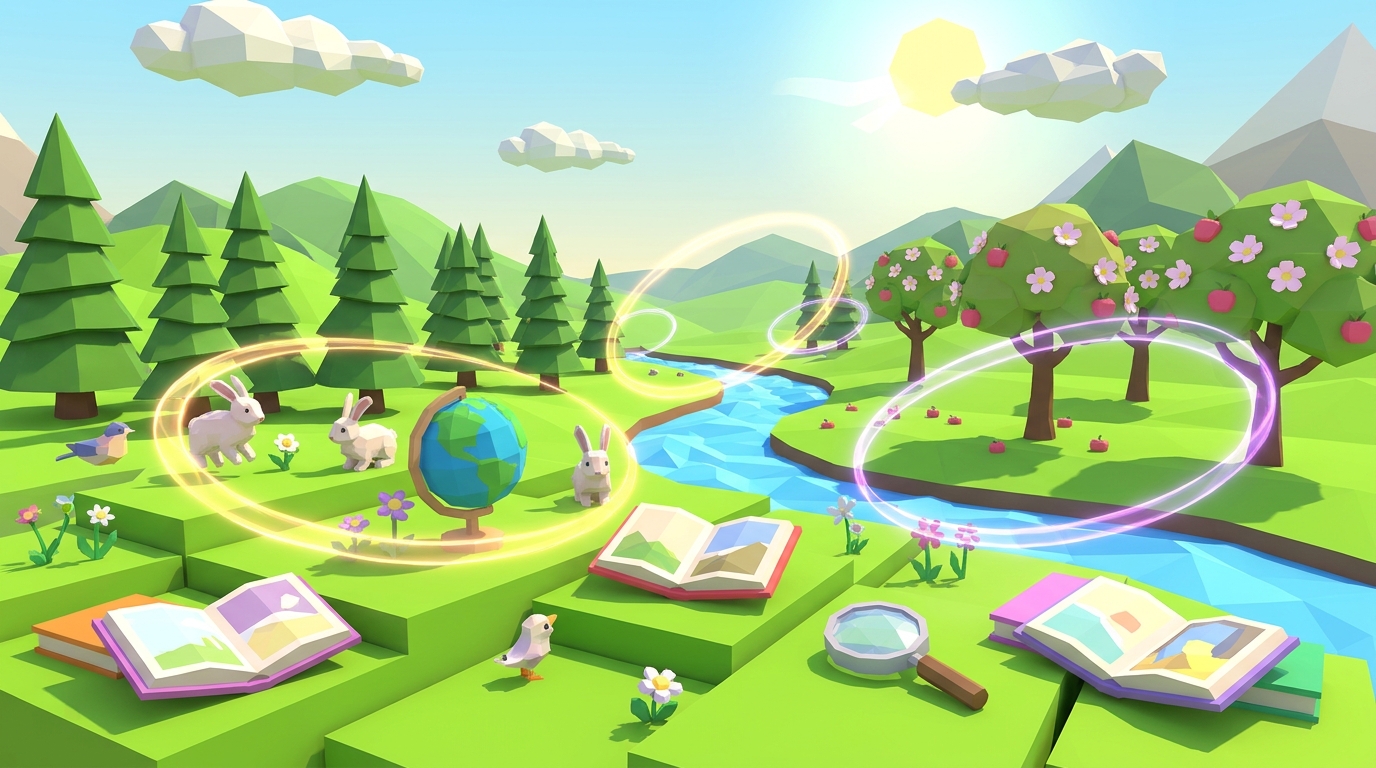
See Cause and Effect in Ecosystem
Explore how plants, water, and animals connect in a simple, visual world. Co-view with your toddler for 5 minutes to spark curiosity about what living things need to survive.
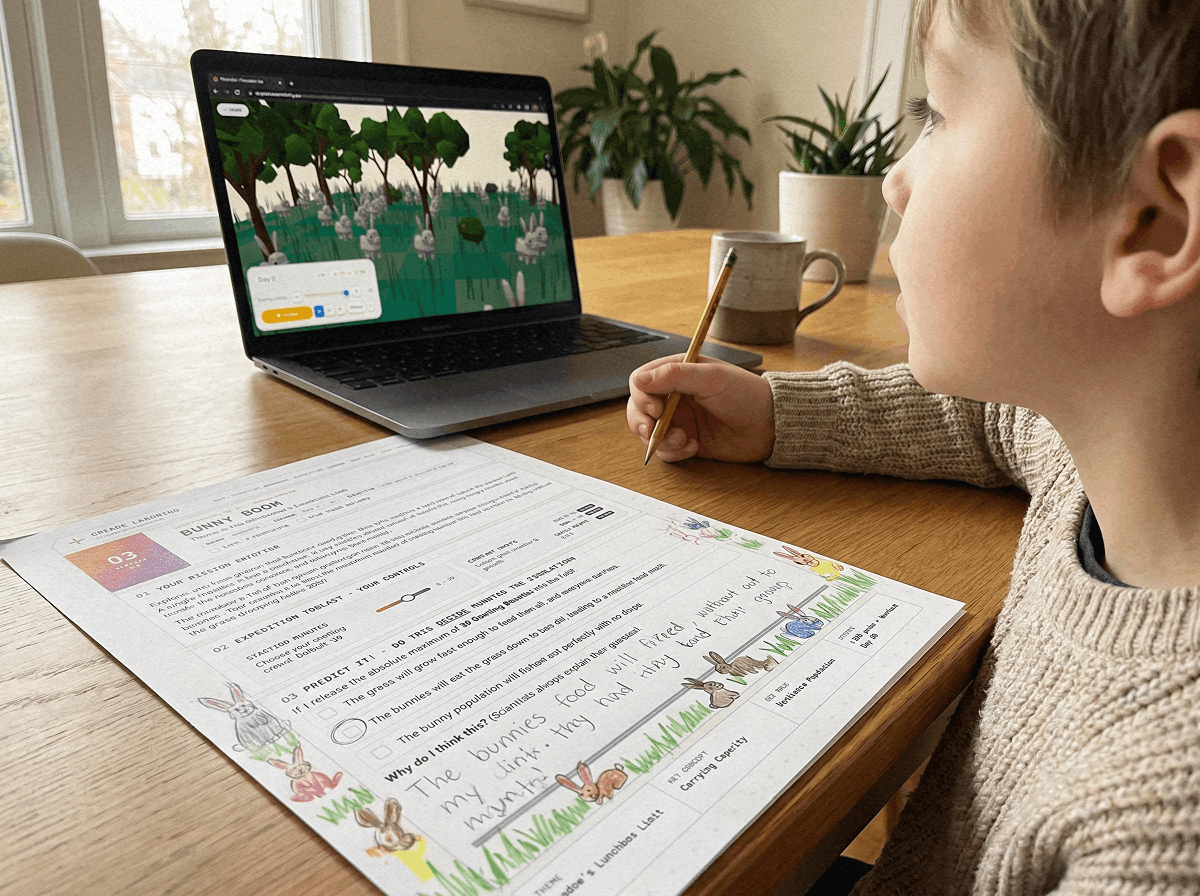
Teaching this topic tomorrow? Download the Free NGSS Student Lab Sheet (Printable PDF)
Download the printable 15-minute daily rhythm cards and backyard habitat checklist to pair with your toddler homeschool curriculum.
A Simple 15-Minute Daily Rhythm That Actually Works
Rigid, hour-by-hour schedules almost always fail with toddlers. Moods shift quickly, naps change, and hunger derails the best lesson plans. Instead of a strict timetable, I recommend a flexible 15-minute learning block anchored to an existing daily habit, such as right after breakfast or right after morning snack. Ten to fifteen minutes of focused, screen-free interaction is plenty for a two-year-old.
Here is a five-day rotation you can repeat every week with fresh materials:
Monday: Sensory & Sorting: Set out two bowls and a handful of large, safe natural objects like pinecones, smooth river stones, and large leaves. Practice sorting by texture (bumpy versus smooth) or size (big versus small).
Tuesday: Water & Volume Physics: Provide two plastic cups, a sponge, and a shallow tray of water. Let your toddler pour, squeeze the sponge, and observe how water moves. Narrate concepts like sink, float, full, and empty.
Wednesday: Backyard Habitat Hunt: Spend ten minutes looking under a log, near a flowerbed, or along a sidewalk crack. Count how many ants, pill bugs, or birds you spot. Talk about where each creature lives and what it might be looking for.
Thursday: Plant Care & Observation: Water a houseplant together, mist the leaves, or check on your bean sprout. Let your toddler touch the soil to feel whether it is dry or damp before watering.
Friday: Story & Movement Recap: Read a picture book about animals or seasons, then act out the movements together: hop like a frog, stretch tall like a tree, or curl up like a sleeping bear.
Introducing Early Systems Thinking with Visual Models
As toddlers approach age three, they begin asking "why" and "what happens if" with increasing frequency. This is the ideal moment to introduce gentle, visual cause-and-effect models. When I designed the Ecosystem simulation, I wanted learners to see that every action in a habitat ripples outward. If you add too many rabbits, the grass disappears. If you remove all the water, the plants cannot survive.
For a toddler, you can sit together and use a guided simulation as a shared picture book rather than a solo screen activity. Let your toddler tap to add a tree or a deer, and then pause to watch what happens together. Ask, "Look, the deer is walking over to the grass. Why did it go there?" Keeping the session to five minutes and treating it as a conversation turns passive screen time into active, co-viewed systems thinking.
You can also mirror this exact concept with physical blocks or animal figurines on the rug. Place three green blocks for grass and two toy deer beside them. Pretend the deer eat the grass, and ask what the deer will do when the green blocks are gone. This tactile storytelling builds the mental model of resource limits and interdependence without a single worksheet.
Common Mistakes to Avoid When Homeschooling Toddlers
The most common mistake I see parents make with a toddler homeschool curriculum is over-scheduling. Buying a 200-page printable binder often leads to frustration when a two-year-old refuses to color inside the lines or tears the paper. At this age, tearing paper is actually a great fine-motor exercise, but it is not the outcome the parent expected. Let go of finished crafts and focus on the process.
Another frequent pitfall is introducing abstract concepts too early. Memorizing the names of all eight planets or reciting the alphabet backward does not mean a toddler understands space or reading. Prioritize concrete experiences they can touch, smell, and manipulate. A toddler who understands that ice melts into water when held in a warm hand has learned far more real science than a toddler who can recite "solid, liquid, gas" from memory.
Finally, avoid comparing your toddler's pace to anyone else's. Development between 18 and 36 months is wildly uneven. One child may speak in full sentences at two while another spends all their energy climbing and balancing. Follow your child's current obsession: whether it is dump trucks, worms, or splashing in puddles: and weave your science vocabulary and sorting games into that interest.
Frequently Asked Questions
How many hours a day should a toddler homeschool curriculum take?
Do I need to buy expensive Montessori or STEM kits?
What age is best to start a toddler homeschool curriculum?
Can toddlers use interactive science simulations?
Toddler STEM Rhythm & Habitat Checklist
Download the printable 15-minute daily rhythm cards and backyard habitat checklist to pair with your toddler homeschool curriculum.