Why Rabbit Simulations Are the Standard for Teaching Natural Selection
In middle school and high school life science curricula, rabbits are the quintessential model organism for teaching Charles Darwins theory of natural selection. Because rabbits reproduce quickly, experience intense predatory pressure, and rely heavily on camouflage, their population numbers illustrate evolutionary mechanisms with remarkable clarity.
For over a decade, science teachers turned to 2D flash-based simulations like PhET to demonstrate these concepts. While pioneering for its time, flat 2D software lacks spatial depth, environmental terrain nuances, and authentic physical predation.
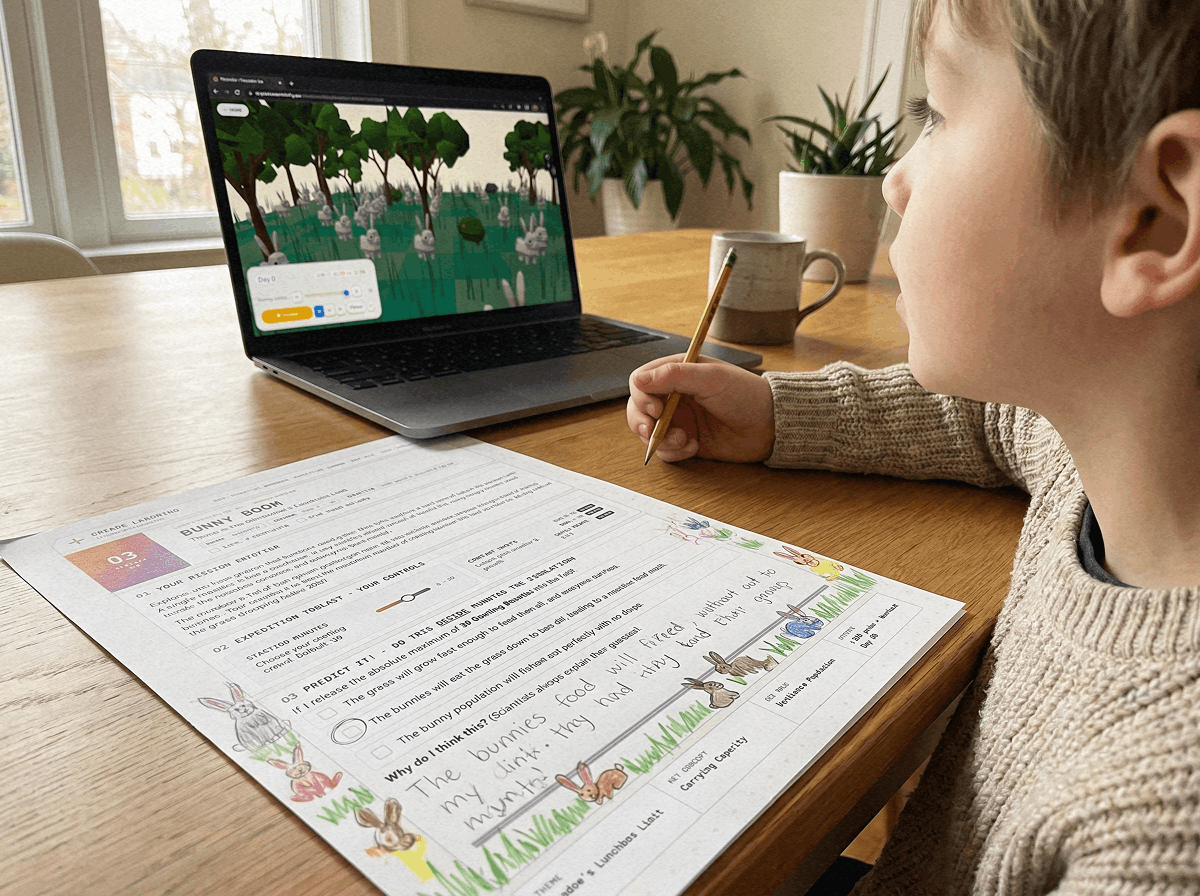
Praxos introduces a fully 3D, browser-based bunny natural selection simulation that runs with zero downloads. To explore related ecosystem tools, read our guide on free ecosystem simulation games.
Variation + Differential Survival (Selective Pressure) + Heredity = Evolutionary Adaptation across generations.
Selective Pressures Modeled in the 3D Meadow
In the Praxos bunny simulation, student investigators can test how three distinct selective pressures alter rabbit gene frequencies over time:
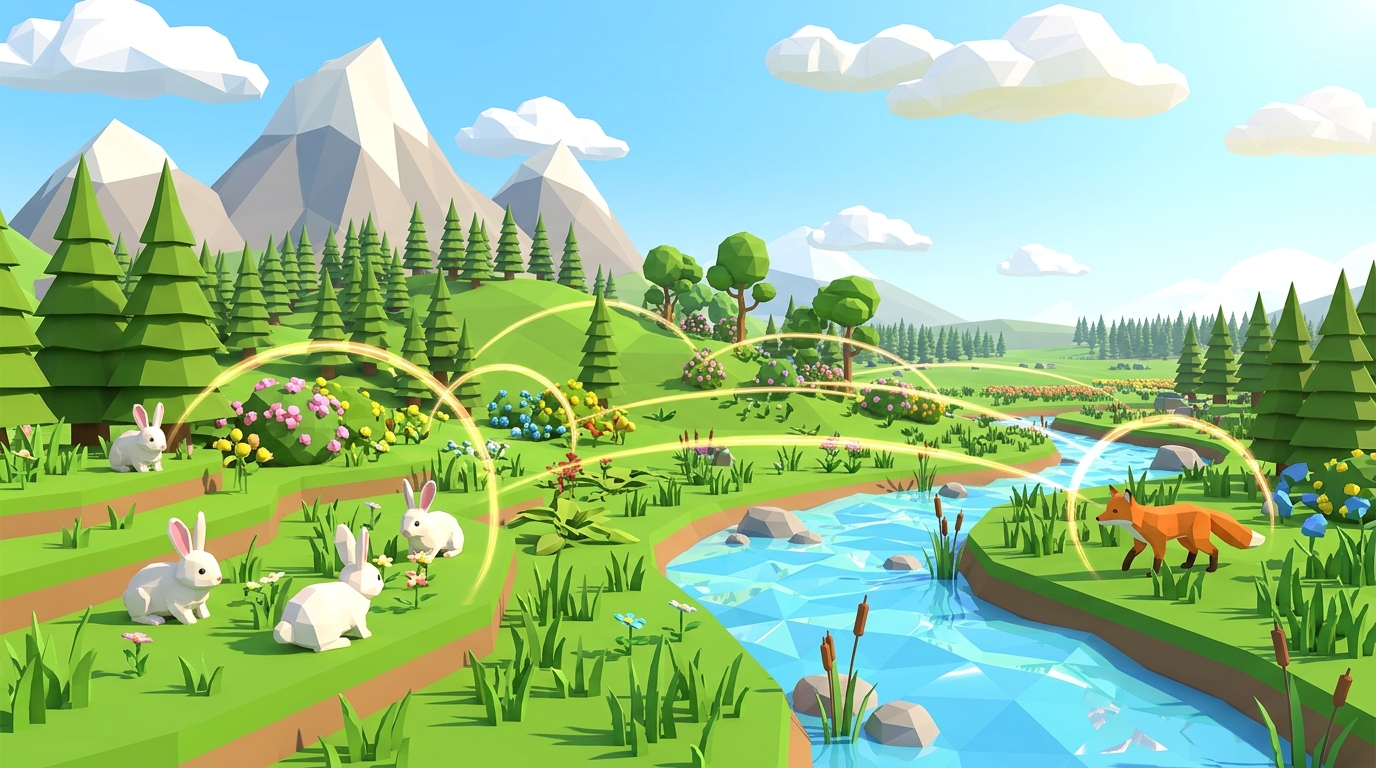
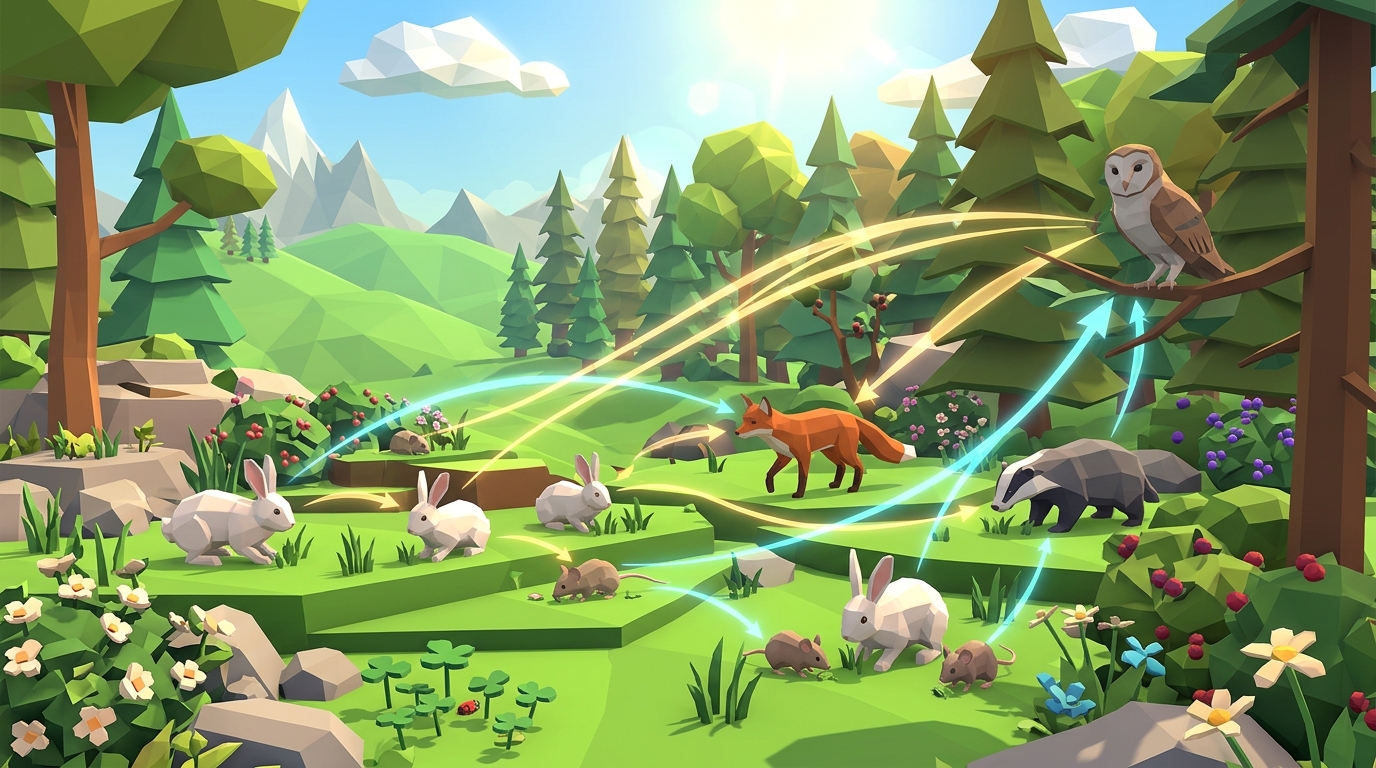
1. Visual Predation and Camouflage: When rabbits forage in stepped green meadows, white-furred rabbits stand out sharply against the grass, making them easy targets for wolves and raptors. Brown and speckled rabbits blend into the terrain, surviving at significantly higher rates.
2. Resource Availability and Food Scarcity: When droughts reduce grass yield, rabbits with higher metabolic demands starve faster than smaller, more energy-efficient individuals.
3. Habitat Corridors and Burrow Shelter: Proximity to protective rock piles and burrow networks allows slower rabbits to evade predators, demonstrating how terrain features buffer selective pressures.
Comparative Trait Analysis: White vs Brown Fur in Seasonal Biomes
Examine how environmental shifts flip the survival advantage between phenotypic traits:
| Rabbit Phenotype | Green Summer Meadow | Snowy Winter Landscape | Arid Desert Scrubland |
|---|---|---|---|
| White Fur Trait | Extremely Low Fitness (High predation) | Extremely High Fitness (Superior camouflage) | Low Fitness (Highly visible on sand) |
| Brown / Agouti Fur Trait | High Fitness (Blends with soil and stems) | Low Fitness (Easily spotted by aerial raptors) | High Fitness (Blends with dry brush and rock) |
| Long Ear Adaptation | High Heat Dissipation (Positive fitness) | Risk of Frostbite (Negative fitness) | Optimal Thermoregulation (Maximum fitness) |
Addressing the Classic Student Misconception about Evolution
When running natural selection labs, science teachers frequently combat Lamarckian misconceptions: students assume individual rabbits decide to change their fur color when predators arrive.
In the Praxos 3D simulation, students observe that individual rabbits NEVER change their coat color during their lifetime. Instead, poorly camouflaged rabbits are eaten before they can reproduce, while camouflaged rabbits survive to pass their alleles to the next generation.
Students see the phenotypic graph shift in real time, cementing the fundamental truth that populations evolve over generations, not individual animals during their lifespans.
Individuals do not adapt; populations adapt. Selection acts on existing genetic diversity.
Run the 3D Bunny Natural Selection Lab for Free
Equip your classroom with an authentic 3D natural selection experiment. Praxos runs natively in any web browser on Chromebooks, PCs, and tablets with zero software installation.
Launch Level 3 and Level 4 right now to begin experimenting. Download our free 24-page companion mission journal to guide student data collection, trait frequency graphing, and CER conclusions.
Adjust predator numbers, monitor coat trait distributions, and track evolutionary adaptations in our free browser simulation.
START NATURAL SELECTION LABFrequently Asked Questions About Bunny Natural Selection Simulations
Common questions asked by biology students and middle school science teachers.
How does this simulation differ from traditional PhET rabbit simulations?
What traits can students manipulate in the simulation?
Is this simulation aligned to NGSS standards?
Can students complete the natural selection lab in one class period?
Free Supporting Science Curriculum and Classroom Tools
Continue your exploration of adaptations and population ecology with these free resources:
Explore classroom game activities in our food chain games for the classroom guide.
Review 3D ecology sandboxes in our ecosystem simulator game online guide.
Discover top educational science tools in our interactive food chain websites guide.
Review the core simulation platform in our free ecosystem simulation game guide.
Set up student rosters and monitor simulation runs via our teacher portal.
Comprehensive student lab sheets, hypothesis logs, and food web diagramming templates designed to accompany the 3D ecosystem simulation.
GET FREE MISSION LOGBOOK (PDF)24-Page Ecosystem Companion Mission Journal (PDF)
Download the free 24-page companion mission journal featuring natural selection data sheets, population oscillation graphs, and CER prompts.