Why Quality Homeschool Science Does Not Need to Cost Hundreds of Dollars
For many homeschool families, finding a comprehensive, secular science curriculum feels like choosing between two frustrating extremes: expensive boxed curricula that cost upwards of $300 (often filled with single-use plastic lab supplies), or disjointed collections of random YouTube videos and black-and-white worksheets that fail to build coherent conceptual mastery.
Science is not a collection of disconnected facts to be memorized for a test; it is an active method of investigating how natural systems function. When students have the opportunity to formulate hypotheses, isolate independent variables, and collect quantitative data, real scientific literacy develops naturally.
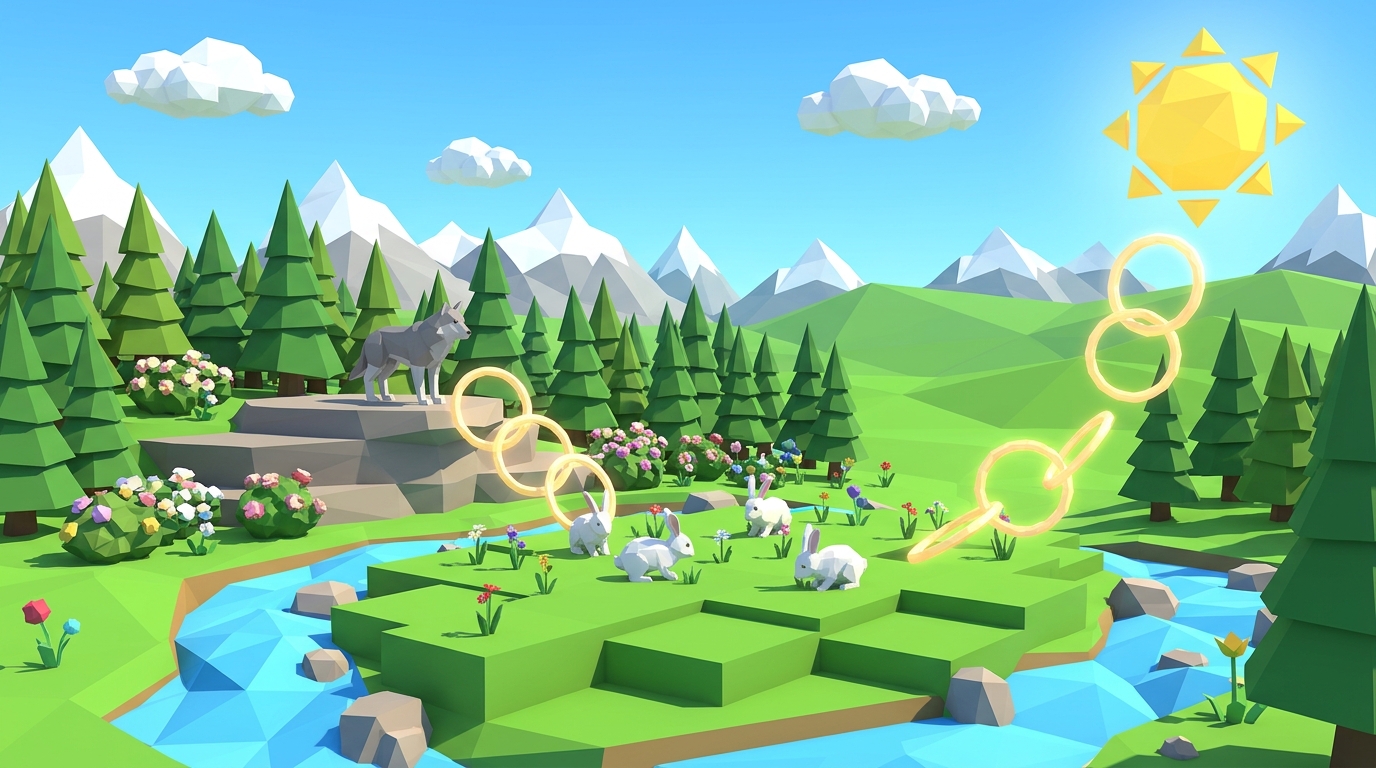
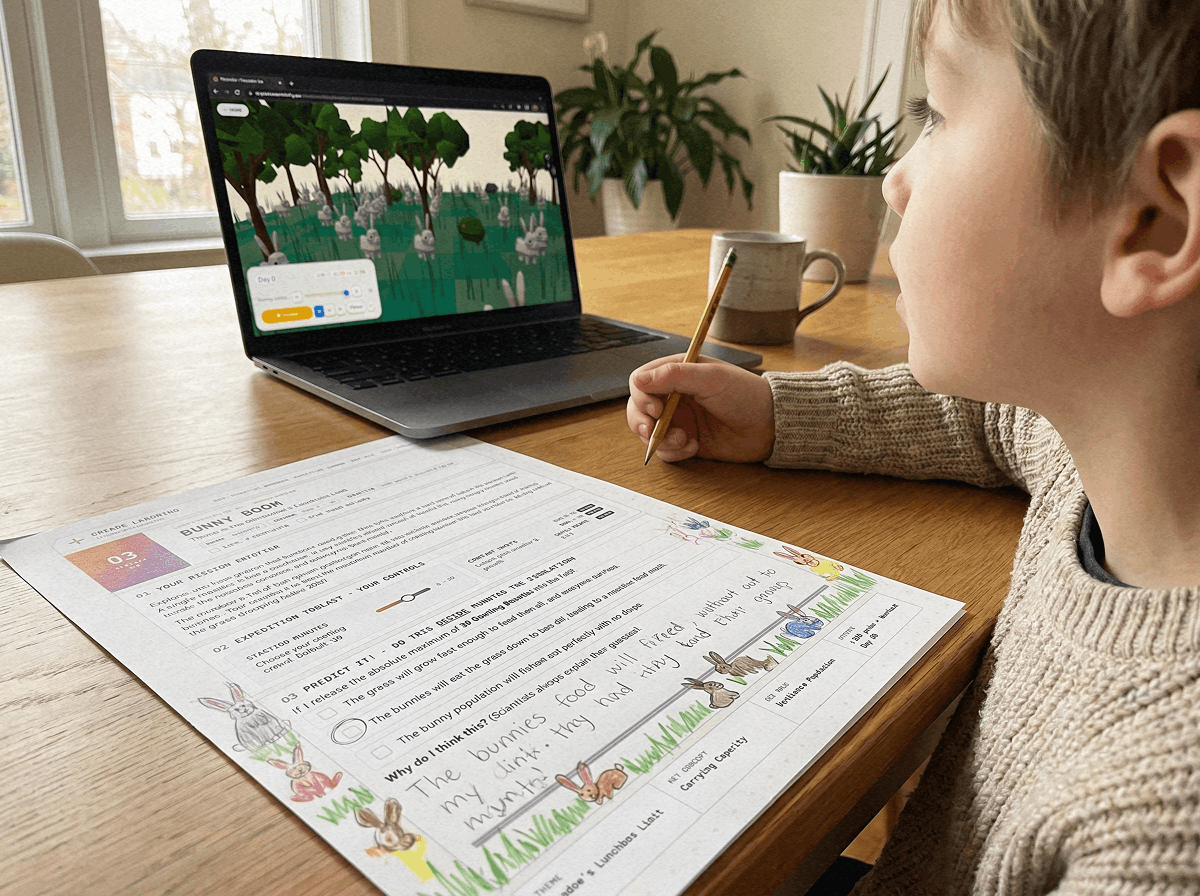
To bridge this gap, I designed a complete 10-week ecology and systems science curriculum for grades 3 through 8. By combining an interactive 3D browser simulation with a tactile 24-page printable lab logbook, students experience authentic inquiry science at zero cost.
All 10 simulation missions and the complete 24-page Expedition Journal are 100% free with email (no credit card or paid subscription required). Level 1 is available as an instant demo in your browser with zero sign-up.
The 10-Week Free Ecology & Systems Curriculum Scope
This 10-week unit is fully aligned to Next Generation Science Standards (NGSS 5-LS1, 5-LS2, MS-LS2-1 through MS-LS2-4) and designed for flexible delivery across one 10-week semester or a 5-week intensive block:
| Week | Core Science Topic | Target NGSS Standard | Simulation Mission | Student Journal Focus |
|---|---|---|---|---|
| Week 01 | Primary Producers & Sunlight Dynamics | 5-LS1-1 / MS-LS1-6 | Level 01: Sun & Rain Balance | Graphing plant biomass output under variable light and rainfall levels. |
| Week 02 | Herbivores & Food Chain Energy Flow | 5-LS2-1 / MS-LS2-3 | Level 02: Prairie Forage | Mapping energy arrows and calculating caloric consumption rates. |
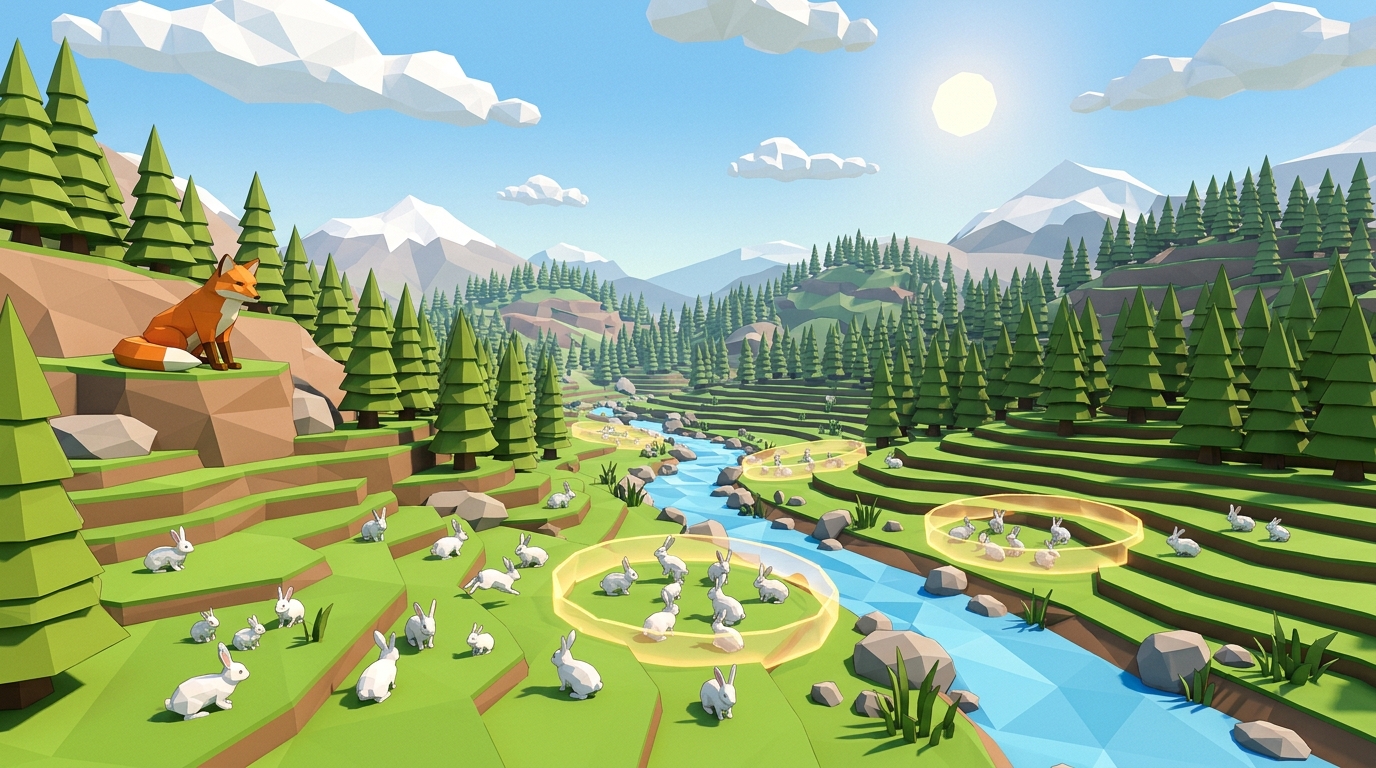
| CORE MILESTONEWeek 03 | Carrying Capacity & The Lunchbox Rule | MS-LS2-1 / MS-LS2-2 | Level 03: Bunny Boom | Plotting logistic S-curves and calculating the (K - N)/K growth fraction. |
| Week 04 | Apex Predators & Trophic Cascades | MS-LS2-2 / MS-LS2-4 | Level 04: The Gray Shadow | Documenting how top carnivores prevent herbivore overgrazing. |
| Week 05 | Plant Competition & Biodiversity | 5-LS2-1 / MS-LS2-5 | Level 05: Forest Canopy | Testing competitive exclusion between fast-growing weeds and deep-rooted trees. |
| Week 06 | Seasonal Drought & Abiotic Stress | 3-ESS2-1 / MS-LS2-1 | Level 06: Arid Survival | Measuring organism resilience during prolonged water scarcity. |
| Week 07 | Keystone Species & River Ecosystems | MS-LS2-4 / MS-LS2-5 | Level 07: River Basin | Analyzing aquatic-terrestrial energy bridges and riparian buffers. |
| Week 08 | Natural Selection & Camouflage Dynamics | MS-LS4-4 / MS-LS4-6 | Level 08: Winter Fur | Tracking allele frequency shifts across seasonal snow biomes. |
| Week 09 | Invasive Species & Biome Disruption | MS-LS2-4 / MS-LS2-5 | Level 09: Meadow Invasion | Modeling how non-native organisms alter native food web stability. |
| Week 10 | Ecological Stewardship & Synthesis | MS-ESS3-3 / MS-LS2-5 | Level 10: Biome Balance | Final student capstone: building a self-sustaining multi-trophic sanctuary. |
How to Structure Your Weekly Homeschool Science Routine
Homeschool parents often ask how much time this curriculum takes per week. A simple 3-day weekly cadence of 20 to 25 minutes per day delivers rigorous inquiry without causing screen fatigue:
Pencil-First Phenomenon & Paper Hypothesis (20 Minutes)
Open the weekly mission in the printable student journal. Read the natural mystery prompt together (e.g. "Why did the meadow grass disappear after the wolves left?"). Have your student write down a clear prediction and sketch expected population trends on paper before touching a screen.
Interactive 3D Simulation Lab Trial (25 Minutes)
Your student launches the corresponding simulation level on any computer, Chromebook, or tablet. They adjust environmental sliders, run three 5-minute experimental trials, and record real-time population counts into their lab data tables at regular intervals.
Coordinate Graphing, CER Synthesis & Reflection (20 Minutes)
Using data collected on Day 2, your student plots a coordinate line graph in their journal. They complete a Claim-Evidence-Reasoning (CER) reflection explaining whether the data supported or refuted their Day 1 hypothesis.
The Power of Dual-Format Inquiry: Screen Experimentation Meets Paper Logging
Pure digital apps often encourage mindless button-mashing, while pure paper workbooks can feel dry and disconnected from dynamic living systems. Praxos combines both formats into a cohesive inquiry loop.
The 3D computational sandbox provides immediate visual feedback, allowing students to test complex scenarios that would take months or years to observe in a physical ecosystem. Meanwhile, the physical printed journal anchors attention, develops fine-motor graphing skills, and builds cognitive ownership through written scientific argumentation.
If you want additional hands-on experiments to pair with this unit, explore our curated guide to 10 homeschool science experiments and review how to teach life science for homeschoolers.
Frequently Asked Questions About Our Free Homeschool Science Curriculum
Here are answers to common questions about implementing this free science unit in your homeschool:
Is Praxos really 100% free?
Does this 10-week unit count as a complete science curriculum?
What age or grade range is this curriculum designed for?
What hardware or lab supplies do I need?
24-Page Student Expedition Science Journal
A free printable 24-page student lab logbook featuring 10 weekly mission logs, hypothesis worksheets, coordinate graphing grids, and Claim-Evidence-Reasoning (CER) writing rubrics.