What Should a Life Science Homeschool Curriculum Cover?
Life science is the cornerstone of K-8 science education. It bridges early childhood nature curiosity with the rigorous causal modeling required for advanced biology in high school.
Under modern science standards (including the Next Generation Science Standards), life science is divided into two distinct developmental bands:
Upper Elementary (Grades 3 to 5): Focuses on organism structures, plant photosynthesis, animal survival behaviors, life cycles, and introductory food webs (NGSS 3-LS1 through 5-LS2). Students learn how living things interact with their abiotic environment.
Middle School (Grades 6 to 8): Deepens into cellular processes, resource competition, mathematical carrying capacity limits, trophic cascades, and genetic variation (NGSS MS-LS1 through MS-LS4). Students model how energy flows and how matter recycles across complex biological networks.
An effective life science curriculum does not merely teach what an animal eats; it teaches how changes in one population ripple across an entire interconnected ecosystem.
Traditional Textbooks vs Hands-On Dual-Format Life Science
When choosing a life science curriculum, homeschool parents typically weigh traditional book-based curricula against interactive inquiry programs.
The table below highlights how the two formats compare across key learning dimensions:
| Dimension | Traditional Textbook Curriculum | Dual-Format Inquiry (Praxos) | Educational Impact |
|---|---|---|---|
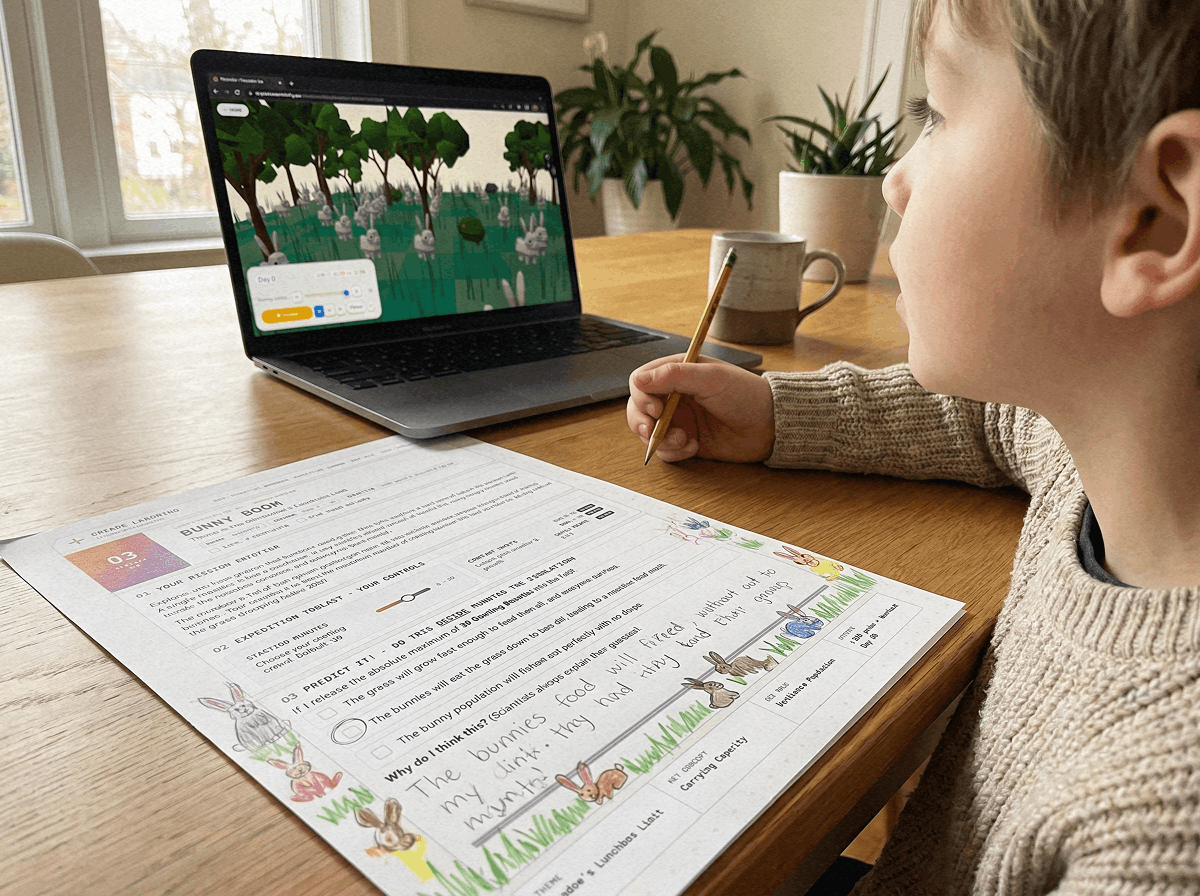
| Student Activity | Read 10 to 15 pages per week, answer end-of-chapter review questions. | Formulate written hypotheses, run live 3D simulation trials, log data. | Active investigation builds 3x higher concept retention than passive reading. |
| Lab Component | Static demonstrations or expensive kits requiring extensive parent setup. | Zero-prep browser simulations with multi-variable controls. | Eliminates supply costs and messy kitchen cleanup. |
| Systems Thinking | Linear diagrams with static labels and multiple-choice quizzes. | Dynamic feedback loops showing population crashes and recoveries live. | Fosters causal reasoning and 21st-century problem solving. |
| FAMILY FAVORITEMulti-Age Adaptability | Separate grade-specific books required for each child. | One shared simulation with differentiated student journal missions. | Allows siblings in grades 3 through 8 to study science together. |
10-Week Life Science Curriculum Pacing Matrix
Here is a structured 10-week life science scope mapping core biological topics to hands-on digital missions and student journal investigations:
Primary Producers and Biomass Flow (NGSS 5-LS1)
Investigate how solar radiation and rainfall nourish vegetation. Measure plant biomass accumulation in Journal Mission Log 1.
Herbivore Foraging and Energy Transfer (NGSS 5-LS2)
Introduce primary consumers. Calculate feeding rates and track calorie consumption in Journal Mission Log 2.
Population Growth and Carrying Capacity (NGSS MS-LS2-1)
Simulate exponential reproduction and resource depletion. Graph logistic population curves in Mission Log 3.
Predator-Prey Dynamics and Food Web Arrows (NGSS MS-LS2-2)
Introduce secondary consumers. Map directional energy transfer using our guide on food web arrows explained.
Dynamic Equilibrium and Feedback Loops (NGSS MS-LS2-4)
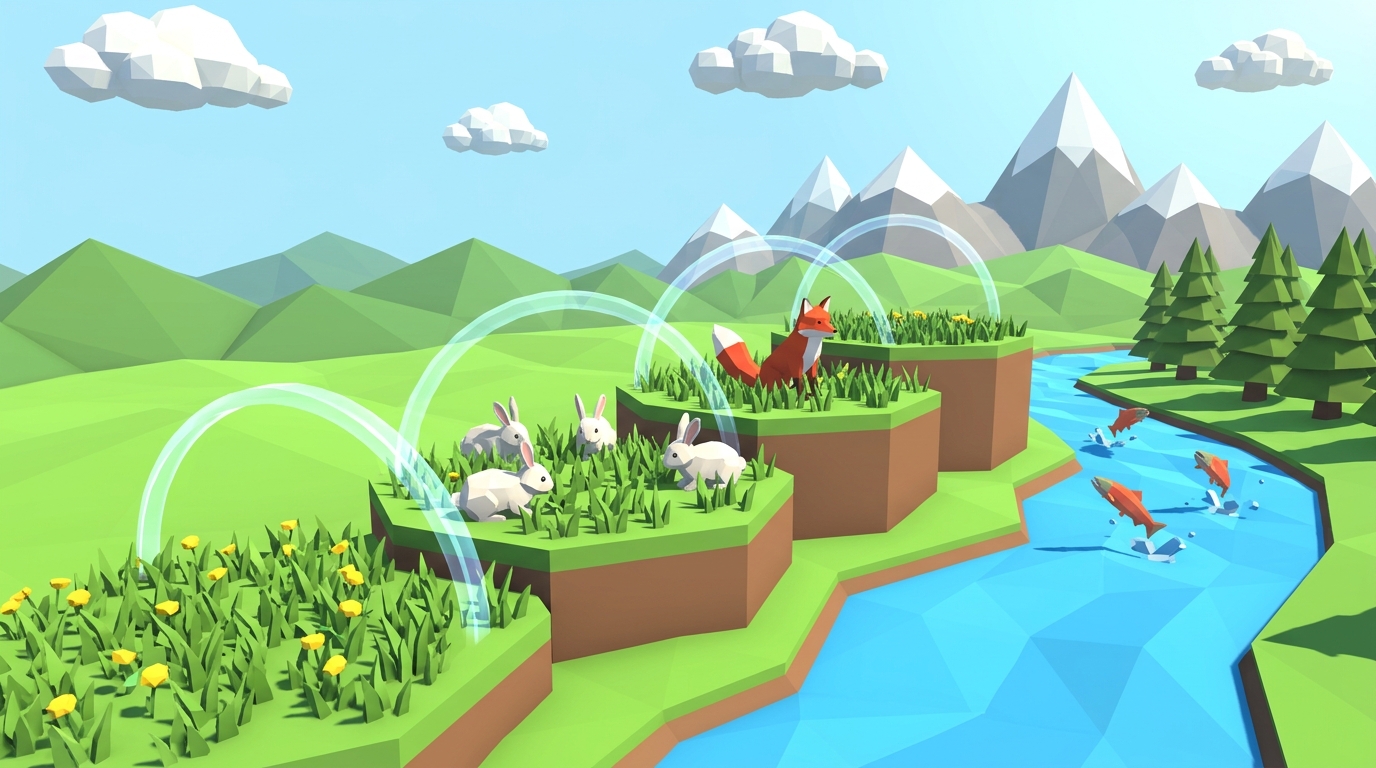
Balance wolf hunting efficiency against rabbit hiding cover. Master stabilizing feedback in Mission Log 5.
Abiotic Climate Stress and Drought Thresholds (NGSS MS-LS2-5)
Simulate extreme heat waves and measure ecosystem recovery resilience.
Resource Surges and Delayed Oscillations
Analyze what happens when nutrient inflows spike, observing multi-generational wave patterns.
Invasive Species and Niche Competition (NGSS MS-LS2-2)
Introduce a non-native competitor and track competitive exclusion dynamics.
Multi-Trophic Biodiversity (NGSS MS-LS2-5)
Construct complex interlocking webs with foxes, birds, deer, and decomposers.
Capstone: Biosphere Stewardship Challenge
Design and sustain a custom 100-day balanced habitat. Complete final student field certification.
Download the complete student companion journal covering all 10 life science missions. Includes prediction logs, data graphing sheets, and rubrics.
Download Free Journal (PDF)Frequently Asked Questions About Life Science for Homeschoolers
Here are answers to common questions parents ask when planning life science coursework:
At what grade should students study life science?
Life science is traditionally taught in 3rd or 4th grade in elementary school, and again in 7th grade in middle school with deeper cellular and ecological emphasis.
How does life science connect to other science branches?
Life science connects to earth science through ecosystems and climate, and to physical science through photosynthesis and energy conservation. Explore our guides for 5th grade science curriculum and 3rd grade science curriculum.
10-Week Life Science Pacing Matrix & Lab Journal
A 24-page printable student lab logbook mapped to NGSS life science standards with data collection tables and prediction rubrics.