Why the Best Science Experiments Do Not Require Fancy Equipment
There is a widespread misconception that for science experiments to be rigorous, they must involve bubbling beakers, specialized glassware, or expensive mail-order subscription boxes. In reality, the heart of the scientific method is not the equipment; it is the inquiry process.
Authentic science requires students to ask a testable question, formulate a falsifiable hypothesis, systematically isolate variables, record objective data, and defend their conclusions with evidence. Whether using household kitchen staples or an interactive 3D computational science model, students learn that real science is a way of thinking.
Below are 10 engaging, zero-stress science experiments that illustrate fundamental principles across biology, ecology, earth science, and physics for grades 3 through 8.
In any authentic science investigation, change only ONE variable at a time while keeping all other conditions identical. This ensures that observed outcomes can be directly attributed to the manipulated factor.
10 High-Engagement Homeschool Science Experiments for Grades 3-8
These 10 experiments are organized to balance digital sandboxes with tactile physical investigations:
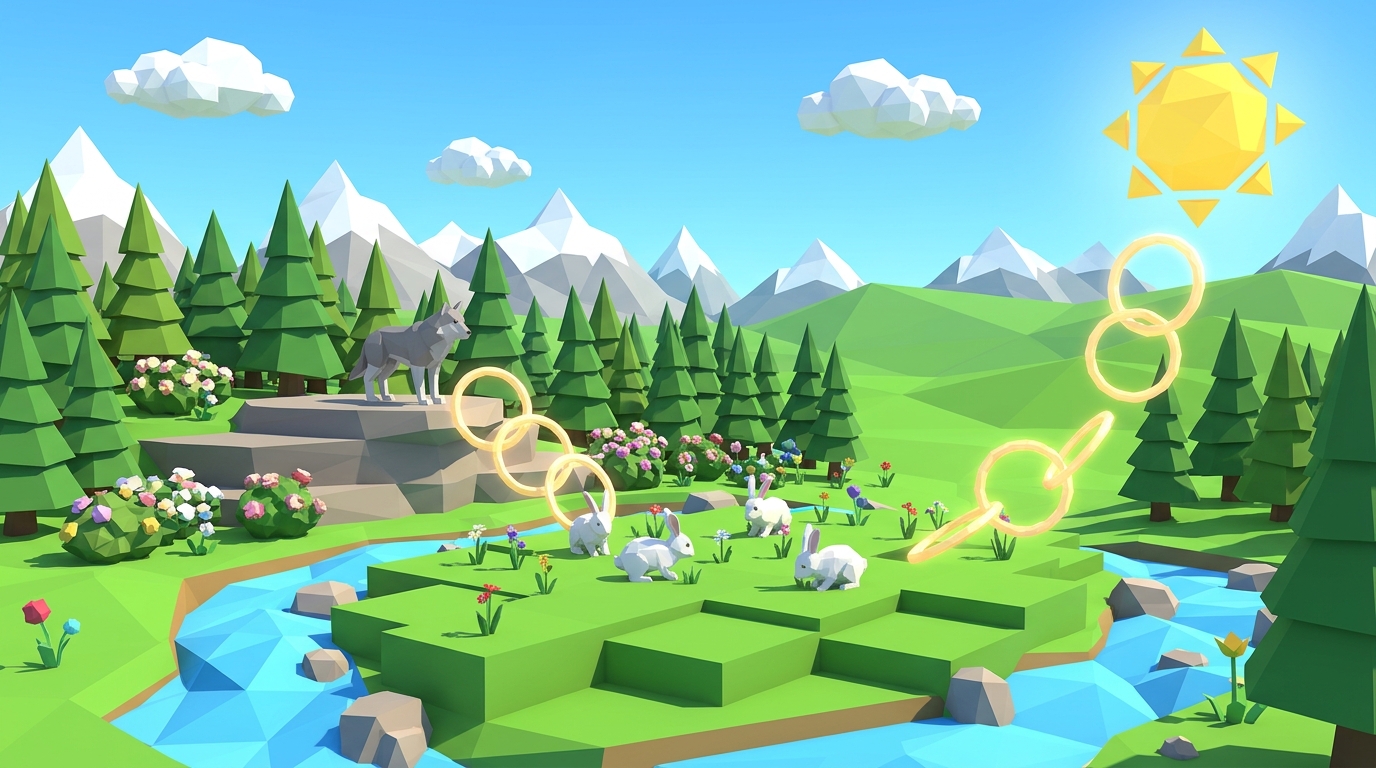
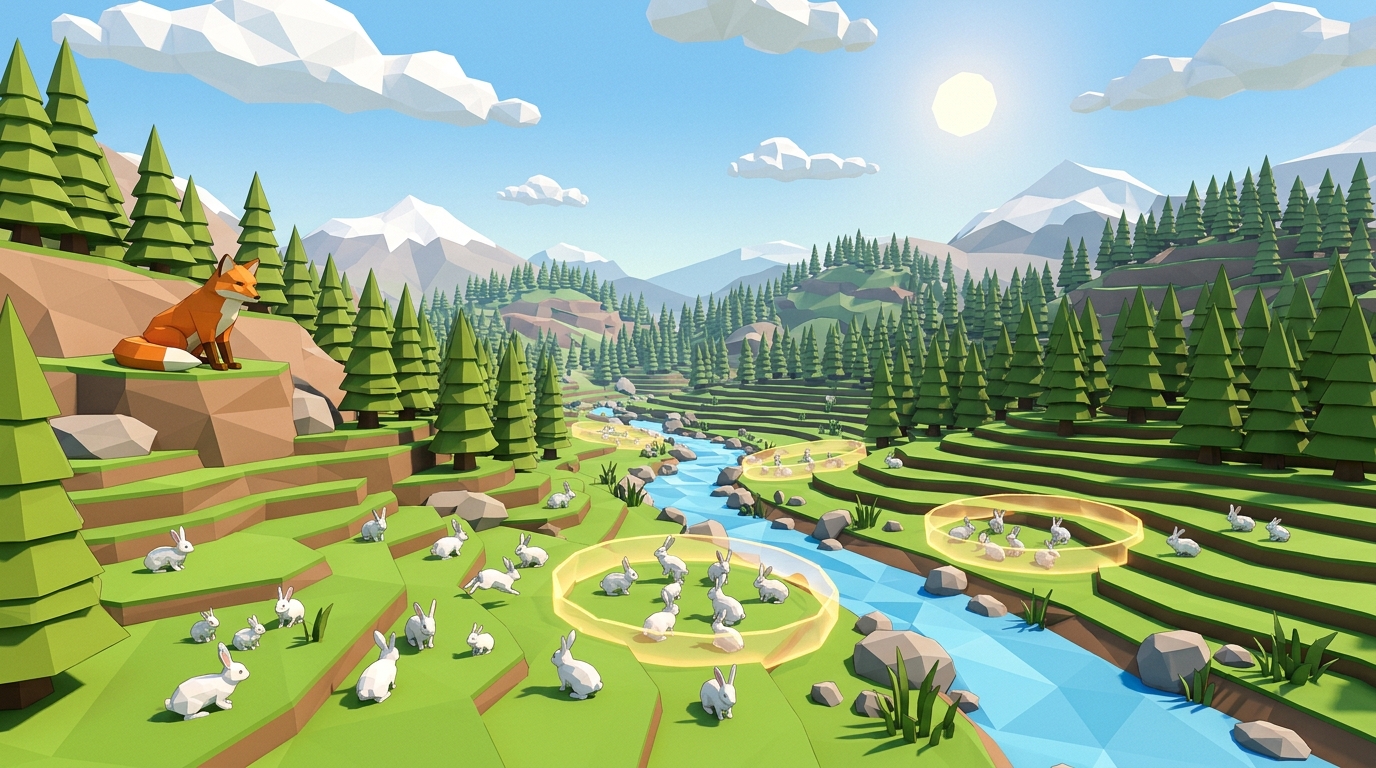
3D Ecosystem Trophic Cascade Lab (Digital Experiment)
Ecology & Population Dynamics (Grades 3-8)
Students use the free Praxos 3D simulation to test how removing apex predators causes herbivore population spikes and total plant biomass collapse. Zero setup time and zero cleanup.
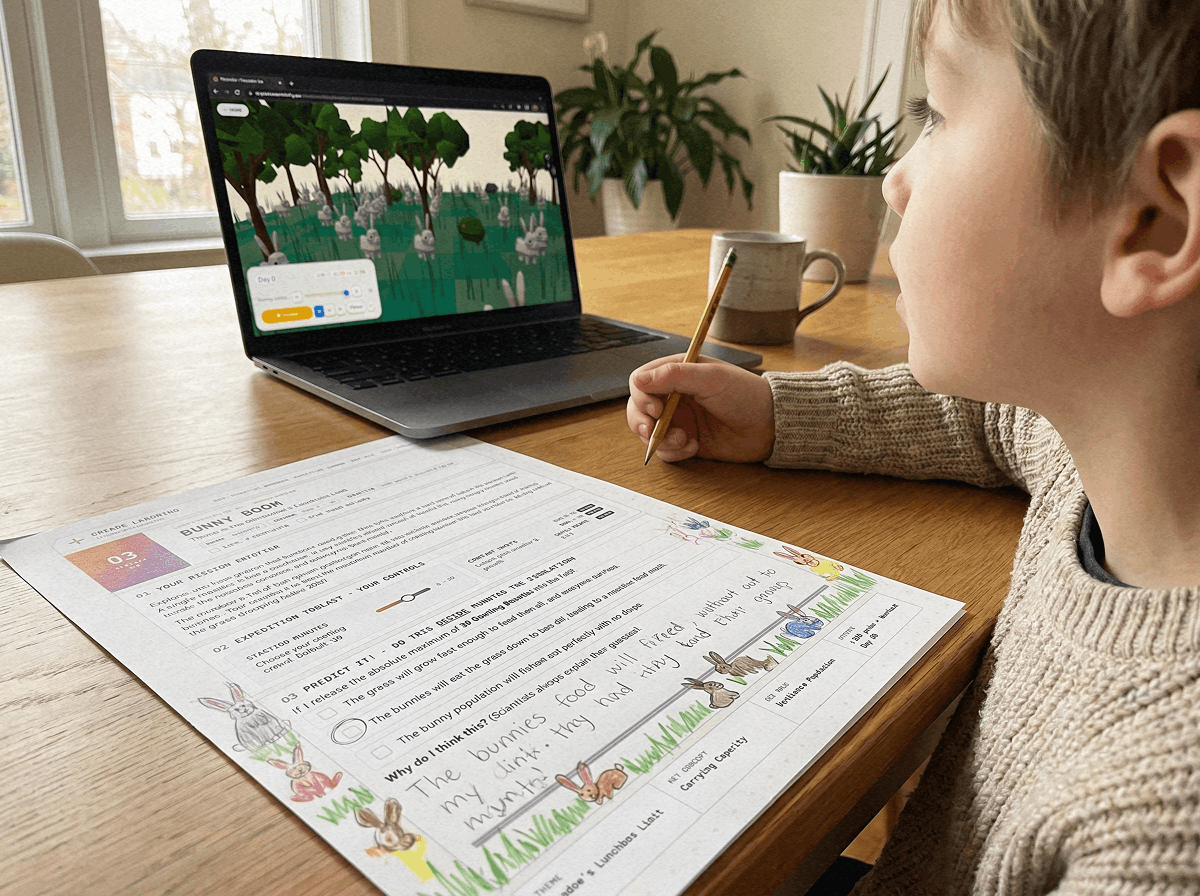
The Lunchbox Bean Trial (Carrying Capacity Experiment)
Mathematics & Environmental Limits (Grades 4-8)
Students use egg cartons as limited habitats and dried beans as animal populations. By introducing finite food tokens each round, students calculate density-dependent carrying capacity limits and model population crashes.
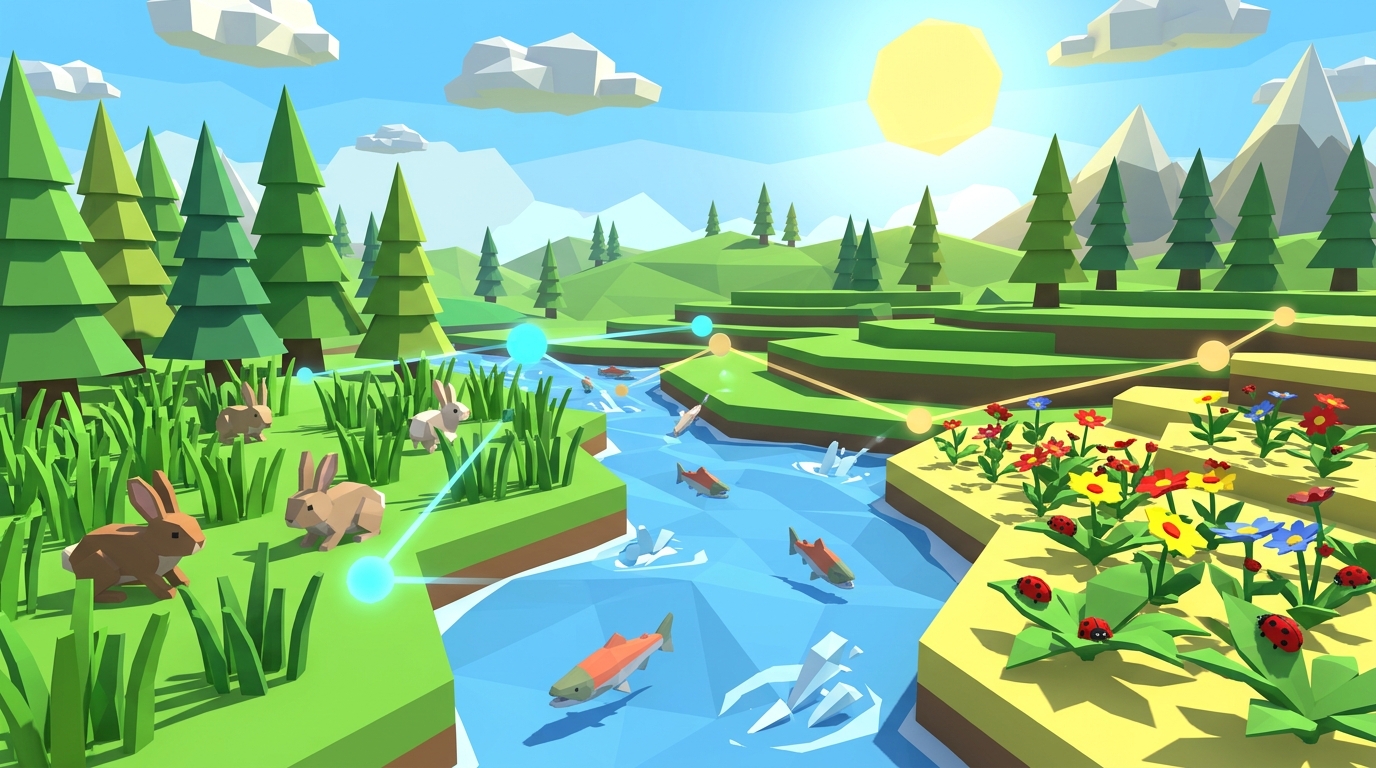
Food Chain Energy Yarn Web (Ecosystem Interconnectedness)
Trophic Systems & Food Webs (Grades 2-6)
Family members hold cards representing sun, plants, herbivores, and predators while tossing yarn to map energy flow. Dropping one strand demonstrates how single species losses reverberate through entire food webs.
Four-Layer Liquid Density Column (Physical Science)
Matter Properties & Density (Grades 3-7)
In a clear glass jar, students gently layer honey, colored dish soap, water, and vegetable oil, observing how liquids settle by molecular density. Dropping grapes and plastic caps tests solid buoyancy.
Clear Cup Seed Geotaxis & Root Window (Botany)
Plant Physiology & Tropisms (Grades 2-6)
Students plant bean seeds along the inside edge of a clear cup filled with moist paper towels. Rotating the cup sideways tests gravitropism as roots bend downward and shoots grow upward toward sunlight.
Prism Solar Spectrum Refraction (Optics & Physics)
Light Waves & Electromagnetic Spectrum (Grades 3-8)
Using direct sunlight through a window, students pass light through a triangular prism onto white paper, measuring how different light wavelengths bend at varying refractive angles.
Sealed 2-Liter Bottle Mesocosm (Earth & Life Science)
Biogeochemical Cycles & Closed Systems (Grades 4-8)
Students construct an airtight mini-terrarium, watering it once and sealing the cap permanently. Over weeks, they observe self-sustaining water evaporation, condensation, and carbon-oxygen cycling.
Backyard Leaf Stomata Oxygen Bubble Test (Photosynthesis)
Cellular Biology & Gas Exchange (Grades 3-8)
Submerging fresh green leaves in a clear bowl of lukewarm water under direct sunlight. After 30 minutes, tiny oxygen bubbles form on leaf surfaces, visually proving active photosynthesis.
Yeast Sugar Fermentation Balloon Bottle (Microbiology)
Cellular Respiration & Gas Expansion (Grades 4-8)
Students mix yeast and sugar in a small plastic bottle and stretch a balloon over the neck. As yeast cells metabolize glucose, carbon dioxide inflates the balloon, demonstrating cellular respiration rates.
Cardboard Ramp Friction & Velocity Track (Mechanics)
Forces, Friction & Potential Energy (Grades 3-7)
Students test rolling vehicle distances across sandpaper, foil, carpet, and wood, measuring how different surface friction coefficients convert kinetic energy into thermal resistance.
Quick Comparison of All 10 Homeschool Science Experiments
Here is a convenient overview comparing prep time, subject area, and key scientific takeaways across all 10 experiments:
| Experiment Name | Science Domain | Prep Time | Materials Needed | Key Concept Taught |
|---|---|---|---|---|
| ZERO MESS3D Ecosystem Cascade Lab | Life Science / Ecology | 0 Minutes (Instant) | Web browser / Chromebook | Trophic cascades, predator-prey balance, and carrying capacity. |
| Lunchbox Bean Trial | Ecology / Math | 5 Minutes | Egg cartons and dried beans | Density-dependent limiting factors and population thresholds. |
| Food Chain Yarn Web | Life Science | 5 Minutes | Yarn and index cards | Food web interconnectedness and ecosystem resilience. |
| Liquid Density Column | Physical Science | 10 Minutes | Honey, dish soap, oil, water | Liquid density gradients and solid mass-to-volume buoyancy. |
| Seed Geotaxis Cup | Botany / Biology | 5 Minutes | Clear cup, seeds, wet towel | Gravitropism, phototropism, and root growth mechanisms. |
| Solar Prism Refraction | Physics / Optics | 2 Minutes | Prism and sunlight | Light refraction, wavelengths, and visible color spectra. |
| Sealed Bottle Mesocosm | Earth Systems | 15 Minutes | 2-liter bottle, soil, seeds | Closed-system water cycles and photosynthetic gas exchange. |
| Leaf Stomata Bubble Test | Plant Biology | 5 Minutes | Fresh leaf, glass bowl, sun | Photosynthetic oxygen production and stomata gas exchange. |
| Yeast Fermentation Balloon | Microbiology | 10 Minutes | Yeast, sugar, bottle, balloon | Anaerobic cellular respiration and CO2 gas volume generation. |
| Ramp Friction Track | Physics / Forces | 10 Minutes | Cardboard ramp, car, textures | Frictional resistance, potential energy, and acceleration. |
How to Turn Simple Experiments into Rigorous Scientific Inquiries
To ensure experiments build deep STEM thinking rather than acting as one-off novelties, follow the Claim-Evidence-Reasoning (CER) framework:
1. Make a Claim: Have your student answer the investigative question in a single concise sentence (e.g. "Increasing surface friction reduces toy car travel distance").
2. Provide Evidence: Require your student to cite exact quantitative measurements from their data log (e.g. "On smooth foil the car rolled 145 cm, whereas on rough sandpaper it rolled only 38 cm").
3. Explain the Reasoning: Guide your student to explain the scientific mechanism linking their data to their claim (e.g. "Microscopic ridges on sandpaper create higher friction forces, converting kinetic energy into thermal energy and slowing the vehicle").
Explore our complete free homeschool science curriculum guide to download printable CER logbooks and structured unit schedules.
Frequently Asked Questions About Homeschool Science Experiments
Here are answers to common questions homeschool parents ask about running science investigations at home:
How often should we conduct science experiments in our homeschool?
What if an experiment fails or gives unexpected results?
Are virtual simulations as effective as physical experiments?
How does Praxos help with homeschool science experiments?
Student Experiment Data Sheets & Graphing Templates
A free printable 24-page student lab logbook with coordinate graphing grids, hypothesis frames, and variable tracking tables designed for grades 3 through 8.