The Energetic Bridge: Why Primary Consumers Define Grassland Health
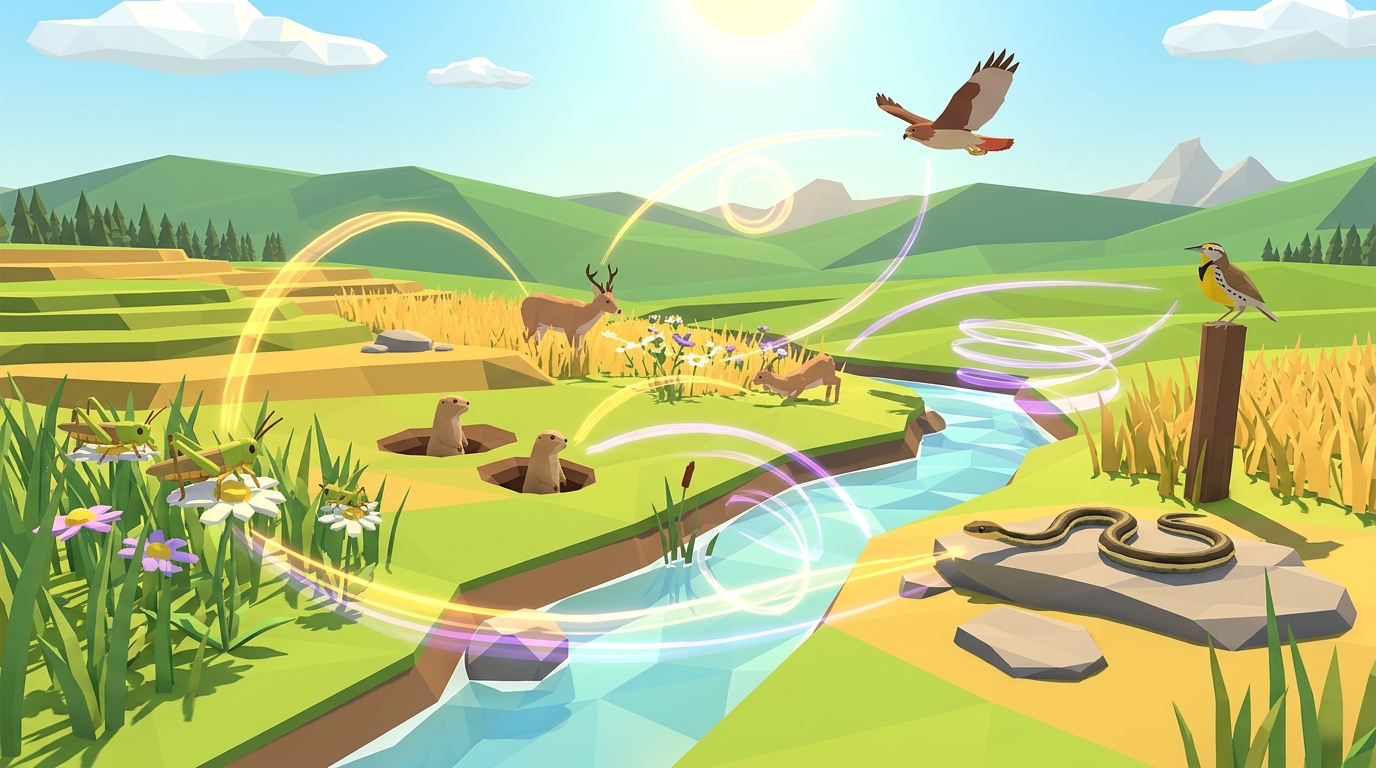
In any terrestrial ecosystem, energy begins with the sun. However, carnivorous predators like red-tailed hawks, coyotes, and plains garter snakes cannot digest fibrous grass roots or assimilate raw sunlight. They depend entirely on primary consumers to transform solar energy stored in plant tissues into bioavailable animal proteins, lipids, and glycogen.
Occupying Trophic Level 2, primary consumers in temperate grasslands serve as the living converters of the Great Plains. By consuming native vegetation, these herbivores prevent grasslands from accumulating excessive thatch, stimulate root aeration, and sustain all predatory tiers. For a broader perspective on grassland systems, see our foundational guide to the prairie food chain.
The Three Functional Groups of Primary Consumers in Temperate Grasslands
Ecologists classify grassland herbivores into three main functional categories based on physical size, foraging strategy, and metabolic requirements:
1. Insect Defoliators and Herbivorous Arthropods: Differential grasshoppers, spur-throated grasshoppers, prairie cicadas, and field crickets. While small individually, insects collectively consume enormous amounts of prairie biomass during warm summer months, providing the primary protein source for grassland songbirds and reptiles.
2. Keystone Burrowing Rodents: Black-tailed prairie dogs, plains pocket gophers, thirteen-lined ground squirrels, and white-footed mice. These small mammals clip grasses, consume nutrient-rich seeds, and construct vast subterranean burrows that shelter other wildlife. To examine their specific food web dynamics, read our deep dive on the prairie dog food web.
3. Large Ungulate Grazers: American bison (Bison bison) and pronghorn antelope (Antilocapra americana). These migratory herbivores consume massive volumes of native bunchgrasses, distributing essential nitrogen and organic fertilizer across hundreds of square miles through their dung.
Key Primary Consumers of North American Temperate Grasslands
The following table compares the diverse herbivores of the North American prairie, highlighting their dietary specializations, digestive mechanisms, and ecological functions:
| Organism | Size & Class | Primary Food Sources | Digestive Adaptation | Ecological Impact |
|---|---|---|---|---|
| Differential Grasshopper | Invertebrate Insect | Grass blades, prairie forbs, leaves | Chewing mandibles with crop storage | Transfers plant energy to songbirds and snakes |
| Black-Tailed Prairie Dog | Small Rodent Mammal | Stems, seeds, subterranean roots | High-efficiency cecal fermentation | Aerates soil and creates essential habitat burrows |
| American Bison | Mega-Herbivore Ungulate | Big bluestem, switchgrass, sedges | Four-chambered ruminant stomach | Prevents woody brush encroachment through heavy grazing |
| Pronghorn Antelope | Medium Ungulate Mammal | Sagebrush, prairie clover, native forbs | Ruminant digestion specialized for shrubs | Selective browser promoting plant species diversity |
| Plains Pocket Gopher | Fossorial Rodent | Tubers, bulbs, taproots | Continuously growing incisors | Tunnels loosen dense clay soil and improve rainwater infiltration |
Digestive Adaptations: How Grassland Herbivores Break Down Tough Prairie Cellulose
Native prairie grasses like big bluestem and buffalo grass are fortified with microscopic silica deposits (phytoliths) and tough cellulose fibers designed to deter plant-eating animals. To survive on this abrasive diet, primary consumers evolved remarkable physiological adaptations:
Ruminant Digestion in Ungulates: Bison and pronghorn possess four-chambered stomachs. Symbiotic bacteria and ciliate protozoa in the rumen ferment tough fibrous plant material through cellulase enzymes, allowing these animals to extract amino acids and sugars from coarse prairie forage.
Continuous Tooth Growth in Rodents: Prairie dogs and pocket gophers possess open-rooted incisors that grow continuously throughout their lives. Constant chewing on abrasive grass stems and mineral-rich roots prevents their teeth from overgrowing while grinding food into fine, digestible pulp.
Specialized Mandibles in Insects: Prairie grasshoppers have serrated chitinous mouthparts that slice cleanly through thick grass blades, minimizing the energy required to chew tough leaf veins.
No vertebrate animal produces the cellulase enzymes needed to digest cellulose on its own; all grassland mammals rely on symbiotic gut microbes to convert grass into usable energy.
Carrying Capacity and Density-Dependent Feedbacks in Prairie Grazers
In ecological modeling, carrying capacity (represented by K) is the maximum population size that an environment can sustain without permanently degrading available resources. For primary consumers, carrying capacity is dictated by abiotic factors like sunlight and rainfall, which govern plant growth.
When seasonal rainfall is abundant, primary producer biomass surges, allowing herbivore populations to expand rapidly. However, if herbivore numbers exceed carrying capacity, overgrazing strips the vegetation down to bare dirt. Without vegetative root systems anchoring the soil, moisture evaporates rapidly, leading to carrying capacity crashes.
In healthy prairie ecosystems, predatory carnivores regulate herbivore numbers, preventing populations from depleting the grass supply. To see how apex raptors fit into this balance, review our analysis of red-tailed hawk trophic levels.
Investigating Herbivore Population Balances in the Praxos 3D Simulation
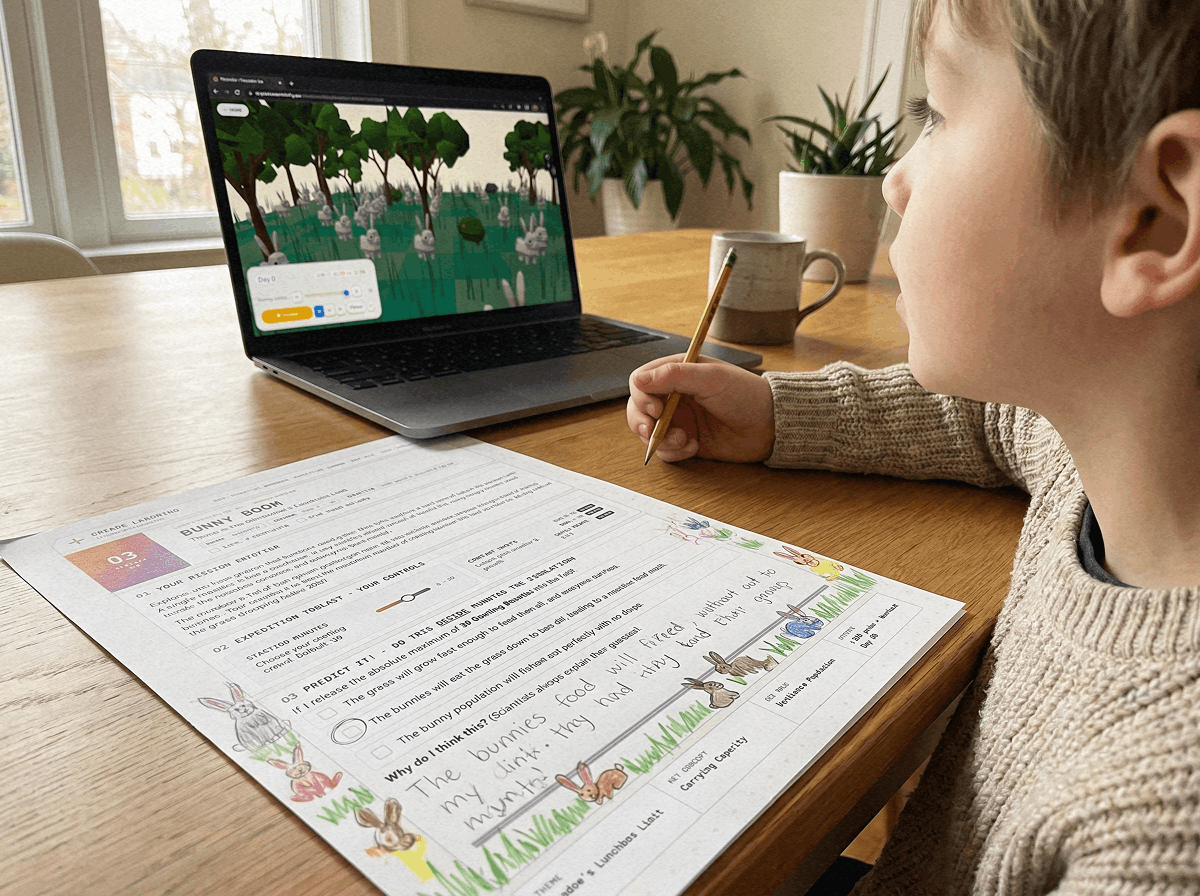
Rather than treating trophic interactions as static book diagrams, students can test carrying capacity firsthand in the Praxos 3D Ecosystem Simulation.
In Levels 1 and 2, students control primary producer growth by fine-tuning sunlight and moisture parameters, then introduce primary consumers to observe their consumption rates. If students introduce too many herbivores too quickly, the grass disappears, and starvation triggers a rapid population drop.
You can run Level 1 and Level 2 right now in any modern browser without an account. Download the companion 24-page mission journal to give your students structured data tables, population graphs, and observation prompts.
Experiment with grass growth rates, herbivore consumption, and population equilibrium in our free 3D browser simulation.
START 3D HERBIVORE LABFrequently Asked Questions About Grassland Primary Consumers
Frequently asked questions from students and science teachers regarding prairie herbivores and trophic energy flows.
What are the main primary consumers in a temperate grassland?
What do primary consumers in the grasslands eat?
Why are primary consumers critical to a grassland food web?
What trophic level do primary consumers occupy?
How do grassland herbivores prevent woody trees from taking over?
Free Grassland Science Curriculum and Classroom Tools
Continue your classroom exploration of grassland ecology with these free interactive resources:
Examine the full Great Plains ecosystem in our comprehensive prairie food chain guide.
Explore keystone rodent colonies in our dedicated prairie dog food web guide.
Download printable diagrams and complete lesson sequences in our prairie food web diagram classroom guide.
Learn how energy dissipates through higher trophic tiers in our red-tailed hawk trophic level explainer.
Set up student rosters and monitor simulation runs via our teacher portal.
Printable student lab sheets, carrying capacity observation charts, and scientific synthesis logs for all 10 simulation levels.
GET FREE MISSION LOGBOOK (PDF)24-Page Ecosystem Companion Mission Journal (PDF)
Download the complete 24-page printable companion logbook with structured data logs, carrying capacity graphs, and food web mission sheets.