The Keystone Role of Prairie Dogs in North American Grasslands
In ecological science, a keystone species is an organism that exerts a disproportionately large influence on its natural environment relative to its numerical abundance. On the temperate grasslands and shortgrass prairies of North America, the black-tailed prairie dog (Cynomys ludovicianus) occupies this foundational position.
Rather than being a simple pest, prairie dogs perform irreplaceable ecological labor. Their extensive subterranean colonies, known as prairie dog towns, function as ecological crossroads. By consuming tough native grasses, clipping back encroaching woody vegetation, and excavating labyrinthine tunnel networks, these burrowing rodents transform flat grasslands into dynamic biological hotspots. To explore the broader biome context, review our comprehensive guide to the prairie food chain.
Anatomy of the Prairie Dog Food Chain: From Native Grasses to Raptors
To understand how energy circulates through a prairie dog colony, ecologists map their feeding connections across distinct trophic tiers:
1. Primary Producers: Perennial native grasses such as blue grama, buffalo grass, and western wheatgrass capture sunlight and groundwater to generate glucose.
2. Primary Consumer (The Prairie Dog): Black-tailed prairie dogs feed voraciously on grass stems, roots, forbs, and seeds. Because they are herbivores, they convert vegetative plant cellulose into animal protein and fat.
3. Secondary and Tertiary Predators: Specialized carnivores, including black-footed ferrets, American badgers, coyotes, and red-tailed hawks, feed directly on prairie dogs to acquire biological energy.
4. Decomposers and Soil Microbes: Dung beetles, burrow-dwelling arthropods, and soil bacteria process prairie dog scat and organic debris, fertilizing the surrounding grassland topsoil.
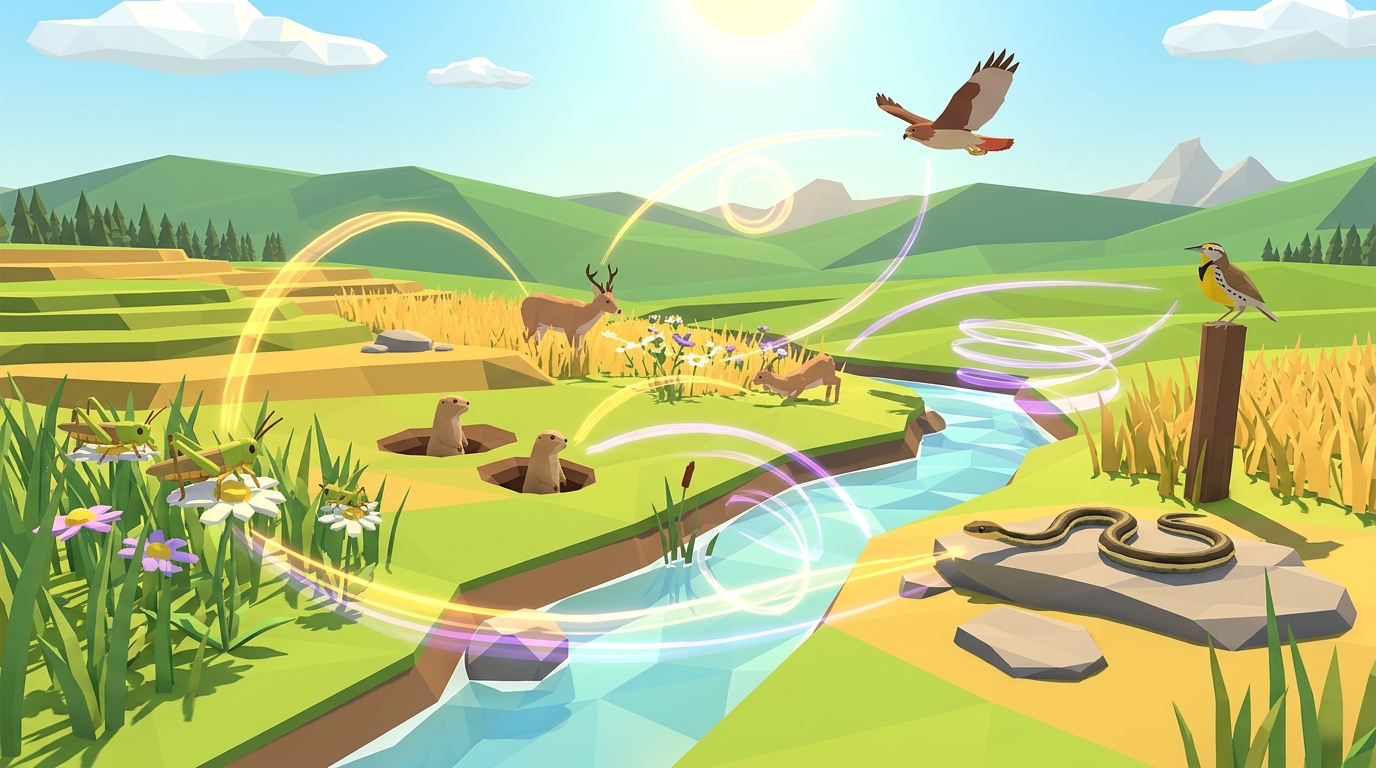
Blue Grama Grass (Producer) -> Prairie Dog (Primary Consumer) -> Black-Footed Ferret or Coyote (Carnivore Predator) -> Soil Decomposers.
Keystone Ecosystem Engineers: How Prairie Dog Towns Reshape the Biome
Beyond serving as prey, prairie dogs actively modify the physical architecture of their ecosystem, earning them the title of ecosystem engineers. Their environmental impacts include:
Soil Aeration and Nutrient Cycling: A single prairie dog colony excavates thousands of underground chambers, bringing deeply buried mineral nutrients to the surface and channeling rainwater deep into the root zone.
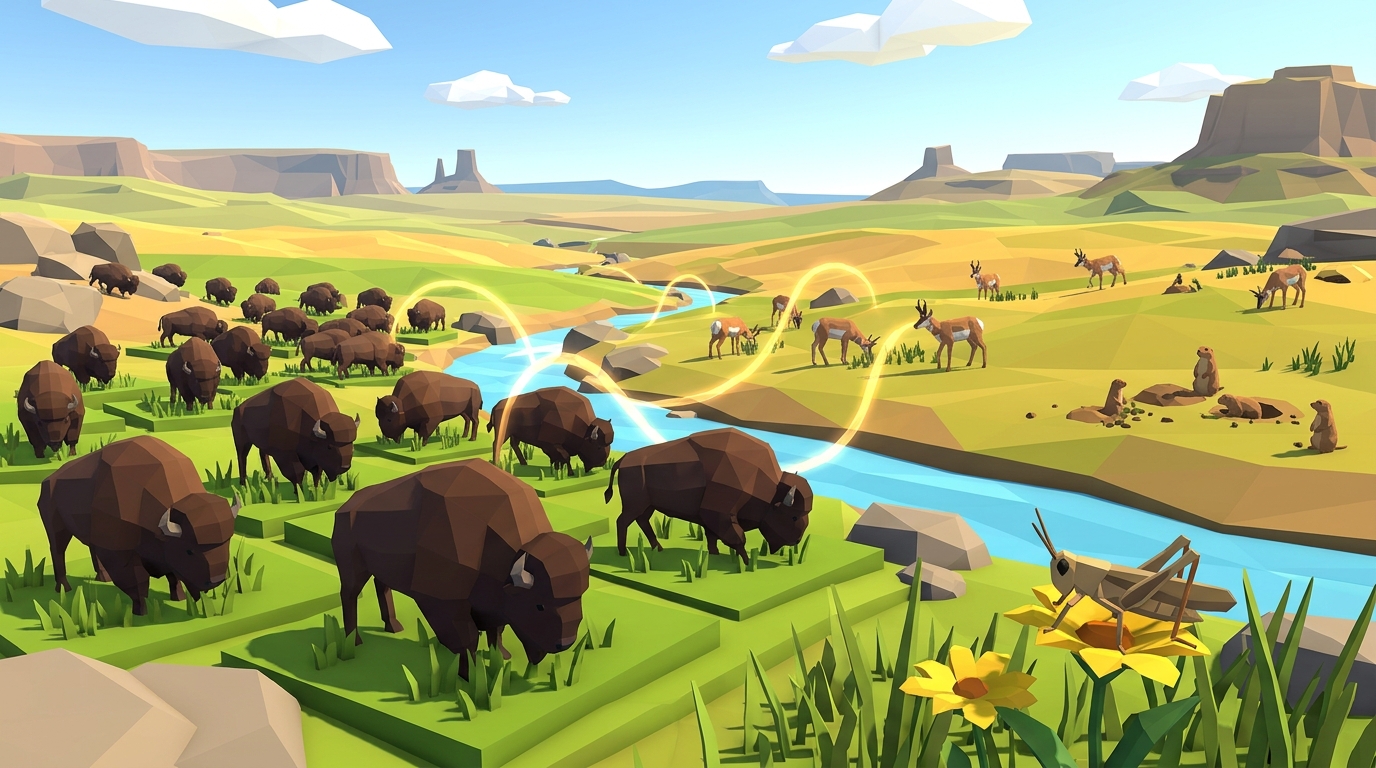
Vegetation Management: Prairie dogs continuously clip tall grasses around their burrows to maintain unobstructed sightlines for detecting approaching predators. This constant pruning stimulates fresh, nutrient-dense shoots that attract foraging bison and pronghorn antelope.
Shelter for Coexisting Wildlife: Abandoned prairie dog burrows provide essential underground microclimates that shelter burrowing owls, eastern tiger salamanders, prairie rattlesnakes, and hundreds of insect species from extreme temperature swings.
Predators of the Prairie Dog: Ferrets, Badgers, Coyotes, and Hawks
Because prairie dogs live in dense social colonies, they represent a high-value food resource for a broad array of prairie carnivores. Different predators exploit unique physical niches to hunt them:
| Predator Species | Hunting Strategy & Niche | Trophic Level | Dependence on Prairie Dogs |
|---|---|---|---|
| Black-Footed Ferret | Subterranean hunting inside active burrow systems at night | Tertiary Carnivore | Extremely High (Over 90% of total diet) |
| American Badger | Excavation hunting using powerful foreclaws to dig out burrows | Secondary / Tertiary Carnivore | High (Major dietary component in spring and summer) |
| Coyote | Ambush and opportunistic pack stalking above ground | Generalist Apex Predator | Moderate to High depending on seasonal rodent availability |
| Red-Tailed Hawk | Aerial perching and steep stoop dives onto foraging rodents | Apex Raptor (Trophic Level 4) | High during daytime foraging periods |
| Prairie Rattlesnake | Ambush striking inside shallow burrows during warm afternoons | Secondary Carnivore | Moderate (Consumes juveniles and small adults) |
The Black-Footed Ferret Dilemma: What Happens When a Keystone Species Declines?
The black-footed ferret (Mustela nigripes) is North Americas rarest native mammal, and its fate is completely tied to prairie dogs. Unlike generalist predators like coyotes that can switch to hunting cottontail rabbits or field mice, black-footed ferrets are obligate specialists.
A single adult ferret requires over 100 prairie dogs per year to survive and raise kits, while also depending on prairie dog burrows for maternal dens and winter survival. When prairie dog colonies were eradicated across the Great Plains during the 20th century due to habitat loss and disease, ferret populations collapsed to near extinction.
This mutual dependence illustrates a critical principle in population biology: when a keystone herbivore drops below its survival threshold, specialized carnivores face immediate extinction cascades. You can also explore how broader energy limits affect predators in our guide to red-tailed hawk trophic levels.
Generalist carnivores survive food web disruptions by switching prey species. Obligate specialist carnivores, like the black-footed ferret, collapse rapidly when their primary prey declines.
Investigating Keystone Herbivore Ratios in the Praxos 3D Simulation
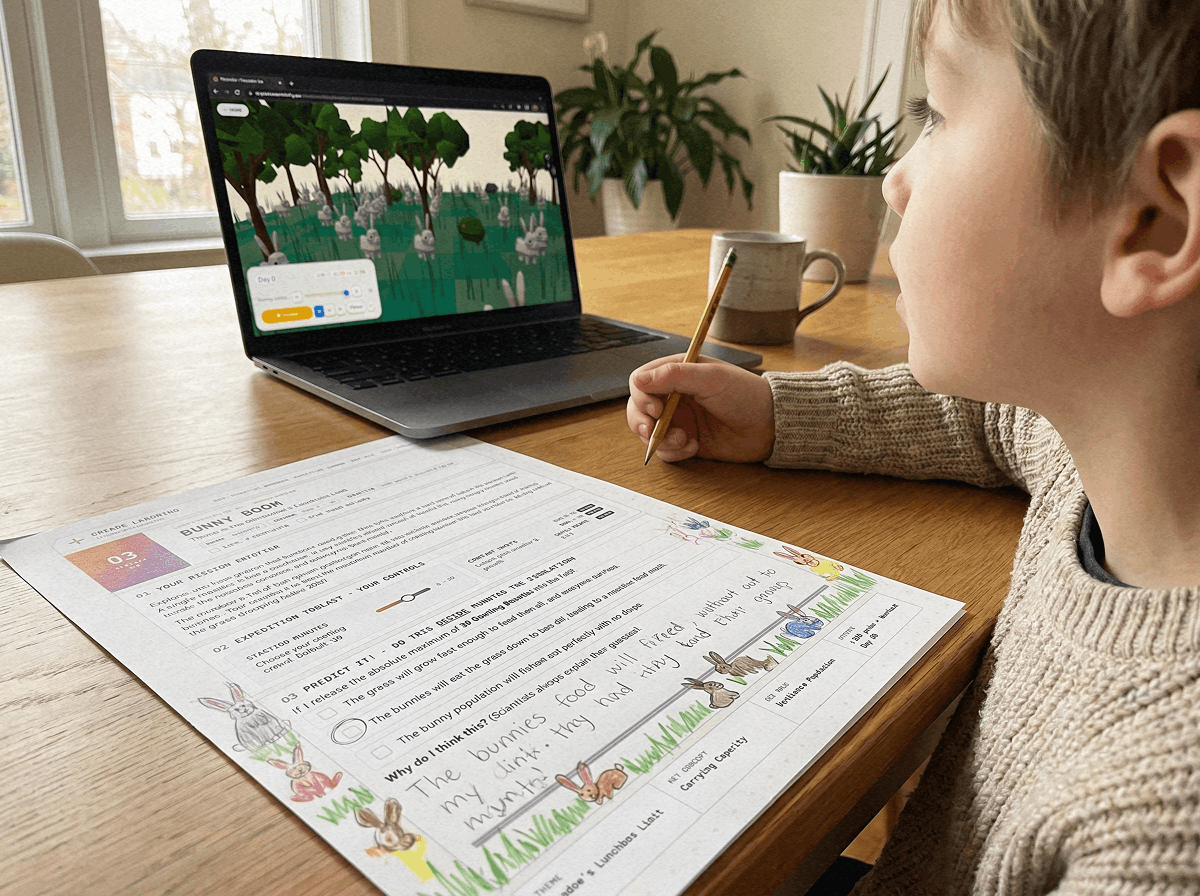
Understanding ecosystem balance requires moving beyond textbook diagrams and experimenting with live population feedbacks. In the Praxos 3D Ecosystem Simulation, students can step directly into the shoes of an ecological researcher.
In Levels 3 and 4, students test how herbivore reproductive speed affects forage density, and how introducing predator pressure stabilizes boom-and-bust population spikes. Instead of passive memorization, students manipulate environmental variables to discover sustainable population thresholds.
You can launch the simulation right now in your web browser with zero account registration or software installation. To accompany your lesson, grab the free 24-page companion mission journal designed for student data collection.
Balance herbivore populations, monitor plant biomass, and observe predator hunting interactions in our free browser simulation.
LAUNCH SIMULATION LABFrequently Asked Questions About Prairie Dog Food Webs
Common questions educators and students ask regarding prairie dog ecology and trophic interactions.
Is a prairie dog a primary consumer or secondary consumer?
What animals rely on prairie dog burrows for shelter?
What is the primary predator of the black-tailed prairie dog?
Why are black-footed ferrets endangered when prairie dogs are common?
How do prairie dogs benefit other grazing animals like bison?
Free Supporting Ecology Resources for Teachers and Students
Expand your grassland life science curriculum with these companion guides and free classroom tools:
Review the overarching grassland trophic structure in our master guide to the prairie food chain.
Explore other primary consumers across the plains in our guide to grassland primary consumers.
Download printable diagrams and lab procedures in our prairie food web diagram classroom guide.
Investigate apex raptors and Lindeman 10 percent rule in red-tailed hawk trophic levels.
Access classroom codes and student tracking on our dedicated teacher portal.
Equip your class with printable hypothesis tables, food web tracking grids, and CER science synthesis logs designed for all 10 simulation missions.
GET FREE MISSION LOGBOOK (PDF)24-Page Ecosystem Companion Mission Journal (PDF)
Download the complete 24-page printable companion logbook to guide students through all 10 ecosystem simulation missions, population charts, and trophic balance investigations.