What Is a Food Chain and Why Build One?
A food chain is a simplified, linear diagram that illustrates how energy and nutrients pass from one living organism to another within an ecosystem. Constructing a food chain helps young learners understand trophic levels, predator-prey dynamics, and the foundational role that sunlight and plants play in sustaining all animal life on Earth.
How to Make a Food Chain in 6 Clear Steps
Follow these six structured steps to construct a biologically accurate food chain for any science project or classroom assignment:
Choose a Specific Ecosystem or Biome
Select one natural environment (such as a temperate forest, desert, coral reef, or prairie). All organisms in your chain must naturally coexist in this habitat.
Identify the Primary Producer (Autotroph)
Begin on the far left with a plant, tree, or algae that converts solar energy into chemical food via photosynthesis (e.g., Oak Tree Acorns or Native Grasses).
Add a Primary Consumer (Herbivore)
Select an animal that eats your producer directly. Draw an arrow pointing FROM the plant TO the herbivore (e.g., Acorns -> Gray Squirrel).
Add a Secondary Consumer (Carnivore or Omnivore)
Add a predator that preys on your herbivore. Draw an arrow pointing FROM the herbivore TO the predator (e.g., Squirrel -> Red Fox).
Add a Tertiary Consumer or Apex Predator
Add a top-tier hunter that preys on the secondary consumer. Draw an arrow pointing into the apex predator (e.g., Fox -> Red-Tailed Hawk).
Include Decomposers (The Nutrient Recyclers)
At the end or beneath the chain, add decomposers (fungi, bacteria, earthworms) that break down dead organic matter and return minerals to the soil.
Example: Constructing a Temperate Forest Food Chain
Here is a complete, five-tier temperate woodland food chain constructed using the 6-step framework:
| Trophic Stage | Organism | Dietary Role | Energy Source |
|---|---|---|---|
| Trophic Level 1 (Producer) | Oak Tree Acorns | Autotroph | Sunlight & Soil Nutrients |
| Trophic Level 2 (Primary Consumer) | Eastern Gray Squirrel | Herbivore | Eats oak acorns and seeds |
| Trophic Level 3 (Secondary Consumer) | Red Fox | Carnivore / Omnivore | Hunts squirrels, voles, and mice |
| Trophic Level 4 (Tertiary / Apex) | Red-Tailed Hawk | Apex Carnivore | Preys on foxes, snakes, and rodents |
| Trophic Level 5 (Decomposer) | Soil Mycorrhizal Fungi | Detritivore | Decomposes organic waste into rich soil |
Common Mistakes to Avoid When Drawing Food Chains
When creating your diagram, double-check your work against these three common errors:
1. Reversing Arrow Direction: Never draw arrows pointing from predator to prey. Arrows must always show the flow of energy into the eater.
2. Starting with an Animal: A food chain cannot begin with a consumer. It must always start with a photosynthetic primary producer or sunlight.
3. Mixing Incompatible Biomes: Ensure your species actually live together in nature (e.g., do not place a polar bear in an Amazon rainforest chain).
The Pencil-First Inquiry Activity: From Paper to 3D Sandbox
To deepen understanding, pair paper diagramming with interactive simulation:
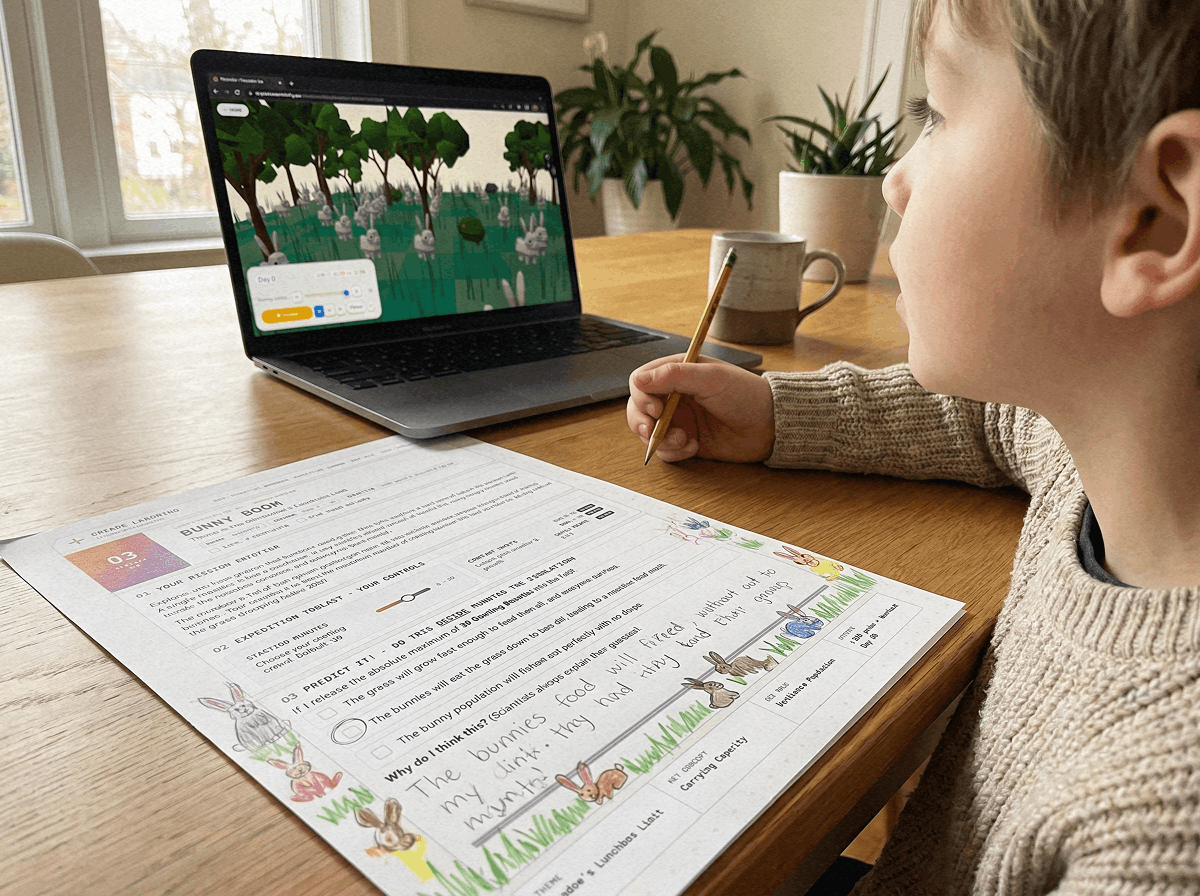
First, draw your paper food chain using the free printable template and write a prediction about what happens if producer growth drops by 50%.
Next, test your hypothesis inside Praxos Ecosystem. Adjust sunlight and starting consumer populations, and watch the real-time ecological results unfold in 3D.
Download the Free Food Chain Template & Launch the 3D Lab
Download our complete 24-page Expedition Science Journal with printable food chain cut-and-paste activities, graphing charts, and reflection sheets.
All 10 simulation missions and the printable logbook are 100% free with email. Level 1 starts instantly in your web browser with zero registration.
Model food chains, carrying capacity, and predator-prey balance in our free browser sandbox.
LAUNCH FREE 3D LABPrintable Food Chain Template Worksheet
Blank cut-and-paste food chain strips, biome organism cards, and error-checking rubrics for grades 3-8.