Why Gamifying Plate Tectonics Beats Static Diagrams: The Cognitive Shift
Teaching plate tectonics is one of the most conceptually demanding units in middle school Earth science. Because the mechanisms occur over millions of years and miles beneath the surface, students cannot observe them directly. When educators rely solely on flat textbook cross-sections with static arrows, students develop persistent misconceptions, such as believing plates float on an ocean of liquid red lava or that earthquakes happen without warning fault friction.
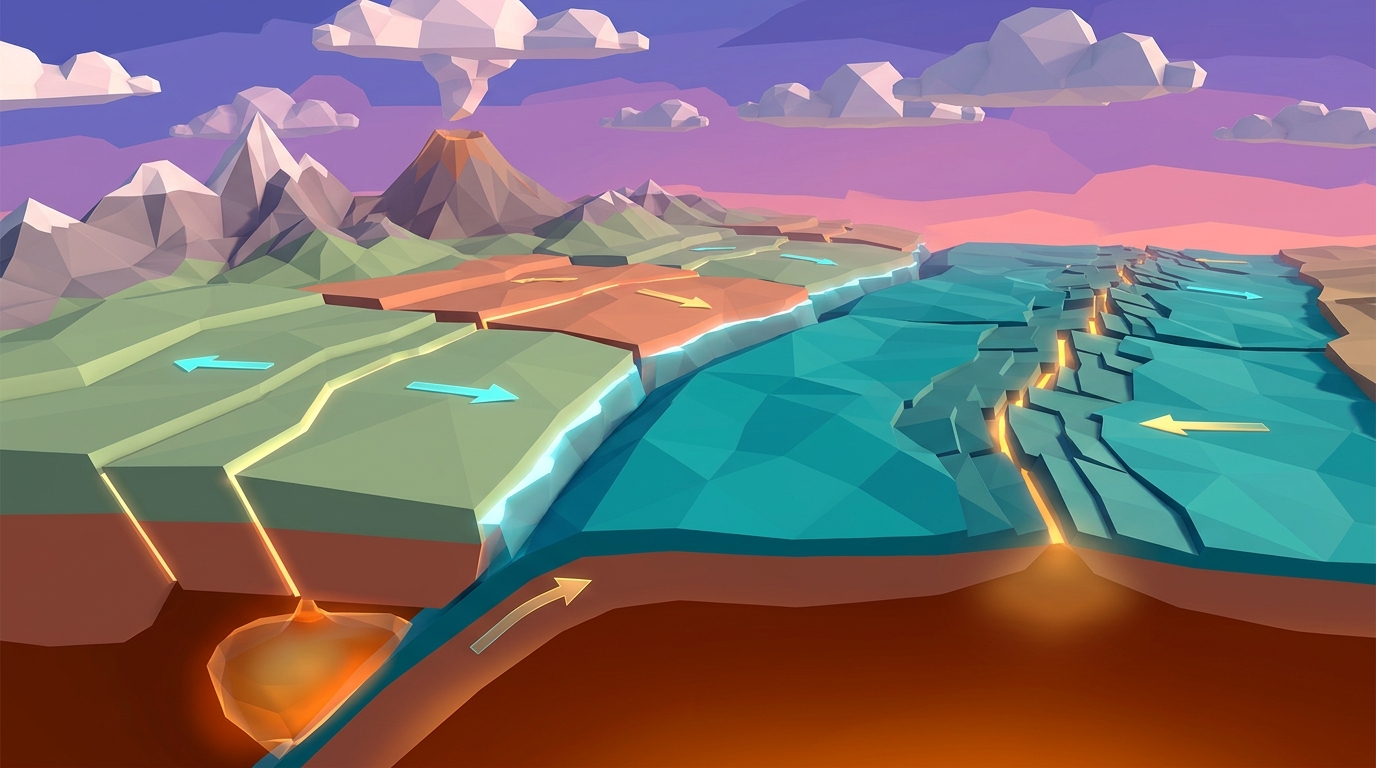
Interactive plate tectonics games and activities solve this cognitive barrier by transforming invisible planetary physics into tangible, manipulable systems. Instead of passively memorizing definitions like subduction or seafloor spreading, students adjust thermal convection sliders, increase crustal density, and directly observe how gravitational slab pull drags colossal plates into ocean trenches.
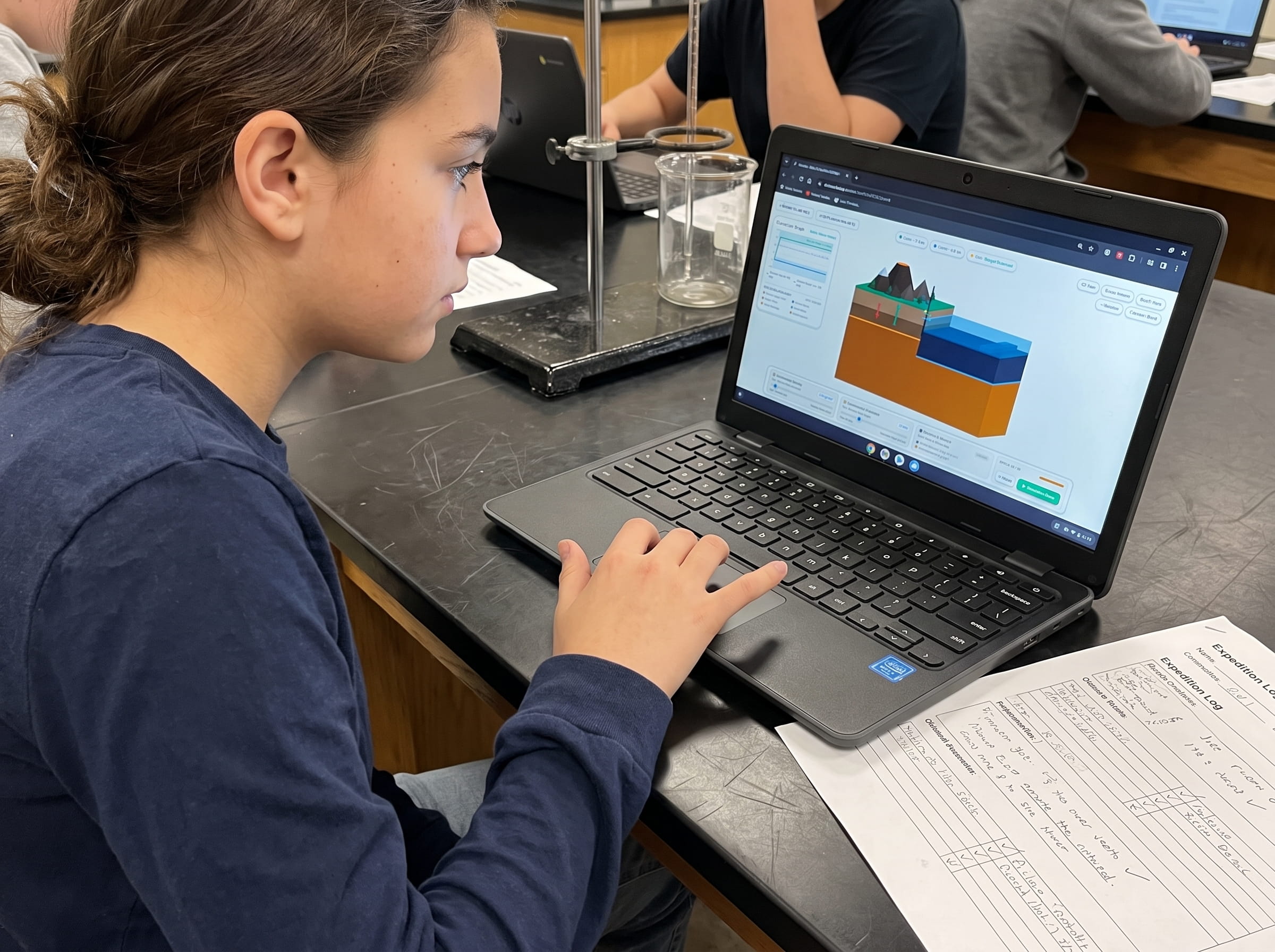
Recent educational research in systems thinking (Ormanci 2026) confirms that students who experiment with interactive simulation games develop a 64 percent deeper understanding of non-linear cause-and-effect loops compared to peers using traditional worksheets. By pairing a dynamic geophysics simulator with physical paper logs, students transition from passive readers into active investigative scientists.
Static 2D diagrams force students to memorize facts. Interactive 3D simulation games empower students to discover planetary mechanisms through iterative cause-and-effect experimentation.
Top 5 Free Plate Tectonics Games & Interactive Activities Ranked for 2026
To help science teachers, homeschool parents, and STEM coordinators choose the best educational tools, I evaluated dozens of digital resources. Each tool was tested across five critical criteria: visual physics accuracy, browser accessibility (zero login friction), NGSS curriculum alignment, student autonomy, and dual-format learning capabilities.
Here are the five best free plate tectonics games and interactive activities currently available for middle school and homeschool science:
Praxos Volcano Island: Plate Tectonics & Eruptions (SIM-02)
Real-Time 3D Geophysics, Mantle Convection Modeling & Dual-Format Learning
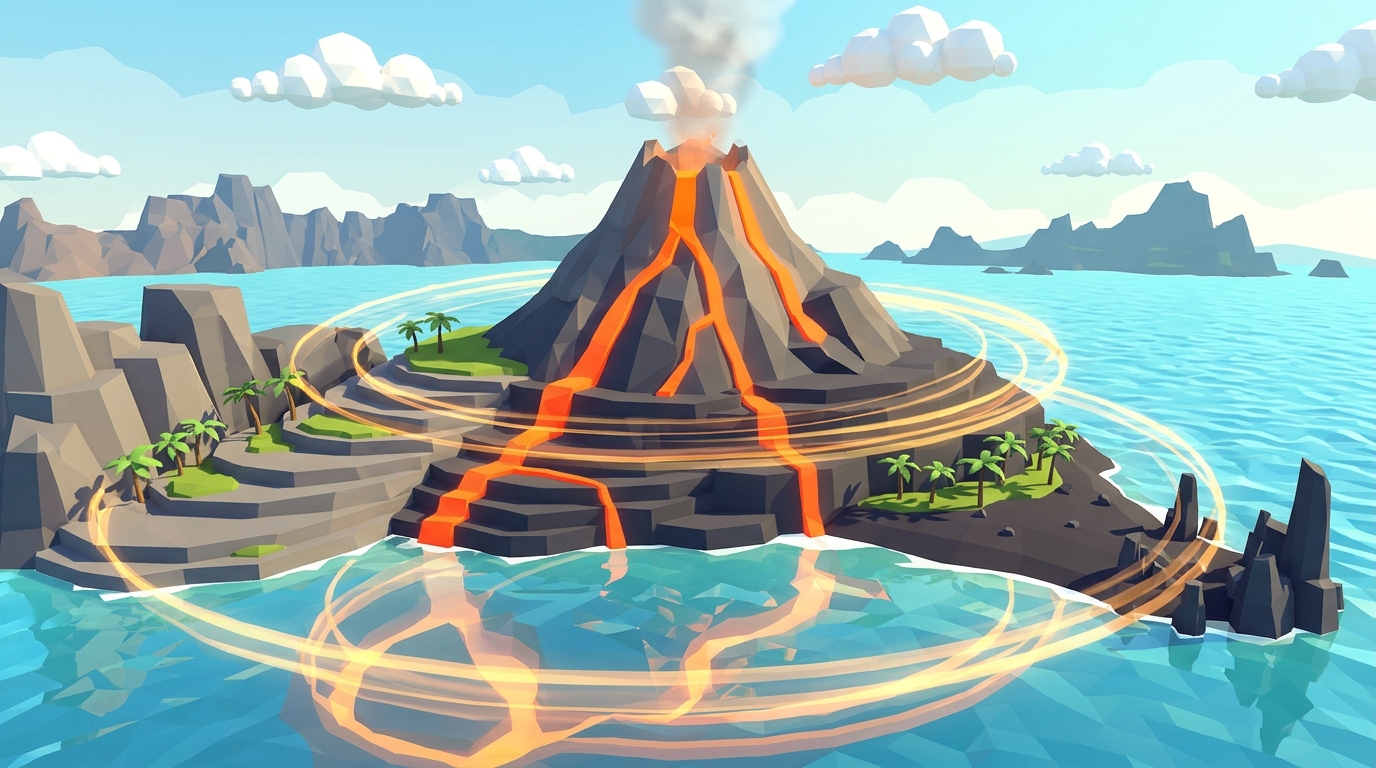
An interactive WebGL 3D geophysics engine that simulates thermal mantle convection, subduction trenches, magma viscosity, and explosive eruptions across 20 structured missions. Level 1 starts instantly in any modern web browser with zero login friction, paired with a free 24-page printable student expedition logbook.
- ✓Real-time thermal mantle convection with adjustable core heat gradients (2,800 K to 3,500 K).
- ✓Dynamic subduction slab pull physics showing continental drift in real time.
- ✓Paired with free 24-page physical Field Geologist Expedition Logbook (PDF).
- ✓Zero ads, zero account creation, and zero student login required.
PhET Interactive Simulations: Plate Tectonics
Crustal Density & Temperature Measurements
Developed by the University of Colorado Boulder, PhET Plate Tectonics provides a simplified 2D cross-section where students adjust crust thickness, composition (silica vs iron), and temperature to observe plate collisions and density-driven subduction.
- ✓Accurate crustal density calculations (continental granite vs oceanic basalt).
- ✓Clean cross-sectional view of convergent and divergent plate margins.
- ✓Teacher-submitted worksheets and activity handouts available.
Annenberg Learner: Dynamic Earth Interactive
Guided Reading & Plate Boundary Identification
A narrative-driven multimedia guide that introduces Earth layers, continental drift history, and tectonic boundary types through animated vignettes and interactive review quizzes.
- ✓Structured historical overview of Alfred Wegener continental drift hypothesis.
- ✓Interactive global plate identification challenge.
- ✓Slip, slide, and collide interactive boundary animations.
PBS LearningMedia: Mountain Maker, Earth Shaker
Elementary to Early Middle School Boundary Intros
A lightweight interactive demo that illustrates how plate motions produce geological landforms like mountain ranges, ocean trenches, and rift valleys over millions of years.
- ✓Simple drag-and-drop boundary animations.
- ✓Clear visuals for transform, convergent, and divergent faults.
- ✓Integrates smoothly into Google Classroom assignments.
National Geographic: Earth Shattering Disaster Lab
Earthquake Seismology & Tsunami Mechanics
Focuses on the catastrophic secondary consequences of tectonic movement, allowing students to explore seismograph wave propagation, fault slip friction, and tsunami wave formation.
- ✓High-impact historical case studies (San Francisco 1906, Tohoku 2011).
- ✓Interactive Richter vs Moment Magnitude comparison.
- ✓Rich multimedia field photography and real-world disaster mitigation tips.
Head-to-Head Comparison: Features, Accessibility & Curriculum Fit
Choosing the right plate tectonics game depends on whether you need a quick 5-minute visual hook, an in-depth physics calculation tool, or a complete inquiry curriculum unit.
Below is the comprehensive feature matrix comparing all five ranked tools across dimensions that matter most to educators and parents:
| Tool Name | Visualization Mode | Physical Journal Integration | NGSS Alignment | Login Required? | Pricing |
|---|---|---|---|---|---|
| Editor ChoicePraxos Volcano Island | Real-Time 3D WebGL Engine | Yes (24-Page Expedition Logbook) | MS-ESS2-1, MS-ESS2-2, MS-ESS2-3 | No (Instant Level 1 Browser Play) | 100% Free with Email |
| PhET Plate Tectonics | 2D Vector Simulation | No (Community Worksheets Only) | MS-ESS2-1, HS-ESS2-1 | No | 100% Free Open Source |
| Annenberg Dynamic Earth | 2D Animated Storybook | No (Online Text Only) | General Earth Science | No | Free Web Access |
| PBS Mountain Maker | Lightweight Clickable Demo | No | Elementary Earth Science | No | Free Educational Access |
| National Geographic Disaster Lab | Multimedia Video & Case Studies | No | Natural Hazards & Human Impact | No | Free Web Resource |
Launch Volcano Island Level 1 Free in Browser
Adjust core heat gradients, observe ductile mantle flow, and watch slab pull drag oceanic plates into deep subduction trenches. 100% free with zero login or setup.
Teaching this topic tomorrow? Download the Free NGSS Student Lab Sheet (Printable PDF)
Download the printable companion journal featuring fault coordinate mapping grids, seismic wave data tables, and NGSS Claim-Evidence-Reasoning rubrics.
The 45-Minute Inquiry Lab Pacing Routine: Pairing 3D Games with Paper Worksheets
The most effective classroom strategy is not to replace hands-on work with screens, but to use the dual-format model: pairing 3D digital simulation with physical pencil-and-paper data recording.
Here is the step-by-step 45-minute lesson pacing routine I recommend for middle school science periods and homeschool blocks:
Minutes 0 to 10: Phenomenon Hook & Boundary Prediction
Display an aerial bathymetric map of the Pacific Ocean Ring of Fire. Ask students why 75 percent of the world active volcanoes are located along the perimeter of a single ocean basin. Students record their initial hypotheses on paper without teacher correction.
Minutes 10 to 25: 3D Simulation Experimentation (Volcano Island Level 1)
Students open Volcano Island Level 1 on Chromebooks, tablets, or shared screens. Working independently or in pairs, they manipulate mantle temperatures from 2,800 K to 3,500 K and observe how convection currents drag the oceanic plate toward the continental boundary.
Minutes 25 to 35: Offline Mapping & Cross-Section Synthesis
Students transition offline to sketch the subduction trench in their 24-page Field Geologist Expedition Logbook. They calculate density differences between continental granite (2.7 g/cm3) and oceanic basalt (3.0 g/cm3) to explain why the ocean floor always subducts.
Minutes 35 to 45: Claim-Evidence-Reasoning (CER) Synthesis
Students construct a formal CER argument: Claim (What driving force moves tectonic plates?), Evidence (Cite quantitative velocity and temperature data from the simulation), and Reasoning (Apply thermodynamic convection and gravitational slab pull principles).
Download the free 24-page Field Geologist Expedition Logbook, complete with boundary coordinate charts, student inquiry briefs, and NGSS rubrics.
Download Free 24-Page Logbook (PDF)Frequently Asked Questions About Plate Tectonics Games & Activities
Here are the most common questions educators and homeschool parents ask when evaluating interactive plate tectonics games and classroom activities:
Are these plate tectonics games suitable for Chromebooks and tablets?
Which NGSS standards are addressed by interactive plate tectonics simulations?
Do students need accounts or passwords to play Volcano Island?
How does dual-format learning improve science retention?
Free 24-Page Field Geologist Expedition Logbook (PDF)
Download the printable companion journal featuring fault coordinate mapping grids, seismic wave data tables, and NGSS Claim-Evidence-Reasoning rubrics.