The Magic of a Pencil in Hand
There is a profound neurological shift that occurs when a child holds a physical graphite pencil. When a student sketches a population oscillation curve or writes down a hypothesis on paper, their brain processes the concept much more deeply than if they had simply tapped a button on a glass tablet screen.
Drawing forces children to slow down, visualize upcoming system interactions, and commit to an idea before testing it in the digital laboratory.
The Kinesthetic Handwriting Advantage in STEM Memory
Cognitive neuroscience studies consistently show that physical handwriting activates motor memory networks and enhances conceptual recall. When children formulate sentences by hand, they engage in active cognitive synthesis rather than passive pattern recognition.
By anchoring digital simulation trials with physical paper logs, learning shifts from transient screen amusement into permanent conceptual understanding.
The 3-Step Routine: Predict, Test, Reflect
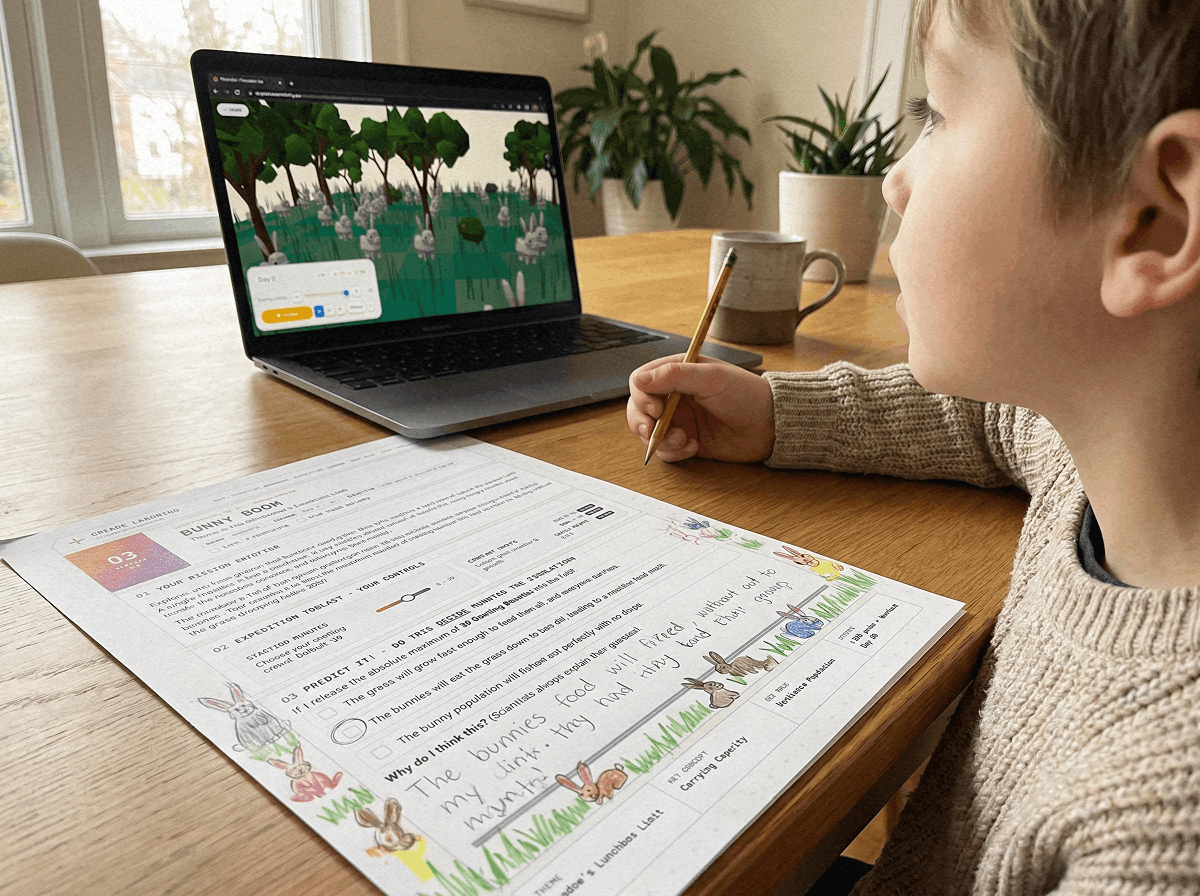
1. Predict on Paper: Before touching any simulation sliders in your 30-minute science block, the child reads the mission brief and writes their hypothesis in their Expedition Logbook.
2. Test on Screen: They launch the 3D simulation, manipulate independent variables, and observe real-time ecological responses.
3. Reflect as a Family: They record the empirical trial data with a pencil, graph what occurred, and share their conclusions at the dinner table.
Download the complete 10-mission journal with printable worksheets, trial logs, and family dinner roundtable prompt cards.
DOWNLOAD FULL JOURNAL (PDF)Try Dual-Format Learning Free
Start with Level 1 instantly in your browser (no sign-up needed). Pair the screen with the printed mission sheet, write your hypothesis with a pencil, run the living 3D lab, and reflect together.
How to Set Up a Dedicated Science Logbook at Home
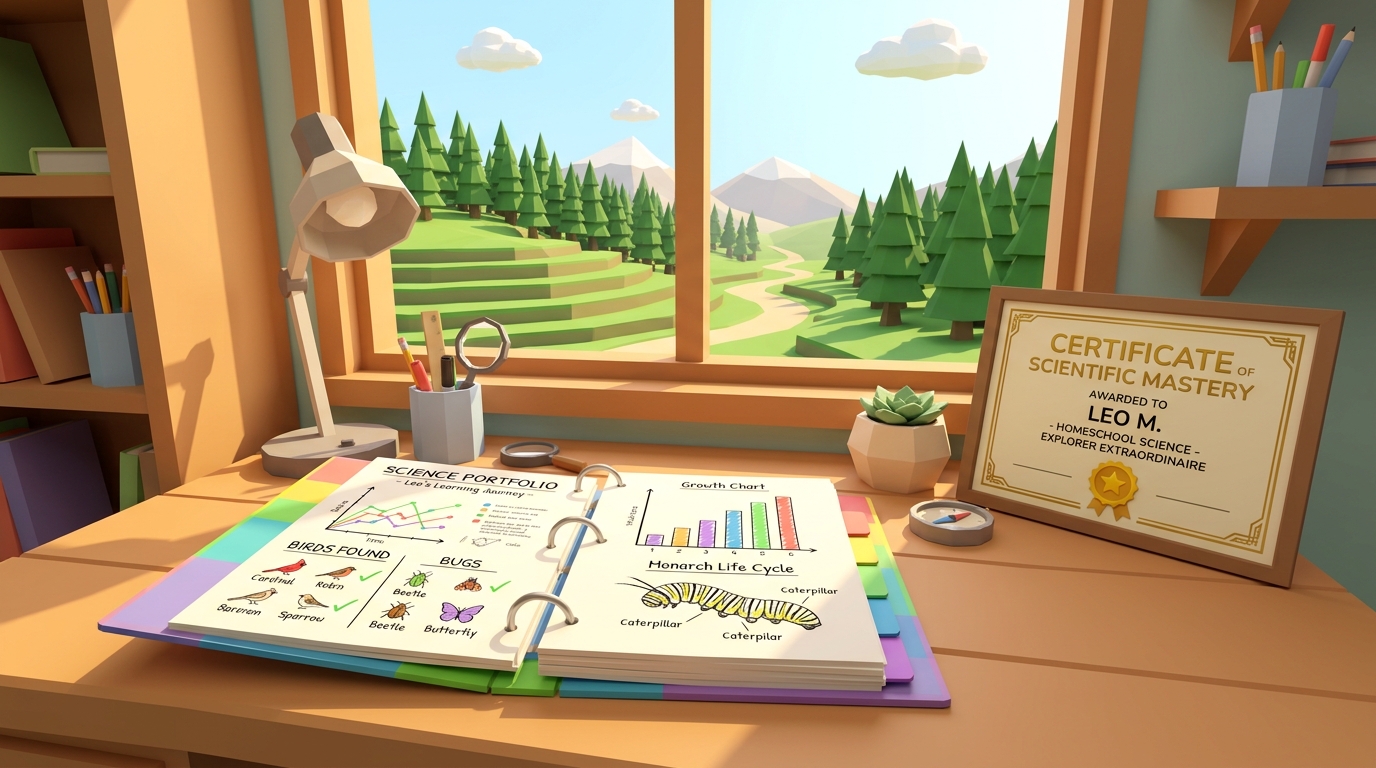
Dedicate a simple three-ring binder or spiral notebook. Organize entries with four consistent headers: Date & Mission Name, Pre-Lab Hypothesis, Numerical Trial Log, and One Big Reflection. This consistent structure gives your child a professional homeschool science portfolio they can take genuine pride in.
The Cognitive Neuroscience of Handwriting in Science Discovery
In an era dominated by touchscreens and AI auto-complete, handwriting in a physical science notebook remains an irreplaceable cognitive tool for deep conceptual synthesis. Neuroimaging studies demonstrate that writing by hand activates complex sensorimotor pathways across the parietal and frontal lobes that are largely bypassed when typing or clicking.
When a child draws a food web diagram with pen on paper, their brain must actively calculate spatial relationships, scale proportions, arrow directions, and trophic hierarchies. This physical drafting forces deep semantic processing: the student cannot simply tap a screen without mentally committing to the directional flow of energy from producer to apex consumer.
Furthermore, physical journals provide a permanent, tactile record of a child evolving intellectual journey. Turning physical pages to compare a November experiment with a September baseline gives young learners a profound sense of scientific ownership and cumulative mastery.
Structuring the Dual-Format Study Desk: 3 Golden Rules
To maximize the benefits of dual-format learning, establish clear ergonomic boundaries between the digital simulation screen and the physical notebook.
Rule 1: The Prediction First Rule. The child must write their formal hypothesis and draw their expected graph in the physical workbook before opening the browser simulation. Rule 2: The Data Split Routine. While the simulation runs, the child observes dynamic 3D interactions on screen and records numeric values into their printed data table every 30 simulated seconds. Rule 3: The Offline Synthesis Protocol. Once the simulation run ends, the laptop lid is closed so the final analytical reflection is written without digital distraction.
This disciplined physical workflow transforms screen time into an active laboratory instrument rather than a passive entertainment trap.
Complete 10-Mission Student Expedition Logbook
The official 24-page print-at-home journal covering all beginner and intermediate ecology labs, designed specifically to be filled out hand in hand while running the 3D simulations.