The Middle School Science Transition: From Observation to Quantitative Modeling
In elementary school, science is primarily observational: students watch plants grow, classify rocks, and explore basic animal diets. When students enter grades 6 through 8 (ages 11 to 14), their cognitive abilities expand rapidly into abstract, multi-variable reasoning.
Under modern standards like the Next Generation Science Standards (NGSS), middle school science challenges students to explain why natural phenomena occur by constructing testable models, analyzing mathematical data patterns, and defending claims with empirical evidence.
Whether your homeschool follows an integrated general science model (covering life, earth, and physical topics every year) or a discipline-per-year model, having a clear scope and sequence prevents learning gaps and prepares your student for high school biology, chemistry, and physics.
Middle school science moves students from asking "What is this organism?" to "How does a change in abiotic solar energy alter population carrying capacity and apex predator stability?"
Grade-by-Grade Middle School Science Scope & Sequence
Here is the standard 3-year progression for homeschool families structuring their middle school science curriculum by core scientific domain:
Life Science & Ecosystem Dynamics (NGSS MS-LS)
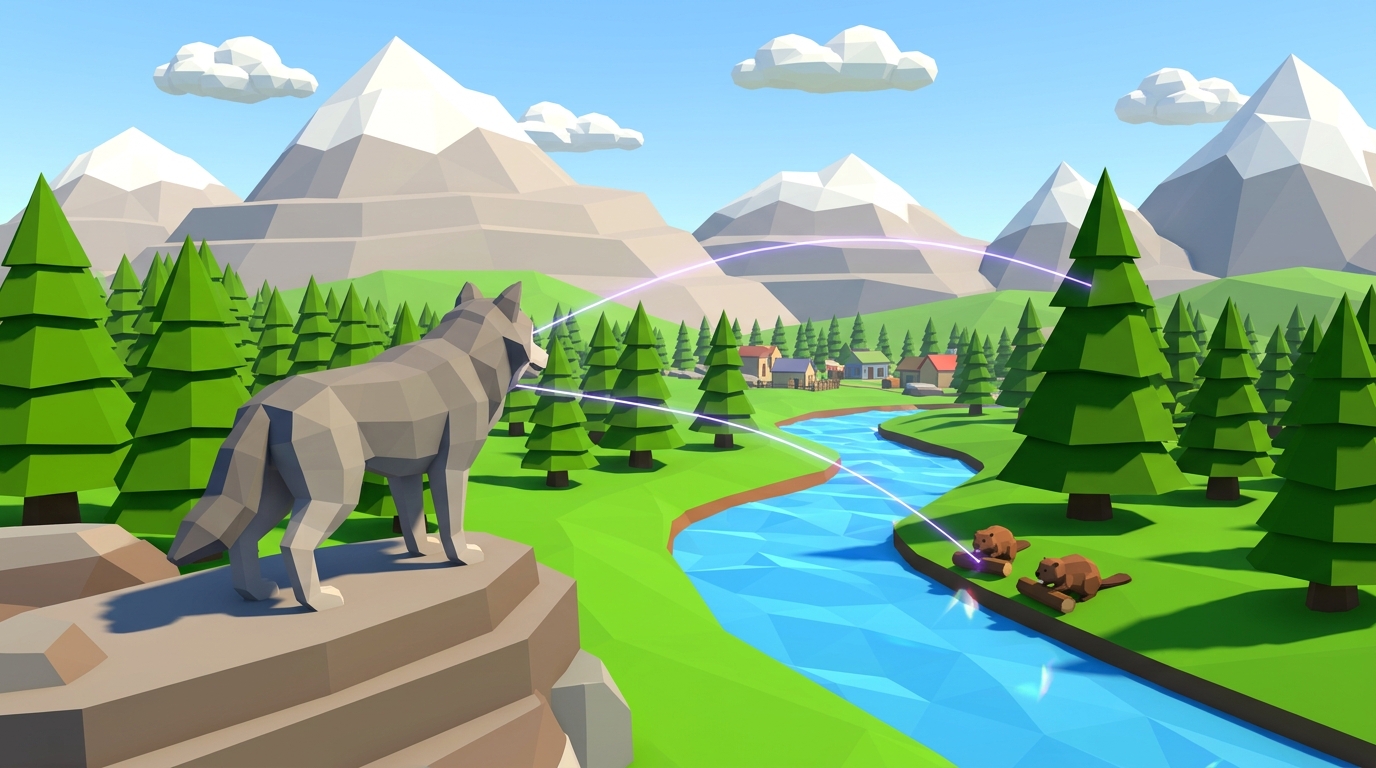
Focuses on cellular structures, photosynthesis mechanisms, organism physiology, food web energy pyramids, density-dependent carrying capacity limits, and trophic cascades. Explore our in-depth guides on life science homeschool curriculum and trophic cascades explained for kids.
Earth & Space Systems (NGSS MS-ESS)
Covers the rock cycle, plate tectonics, geological time scales, water and carbon cycles, atmospheric weather patterns, ocean currents, and global biome distribution. See our complete earth science homeschool curriculum guide.
Physical Science & Chemical Principles (NGSS MS-PS)
Investigates atomic structure, elements and the periodic table, chemical vs physical changes, thermal energy transfer, Newton's laws of motion, gravity, and electromagnetic wave properties.
NGSS Middle School Standards Alignment Matrix
A robust homeschool curriculum aligns with key middle school performance expectations, ensuring students master foundational scientific competencies:
| Science Domain | Core Middle School Topic | Target NGSS Standard | Key Student Competency |
|---|---|---|---|
| CORE PRAXOS LABLife Science | Ecosystem Carrying Capacity & Resource Limits | MS-LS2-1 | Analyze and interpret data to provide evidence for the effects of resource availability on organisms and populations in an ecosystem. |
| CORE PRAXOS LABLife Science | Predator-Prey & Trophic Cascade Dynamics | MS-LS2-2 | Construct an explanation that predicts patterns of interactions among organisms across multiple ecosystems. |
| Earth Science | Earth Materials & Biogeochemical Cycles | MS-ESS2-1 | Develop a model to describe the cycling of Earth's materials and the flow of energy that drives this process. |
| Earth Science | Climate Systems & Abiotic Energy Distribution | MS-ESS2-6 | Develop and use a model to describe how unequal heating and atmospheric circulation determine regional climates. |
| Physical Science | Chemical Reactions & Conservation of Matter | MS-PS1-2 | Analyze and interpret data on the properties of substances before and after the substances interact to determine if a chemical reaction has occurred. |
| Physical Science | Forces, Motion & Kinetic Energy | MS-PS2-2 | Plan an investigation to provide evidence that the change in an object's motion depends on the sum of the forces on the object and the mass of the object. |
The Ecology Bridge: Connecting Life Science to Earth & Physical Systems
Many homeschool programs treat biology, geology, and physics as separate, isolated silos. However, the most profound learning happens when students see how these disciplines intersect.
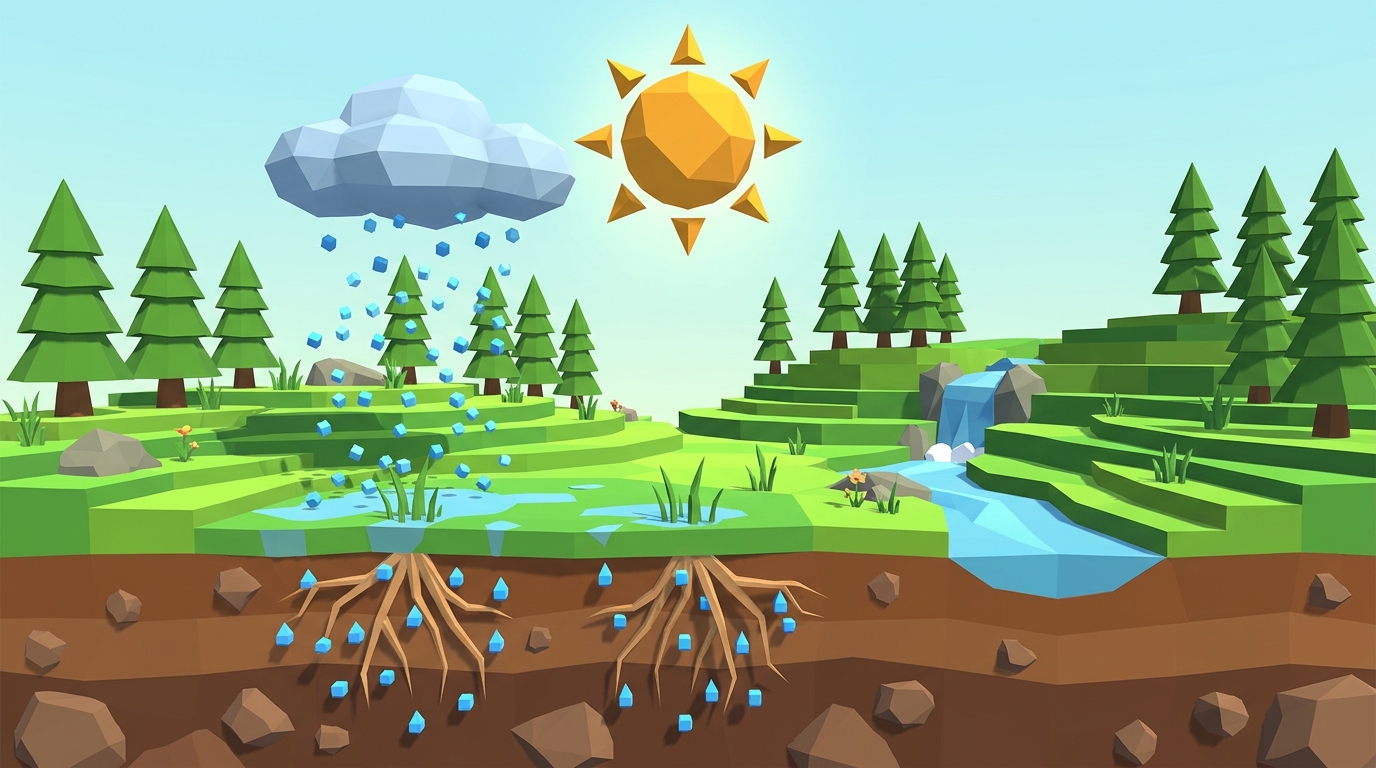
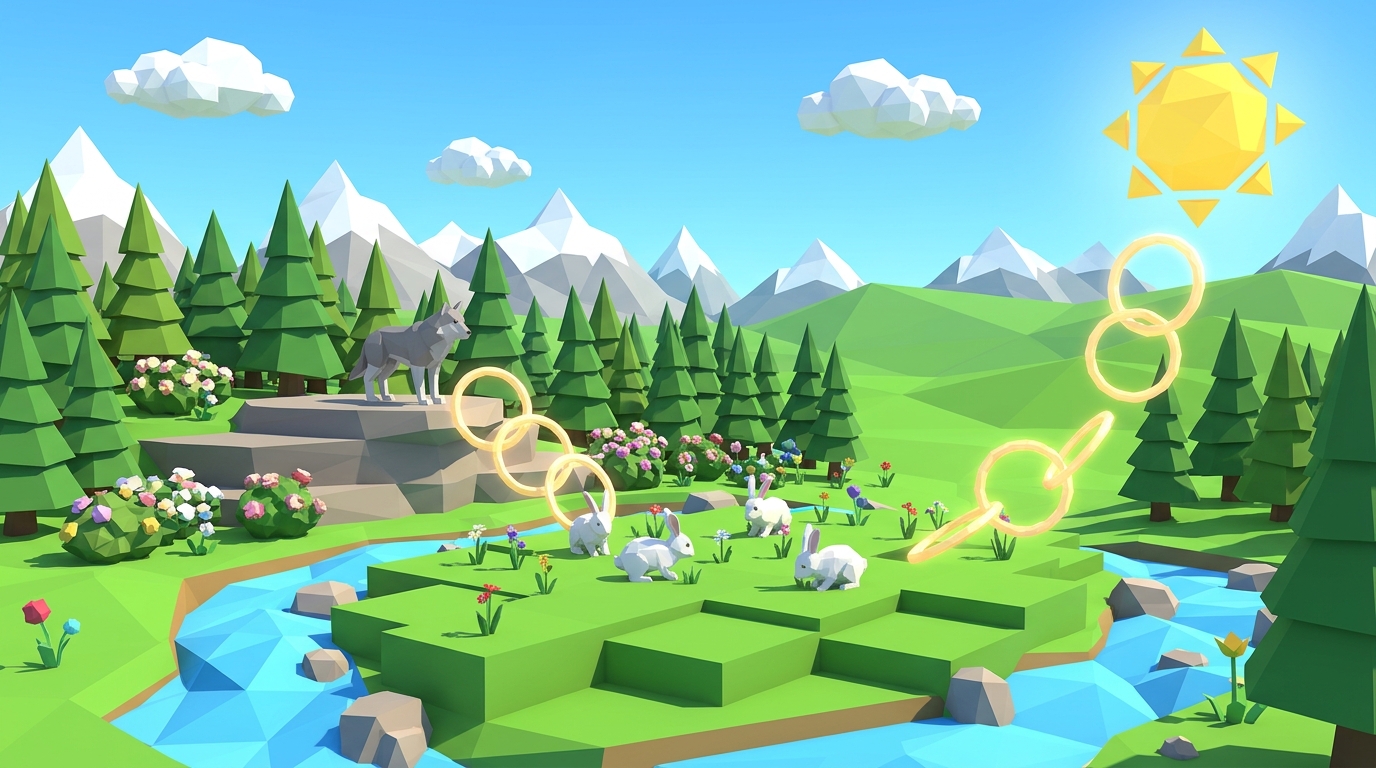
Ecology serves as the perfect interdisciplinary bridge: solar photons from physics drive photosynthetic glucose synthesis in biology, which relies on mineral nutrients and hydrological precipitation from earth science. When students explore dynamic 3D labs, they see how abiotic physical inputs directly dictate biological population health.
In our free homeschool science curriculum, middle schoolers manipulate solar radiance, precipitation levels, and trophic balances to witness these interconnected feedback loops firsthand.
Experience how abiotic and biotic factors interact. Launch Level 1 free in your browser with zero registration, or unlock all 10 simulation missions free with your email.
Launch Free 3D LabA High-Impact 3-Day Weekly Routine for Middle School Science
Middle school science does not require hours of daily parent lecturing. A focused 3-day weekly routine of 45 to 60 minutes per session builds exceptional analytical rigor:
Pencil-First Prediction & Conceptual Inquiry
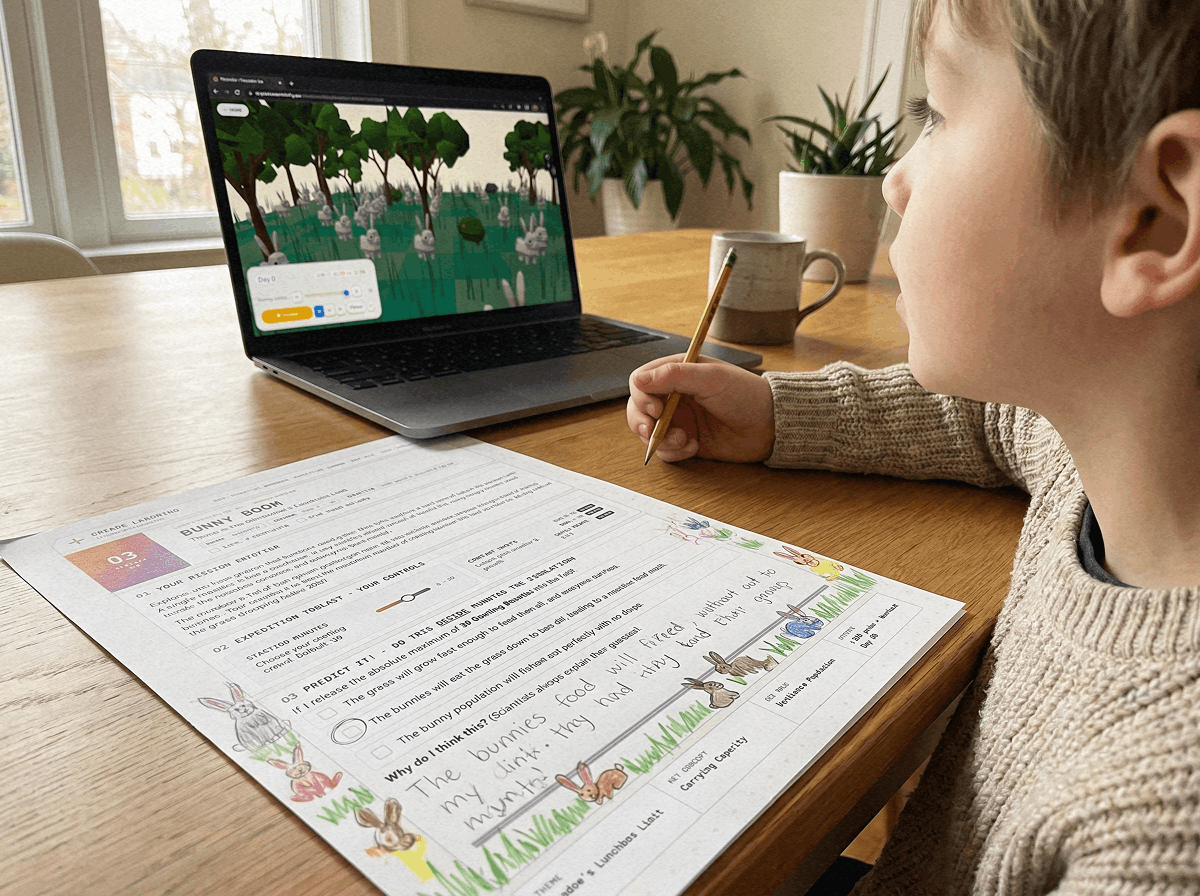
Introduce a compelling scientific prompt or system paradox. Have the student write their hypothesis, isolate independent and dependent variables, and draft a predictive sketch in their lab logbook before touching any equipment.
Interactive 3D Simulation & Data Gathering
The student runs systematic trials in a digital simulation or hands-on lab. They alter one variable at a time (e.g. predator density or water levels) and record quantitative data points across successive cycles.
Coordinate Graphing & Claim-Evidence-Reasoning (CER)
The student translates raw data into coordinate line graphs and writes a 4-sentence Claim-Evidence-Reasoning synthesis explaining the underlying causal mechanisms.
Frequently Asked Questions About Middle School Science Scope & Sequence
Here are answers to common questions parents ask when planning middle school homeschool science:
Should middle school science be taught integrated or by discipline?
Both approaches work well. Integrated science (general science) teaches life, earth, and physical concepts each year, emphasizing real-world connections. Single-discipline tracks (Life in 6th, Earth in 7th, Physical in 8th) allow deeper immersion into each subject before high school.
How do I fulfill middle school lab requirements without expensive supplies?
Combine household experiments with interactive 3D simulations. Digital labs allow students to manipulate complex variables and collect quantitative population data with zero mess or chemical hazards.
How do I assess middle school science without standardized tests?
Evaluate your student's lab journal entries, coordinate graphs, and CER written arguments. Check our guide on how to build a homeschool science portfolio.
Middle School Science Scope & Sequence Guide (PDF)
A comprehensive 24-page student lab journal and pacing matrix aligned to NGSS middle school science standards with coordinate graphing sheets.