Foundations of an Enriching Prek Homeschool Curriculum
When designing a prek homeschool curriculum for 3- and 4-year-olds, the most vital principle to remember is that play is the highest form of early childhood research. At this developmental stage, young children do not require structured desks, formal grading, or rigid phonics drills. Their brains are wired to explore the physical universe through sensory immersion: feeling the rough ridges of pinecone scales, watching ants carry breadcrumbs across garden stones, and listening to rain patter against windowpanes.
A healthy prek homeschool curriculum nurtures this innate wonder by organizing daily life around three developmental pillars: sensory exploration, language-rich storytelling, and foundational mathematical and scientific inquiry. By prioritizing hands-on experiences over repetitive paper worksheets, parents build robust cognitive neural pathways while preserving their child's joyful love of learning.
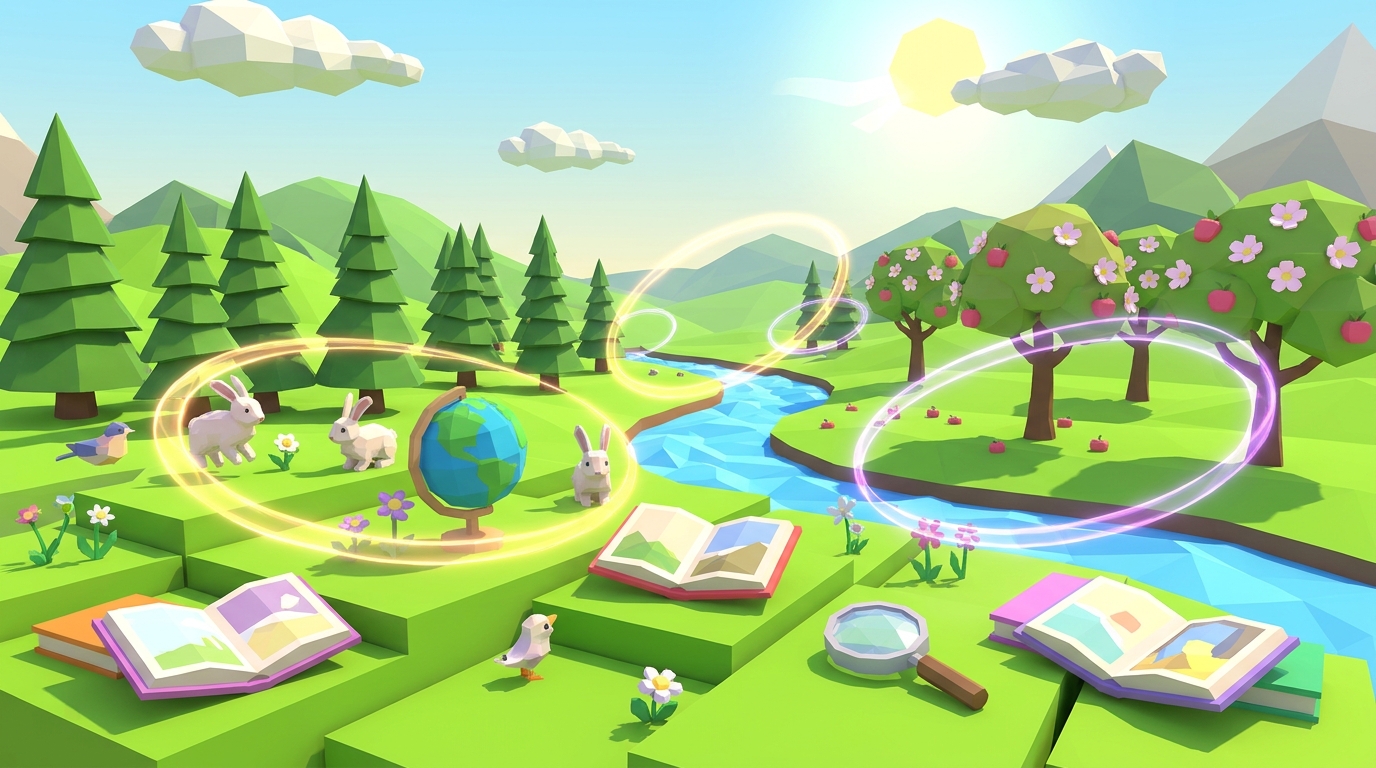
When I created the introductory exploration modes for our simulations, I wanted to provide parents with a calm, clutter-free digital tool that respects early childhood boundaries. Our gentle meadow sandboxes feature soothing colors, natural ambient sounds, and zero high-stress timers or flashing scoreboards, allowing preschoolers to explore living systems alongside their parents at their own natural pace.
Essential Science Milestones in a Prek Homeschool Curriculum
While formal science standards begin in kindergarten, an effective prek homeschool curriculum establishes essential cognitive stepping stones across three natural domains:
1. Sensory Observation and Comparison. Preschoolers practice using their senses to categorize natural objects by color, texture, shape, and weight: smooth river pebbles versus rough granite, dry crisp leaves versus moist moss.
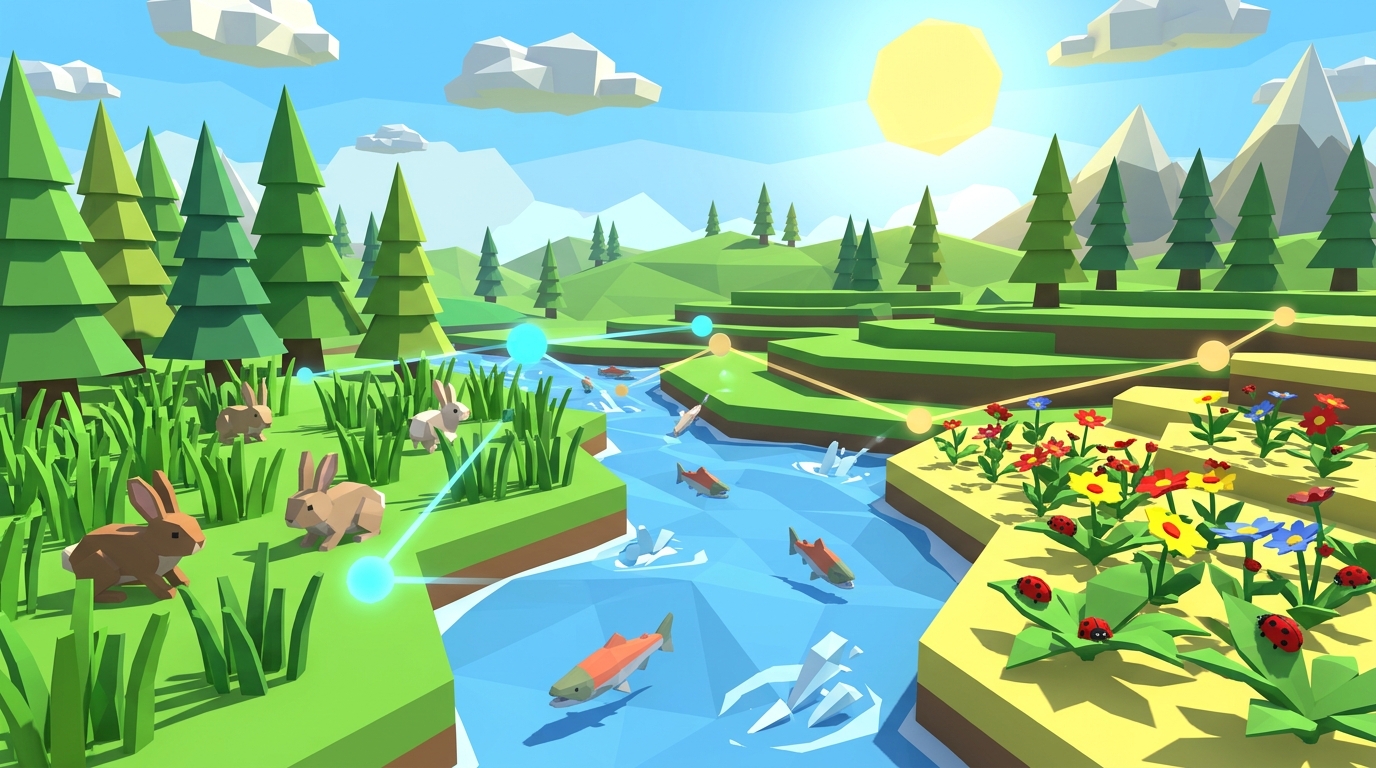
2. Living Things and Animal Needs. Children discover that animals need food and cozy burrows, while plants need water and sunlight. Observing gentle woodland creatures in a 3D digital meadow helps children connect digital life to local wildlife in their backyard.
3. Weather Awareness and Seasonal Cycles. Tracking sunny, cloudy, rainy, and snowy days introduces children to seasonal rhythms and how temperature changes influence clothing choices and animal behavior.
4. Cause-and-Effect Exploration. What happens when water pours over sand? What happens when a ball rolls down a ramp? Early physics emerges naturally through physical block play and water table experiments.
Keep sessions short, cheerful, and hands-on. Ten minutes of focused sensory inquiry creates far more cognitive growth than thirty minutes of reluctant worksheet coloring.
Designing a Daily Routine for Your Prek Homeschool Curriculum
A successful prek homeschool curriculum relies on consistent daily rhythms rather than rigid hourly bells. Preschoolers thrive when they know what comes next, feeling safe and focused within a predictable schedule:
Morning Circle (10 Minutes). Sing a welcoming song, examine the outdoor weather together, and record today's cloud or sun icon on a simple paper wall calendar.
Sensory Nature Walk (20 Minutes). Step outdoors with a small basket. Collect three different types of leaves, listen for bird calls, or inspect damp garden soil under a magnifying glass.
Guided Story & Digital Exploration (15 Minutes). Read a rich picture book about forest animals or plant seeds. Spend 5 to 10 minutes in the Praxos ecosystem sandbox, watching how digital rabbits and deer interact with meadow plants.
Tactile Art & Journaling (15 Minutes). Use washable finger paints, crayons, or clay to represent what they observed outdoors, strengthening fine motor pincer grasp and creative expression.
Weather Check
Observe the sky together and place a sunny, cloudy, or rainy card on the calendar.
Nature Walk & Basket Collect
Gather twigs, leaves, or stones on a short outdoor neighborhood stroll.
Storybook & 3D Observation
Read an animal tale and explore animal habits in a gentle 3D digital habitat.
Tactile Creative Expression
Draw, paint, or sculpt observations using clay or colorful crayons.
Gentle 3D Wildlife Sandbox
Introduce preschool learners to wildlife and natural environments in safe 3D. Explore colorful meadow tiles, watch gentle animal interactions, and discover how sunshine and rain help flowers grow.
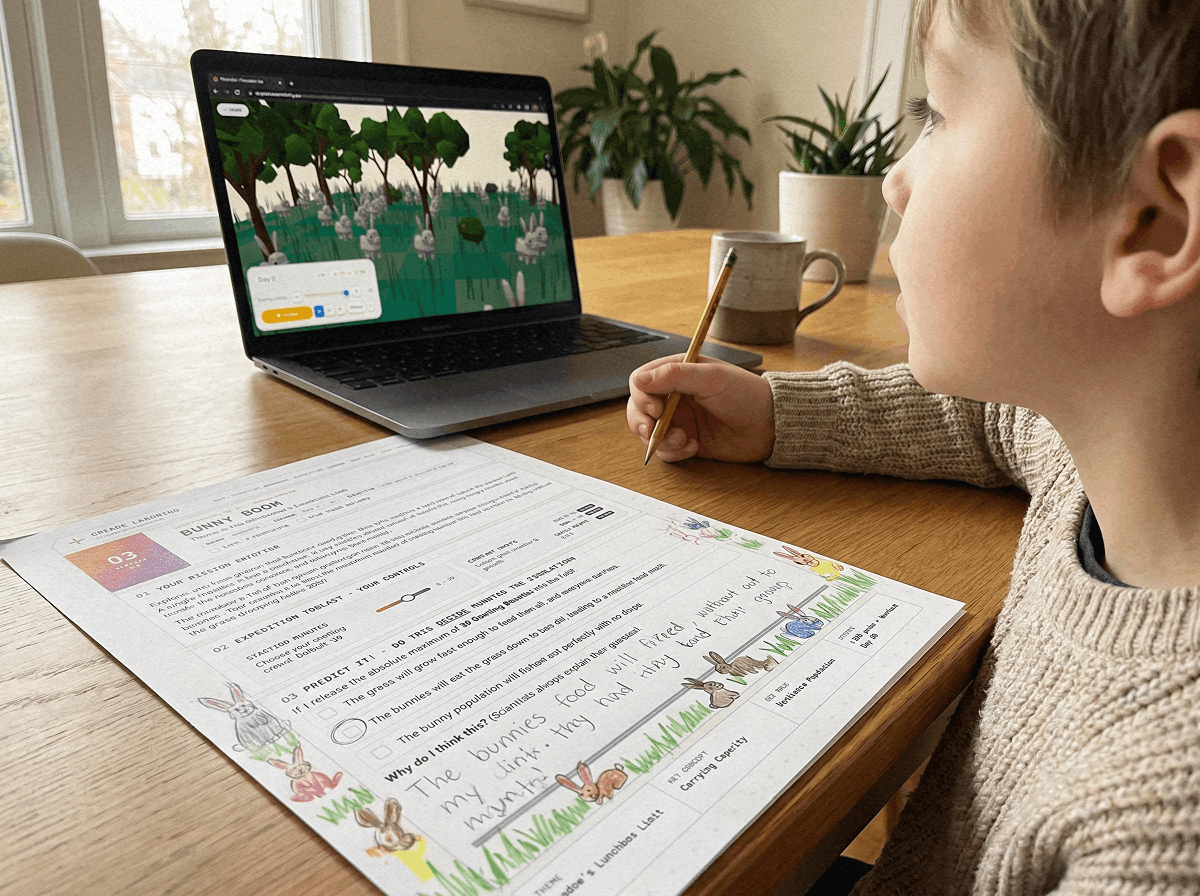
Teaching this topic tomorrow? Download the Free NGSS Student Lab Sheet (Printable PDF)
Access printable preschool nature scavenger hunts, animal footprint matching sheets, and weather tracking cards in a free high-resolution PDF download.
Early Learning Framework: Worksheets vs Nature Inquiry
The comparison table below highlights why sensory nature exploration outperforms commercial preschool workbooks in fostering early cognitive development:
| Curriculum Component | Commercial Preschool Workbooks | Sensory Nature Inquiry Approach | Long-Term Cognitive Benefit |
|---|---|---|---|
| Motor Skill Focus | Tracing dotted lines with pencil | Manipulating pinecones, magnifying glasses, clay | Builds hand strength and bilateral coordination |
| Concept of Animals | Coloring cartoon animals on flat page | Watching real and 3D animal movement habits | Develops authentic ecological empathy and understanding |
| Vocabulary Building | Memorizing flashcard words out of context | Discussing textures, smells, and observations | Encourages complex descriptive language acquisition |
| Parent-Child Bond | Correcting pencil mistakes and errors | Shared wonder during outdoor discovery | Establishes a joyful, stress-free homeschool culture |
Overcoming Common Pitfalls in a Prek Homeschool Curriculum
The most frequent trap for enthusiastic home educators is attempting to recreate formal elementary schooling at age four. Pushing long desk hours or formal handwriting drills often results in tears, resistance, and parental frustration.
Remember that gross motor movement (running, climbing, balancing on logs) is the neurological prerequisite for fine motor pencil control. When children run across uneven meadow grass or balance on stepping stones, their vestibular and proprioceptive systems mature, preparing their brains for future academic concentration.
Embrace short 10- to 15-minute learning bursts. If your child becomes distracted or restless, pause the lesson and transition to physical play. A relaxed, cheerful prek homeschool curriculum builds self-confidence, emotional security, and a vibrant curiosity that lasts a lifetime.
Frequently Asked Questions About Prek Homeschooling
Here are concise, reassuring answers to common questions about educating preschoolers at home.
How many hours a day should a prek homeschool curriculum take?
Does my 4-year-old need to learn how to read in Pre-K?
How can I include science in our preschool day without making a mess?
Is screen time ever beneficial in a prek curriculum?
Download the Free 10-Mission Ecology Logbook
Access printable preschool nature scavenger hunts, animal footprint matching sheets, and weather tracking cards in a free high-resolution PDF download.