The Efficiency Trap: Why Peak Optimization Breeds Fragility
In engineering, business, and evolutionary biology, there is a constant tension between optimization and resilience. When an organism focuses entirely on doing one single thing exceptionally well, it outcompetes everyone else as long as conditions remain unchanged.
Consider a specialist herbivore adapted exclusively to high-sugar, soft berry bushes. With specialized digestive enzymes and sharp dentition, it processes berries at twice the speed of generalist competitors, gaining energy rapidly, producing large litters, and dominating the landscape during good years.
However, systems dynamics reveals the hidden danger: hyper-specialization creates zero fault tolerance. If an unexpected fungus, drought, or invasive insect eliminates that single plant species, the specialist has no fallback plan. It cannot digest alternative foods, and its population plunges to zero.
In Level 10 of the Praxos 3D simulation ("Picky Eaters"), students complete the Phase 2 capstone mission, discovering why genetic diversity and dietary flexibility act as nature's ultimate survival insurance policy.
Specialists win during stability; generalists survive disruptions. An ecosystem optimized solely for peak efficiency collapses when its primary pillar fails.
Generalists vs Specialists: Real-World Ecological Case Studies
Across Earth's ecosystems, the contrast between specialists and generalists shapes species survival and conservation status:
The Giant Panda (Hyper-Specialist): The giant panda's diet consists of 99% bamboo. Because bamboo is low in nutrients, pandas spend up to 14 hours a day eating up to 38 kilograms of shoots. However, bamboo species undergo synchronized mass flowering and die-offs every 30 to 120 years. In fragmented mountain ranges where pandas cannot migrate to find alternate bamboo varieties, local populations face severe famine.
The Koala (Extreme Specialist): Native to Australia, koalas feed almost exclusively on the leaves of a few dozen eucalyptus species. Eucalyptus leaves are toxic to most mammals, giving koalas exclusive access to an abundant food tree. But when deforestation or wildfires sweep through eucalyptus groves, koalas have zero alternative diets.
The Common Raccoon (Ultimate Generalist): Raccoons eat nuts, berries, insects, eggs, fish, small rodents, and human food scraps. Because their digestive system handles almost anything, raccoons thrive from wild Canadian forests to downtown Tokyo and suburban Chicago, withstanding harsh winters, urban expansion, and environmental disruptions.
| Ecological Trait | Specialist Species (e.g., Koala, Panda) | Generalist Species (e.g., Raccoon, Coyote) |
|---|---|---|
| NICHE WIDTHDietary Breadth | Narrow (1 or 2 specific plant/prey species) | Broad (dozens of plant, fruit, insect, and meat sources) |
| EFFICIENCYDigestive Efficiency | Very High on target food (processes toxins or cellulose) | Moderate / Flexible (handles diverse calorie sources) |
| FRAGILITYVulnerability to Disturbance | Extreme (single plant blight causes mass starvation) | Low (switches food sources seamlessly when one fails) |
| DISTRIBUTIONGeographic Range | Limited to specific micro-climates and host plants | Continental / Cosmopolitan across diverse biomes |
The Mechanics of Level 10: Surviving the Day 25 Berry Blight
Level 10 is designed as a systems thinking experiment testing dietary traits and resource buffers across 60 simulation days:
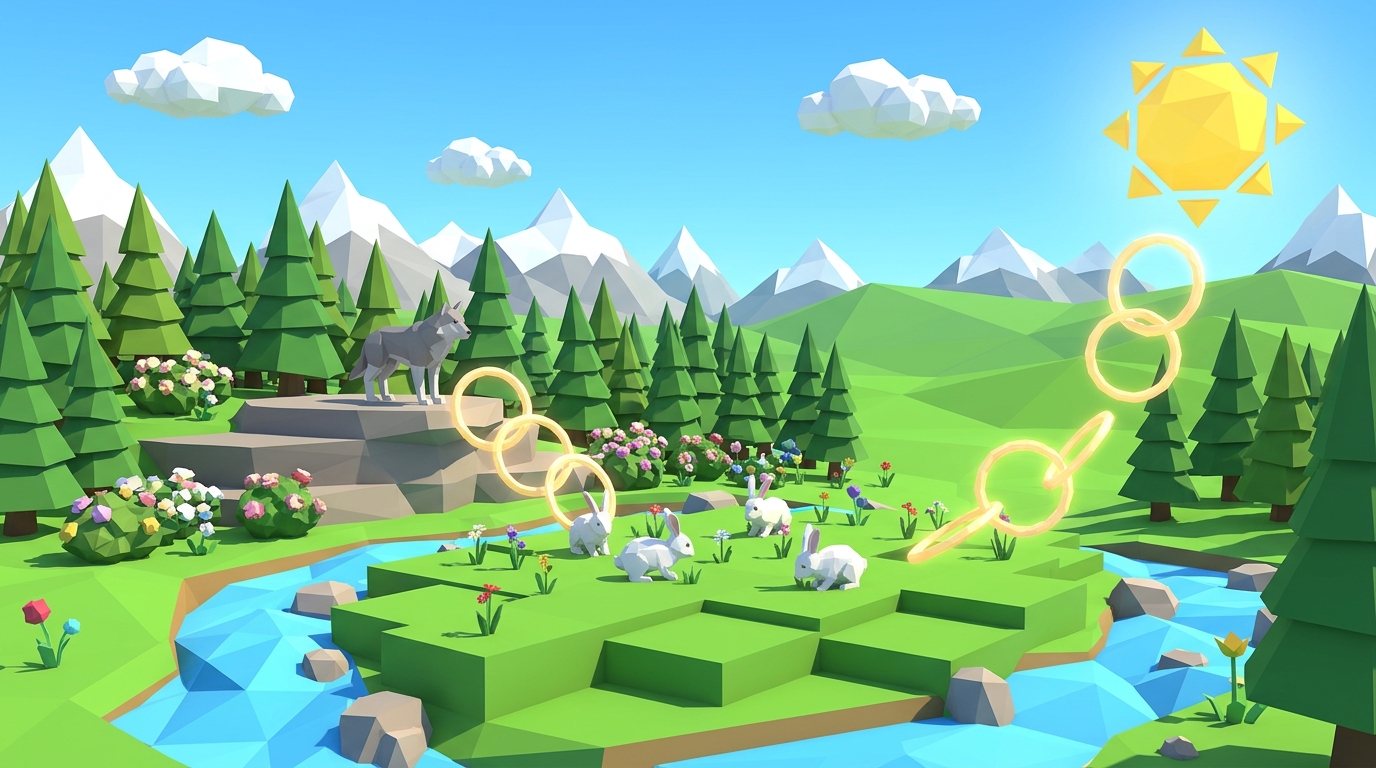
The Meadow Setup: The terrain features both grass and sweet berry bushes. The student controls plantRatio (default 0.60, meaning 60% berries and 40% grass) and chooses between Trait A (Generalist Diet) and Trait B (Specialist Diet).
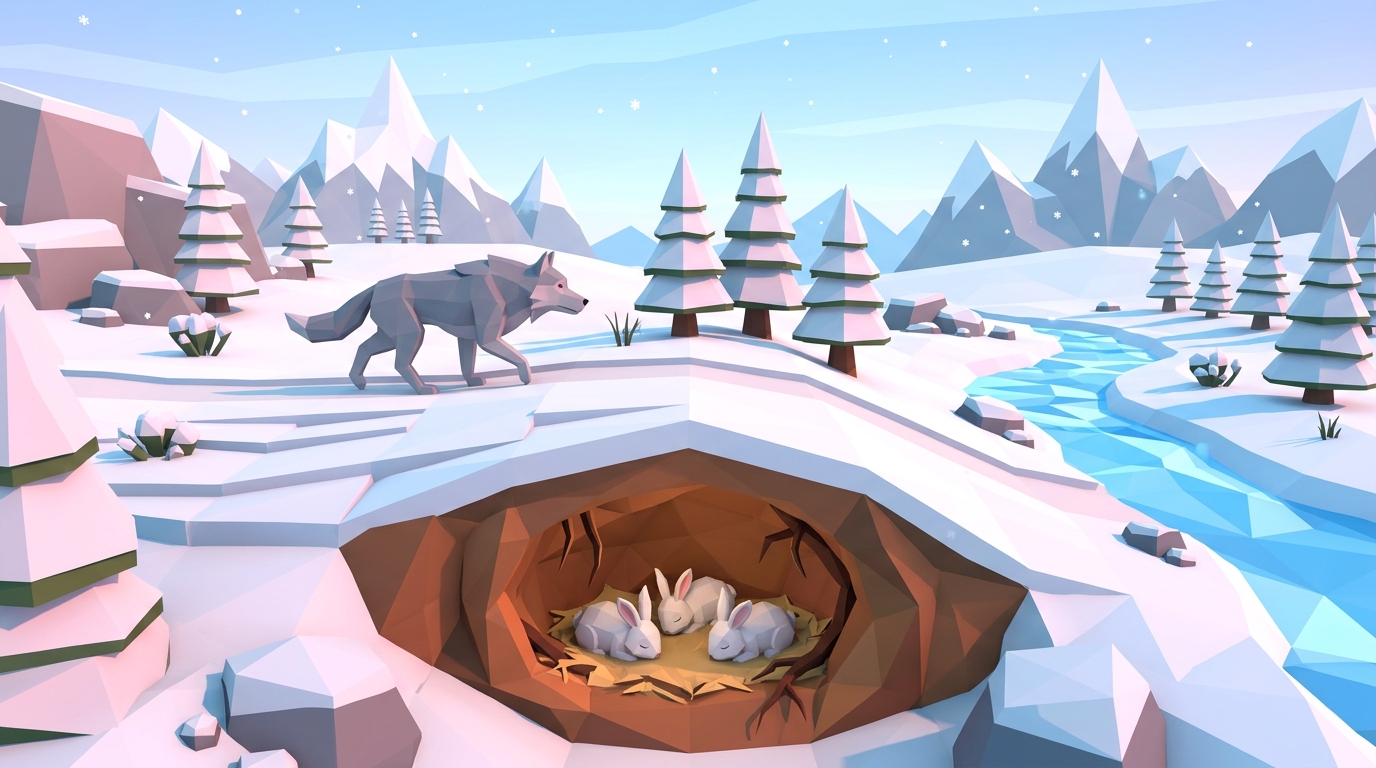
The Catastrophic Shock: On Day 25, an incurable Berry Blight sweeps the map. 100% of berry bushes wither and turn to ash, leaving only green ground grass until berries slowly begin regrowing on Day 50.
The Default Failure Trap: If run with default Trait B (Specialist Diet), specialist rabbits multiply rapidly during Days 1 to 24. But on Day 25, unable to digest tough grass cellulose, 100% of specialists starve to death within 10 days, resulting in total extinction.
Here is the verified scientific strategy to clear Level 10 with a 3-star victory:
Step 1: Select Trait A (Generalist Diet)
Before pressing Play, toggle the genetic trait selector to Trait A: Generalist Diet. This equips your rabbit herd with multi-source digestive capabilities, allowing them to eat both sweet berries and ground grass.
Step 2: Calibrate the Habitat Safety Reserve (Plant Ratio 0.20 to 0.50)
Lower the Berry Plant Ratio slider from the default 0.60 down to between 0.20 and 0.50 (ideally ~0.35). This ensures at least 50% to 65% of the meadow remains planted in sturdy ground grass as an emergency food reserve.
Step 3: Weather the Blight and Cruise to Day 60
Press Play. When Day 25 arrives and berry bushes vanish, generalist rabbits immediately shift their grazing to the preserved grass reserve. Population numbers dip slightly but hold steady above 6 individuals, sailing into Day 60 for an emphatic victory.
Play Level 1 free in your browser to begin your journey, or advance to Level 10 to test genetic trade-offs, crop blights, and dietary resilience in real-time 3D.
Play Level 1 Free in BrowserFunctional Redundancy: Why Systems Need Backup Pathways
In electrical grids, computer networks, and living ecosystems, the most reliable systems are built on functional redundancy: having multiple independent components that can perform the same critical function.
If an airplane has only one hydraulic line, any damage causes a catastrophic crash. If it has three independent backup lines, the flight continues safely even if one fails.
Dietary generalism is nature's version of functional redundancy. A food web where each herbivore connects to only one plant species is brittle. The loss of a single plant cascades into immediate herbivore extinction and predator collapse.
Conversely, a food web rich in generalists features dense webs of interconnected feeding lines. When one food stock suffers a blight, consumers shift along redundant pathways to alternate stocks, absorbing the shock and preserving overall system stability.
Redundancy is not waste; redundancy is insurance. Systems with multiple overlapping pathways survive the shocks that shatter hyper-optimized networks.
Hands-On Science Journal: Dietary Breadth Matrix
Deepen active inquiry with your child or homeschool science cohort by opening a physical science notebook and completing these three exercises:
1. The 2-Column Trade-Off Matrix: Draw a chart comparing Specialist vs. Generalist. For each, list one major advantage during peaceful times and one major danger during environmental disruptions. Conclude with a sentence explaining why neither strategy is "better" in all situations.
2. The Monoculture vs. Poly-Crop Garden Analysis: Relate Level 10 to human agriculture. Ask: "Why was the 1845 Irish Potato Famine so devastating to human populations?" Discuss how planting a single crop variety (monoculture) creates the exact same vulnerability as a specialist animal facing a blight.
3. Local Species Classification Challenge: Choose five animals native to your local state or country (such as white-tailed deer, monarch butterflies, crows, pandas, or honeybees). Classify each organism as either a dietary specialist or generalist, and identify what threats each faces.
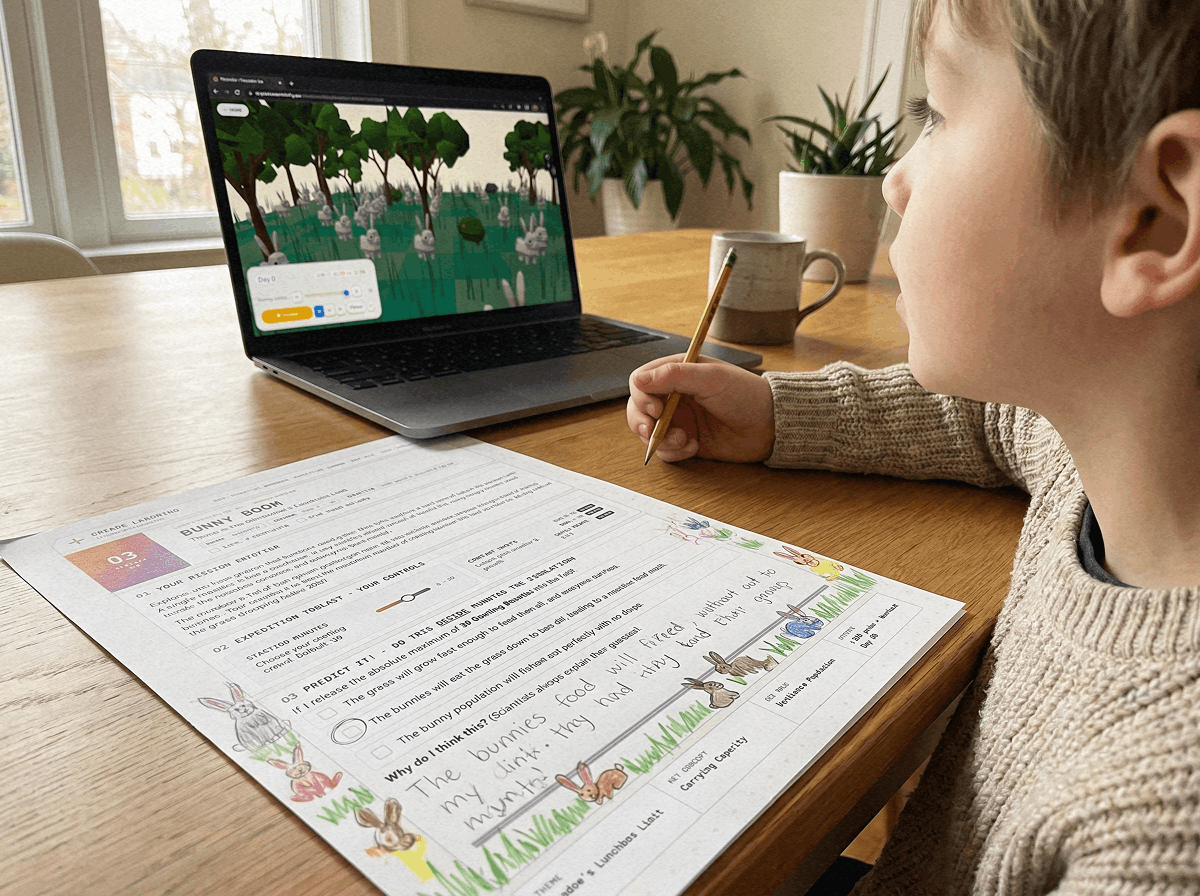
Download the free 24-page PDF journal to complete dietary trade-off matrices, map agricultural monoculture vulnerabilities, and log simulation data.
Download Level 10 Journal (PDF)Frequently Asked Questions: Specialists, Generalists & Diet Breadth
Common questions from educators, parents, and students exploring dietary ecology and resilience:
What is the main difference between a specialist and a generalist species?
Why do specialists multiply faster before the blight in Level 10?
Why must students reduce the berry plant ratio in addition to picking generalists?
Can students play Praxos Level 10 in the browser for free?
Level 10 Mission Log & Ecological Niche Breadth Matrix (PDF)
A printable 24-page Expedition Science Journal featuring specialist vs. generalist trade-off matrices, giant panda case studies, and functional redundancy food web diagrams.