The Solar Batteries of Planet Earth
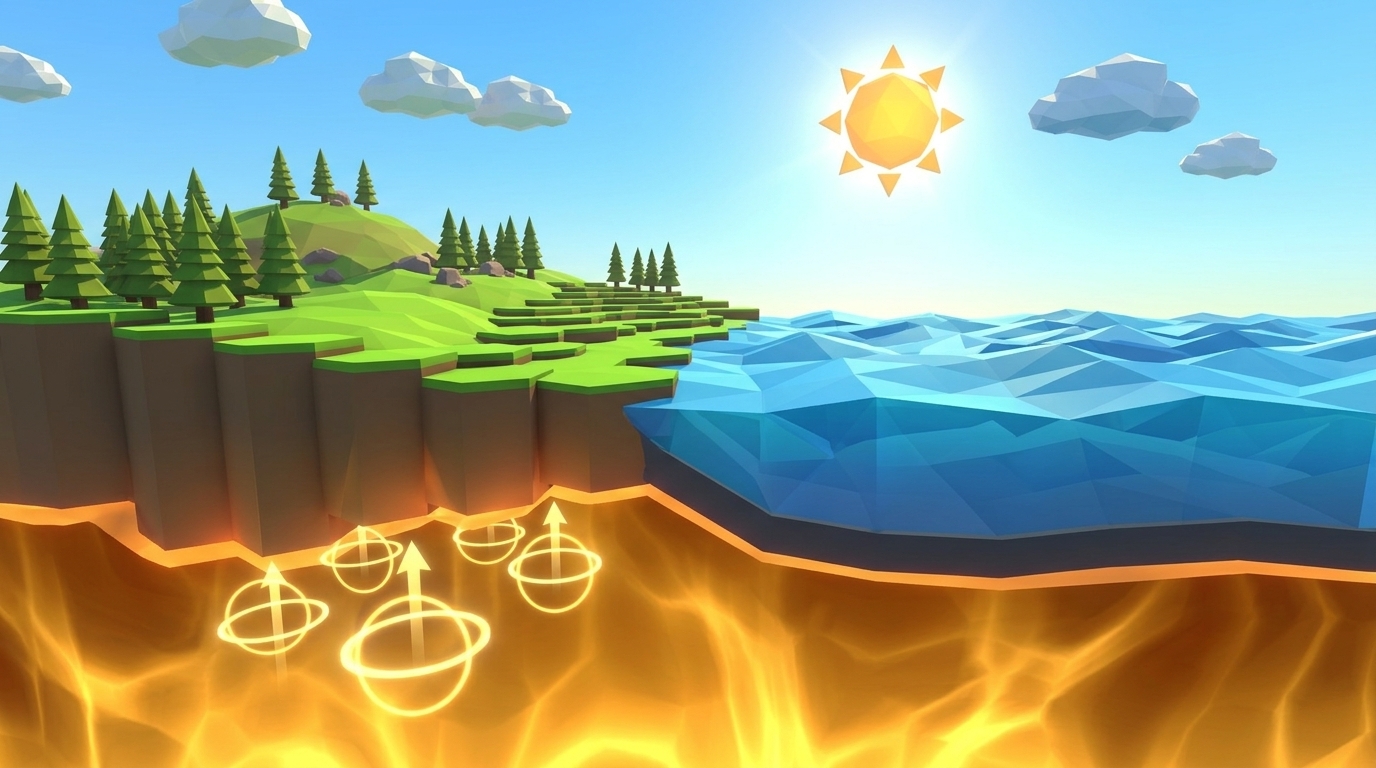
Every living creature on Earth, from tiny bunnies to giant grizzly bears and humans, runs on solar energy. However, animals cannot consume sunlight directly. We rely entirely on primary producers (plants and algae) to function as living solar panels, forming the base for all herbivores and secondary consumers.
Through the process of photosynthesis, plants absorb photon packets from sunlight and combine them with carbon dioxide from ambient air and water drawn through root networks to synthesize glucose (plant sugar) and release oxygen.
Non-Living (Abiotic) Forces Govern the Living World
In ecology, living organisms are classified as biotic factors, while physical environmental parameters such as solar irradiance, precipitation, ambient temperature, and soil minerals are known as abiotic factors.
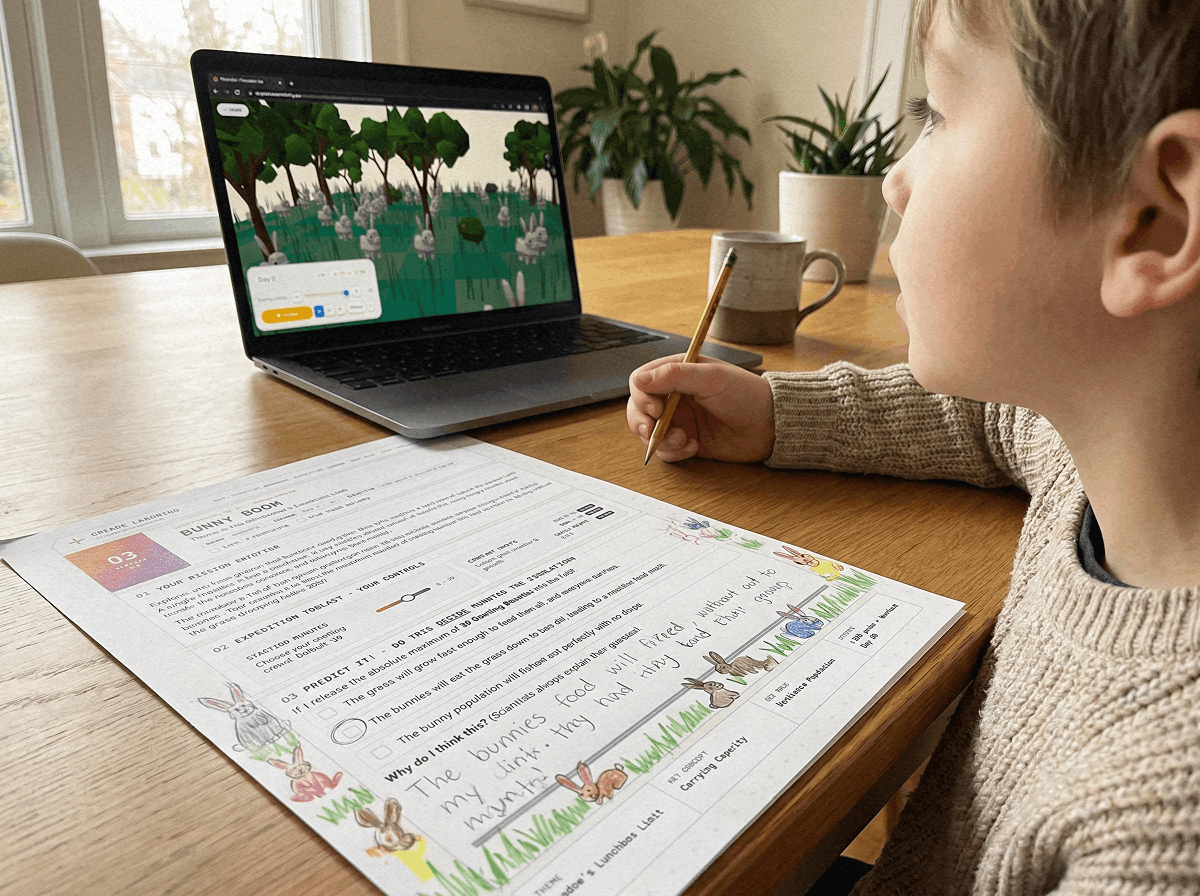
If you alter the abiotic parameters by even 25%, the entire living biomass threshold shifts dramatically. Testing these environmental sliders inside a digital lab transforms an abstract formula into an obvious visual truth.
Over 95% of a massive redwood tree's physical body was built from invisible carbon gas pulled directly out of the air, powered by solar photons.
What Happens When Solar Energy Drops: Drought & Seasonal Stress
In Level 1 and Level 6 of our Ecosystem lab, students test drought and seasonal light deprivation scenarios. When sunlight drops by 50%, plant growth rates stall, setting the dynamic limits of carrying capacity for the entire habitat.
Power the Meadow with Sunlight
Start with Level 1 instantly in your browser (no sign-up needed). Adjust sunlight and rain levels to discover the exact sweet spot that helps vegetation thrive without drying out the soil.
Quick Kitchen Window Experiment for Homeschoolers
Place two identical grass seed cups on a windowsill. Water both equally, but cover one cup with a dark cardboard box. Have your student log daily height measurements in their science journal to observe the direct biological impact of photon starvation.
The Global Carbon Cycle Explained for Young Biologists
Carbon is the fundamental building block of all living cells on Earth. In the atmosphere, carbon exists primarily as carbon dioxide gas. When plants photosynthesize, they capture these gaseous carbon molecules and assemble them into solid cellulose and glucose chains.
When herbivores eat grass, that carbon transfers up the food chain to build animal muscle and bone. When leaves fall and decompose, soil microbes recycle the carbon back into the earth. Understanding this continuous cycle helps students appreciate how plant life directly stabilizes the global climate.
Key Vocabulary Breakdown: Biotic, Abiotic, Chlorophyll, and Biomass
Biotic Factors: All living or once-living components of an ecosystem (such as plants, animals, fungi, and bacteria).
Abiotic Factors: Non-living physical and chemical elements of the environment (including sunlight, rainfall, temperature, and soil minerals).
Chlorophyll: The green pigment molecules located inside plant chloroplasts that capture solar photon energy.
Biomass: The total dry mass of living organisms within a given habitat or trophic level at any specific point in time.
Abiotic Limiting Factors: The Barrel Stave Law Explained for Young Scientists
In plant biology and agronomy, growth is governed by Justus von Liebig Law of the Minimum, often visualized as a wooden barrel with staves of unequal length. Just as the barrel can only hold water up to the height of its shortest stave, a plant growth is strictly limited by whichever essential resource is in shortest supply; whether it is sunlight, hydration, nitrogen, or ambient temperature.
Young learners often assume that if a plant lacks adequate sunlight, providing extra water or fertilizer will compensate. In reality, photosynthesis is a precise biochemical equation: 6CO2 + 6H2O + light energy -> C6H12O6 + 6O2. If photons of light are unavailable to excite chlorophyll molecules, surplus water simply waterlogs the soil and suffocates root systems.
Testing these non-linear limiting factors in 3D sandbox simulations allows students to observe the exact threshold where an excess of one variable fails to overcome a deficiency in another.
Kitchen Ecology Experiment: Tracking Biomass Generation at Home
Bring photosynthesis principles to life with a simple 7-day seed germination investigation using common household materials.
Set up three identical clear cups with moist paper towels and five bean seeds each. Place Cup A on a sunny windowsill (full sunlight + moisture), Cup B in a dark cupboard (zero sunlight + moisture), and Cup C on the windowsill without water (full sunlight + dry). Have your student record daily root emergence, stem elongation in millimeters, and leaf pigmentation changes in their science logbook.
This tactile experiment provides direct physical validation of the abiotic variables simulated in our digital biology laboratory.