What Does a 2nd Grader Need to Learn in Science?
Seven- and eight-year-olds are eager observers of the physical world. In 2nd grade, science focuses on hands-on discovery and learning how to describe what they see using accurate observations.
Under the Next Generation Science Standards (NGSS), a complete 2nd grade homeschool science curriculum covers four core areas:
1. Interdependent Relationships in Ecosystems (2-LS2 & 2-LS4): Plants need sunlight and water to grow, animals disperse seeds and pollinate plants, and diverse habitats support different living things.
2. Structure and Properties of Matter (2-PS1): Classifying materials by observable properties (flexibility, texture, hardness) and exploring how heating and cooling change matter.
3. Earth Events: Fast and Slow (2-ESS1): Understanding quick events (volcanoes, earthquakes) and slow processes (erosion, weathering).
4. Earth Systems: Water Mapping (2-ESS2): Identifying where water exists on Earth in liquid and solid forms.
Keep 2nd grade science joyful and visual. Emphasize questions like "What do you notice?", "What do you wonder?", and "What happens if we give this plant more water?"
2nd Grade Life Science Observation Framework
Here is an easy framework pairing simple backyard activities with digital simulation observations:
| Science Topic | Core Question | Backyard Investigation | Visual Simulation Bridge |
|---|---|---|---|
| Plant Sunlight Needs | Can plants grow without light? | Cover one leaf with foil for 5 days | Slide sun slider to zero in Praxos Level 1 |
| Plant Water Needs | What happens to dry soil? | Compare watered vs unwatered bean seeds | Adjust rainfall slider in Praxos Level 1 |
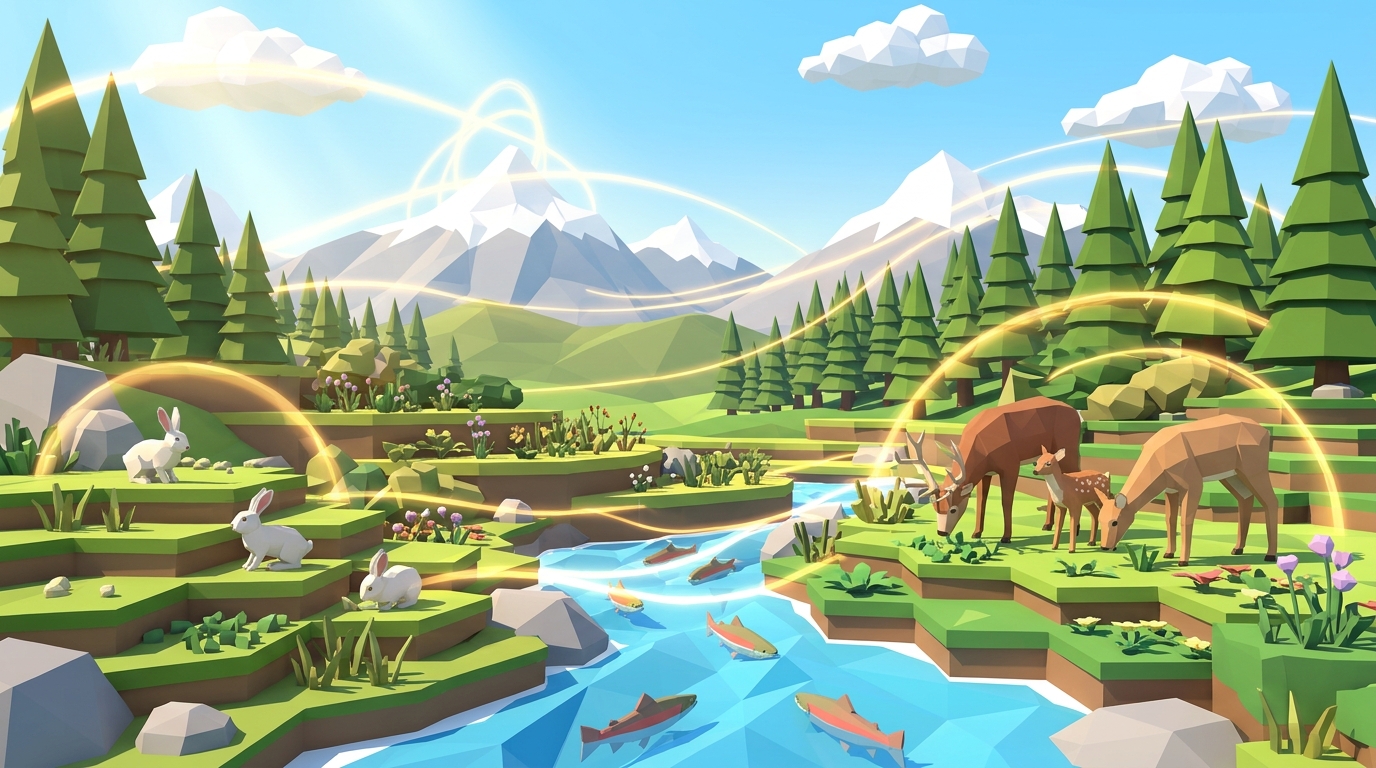
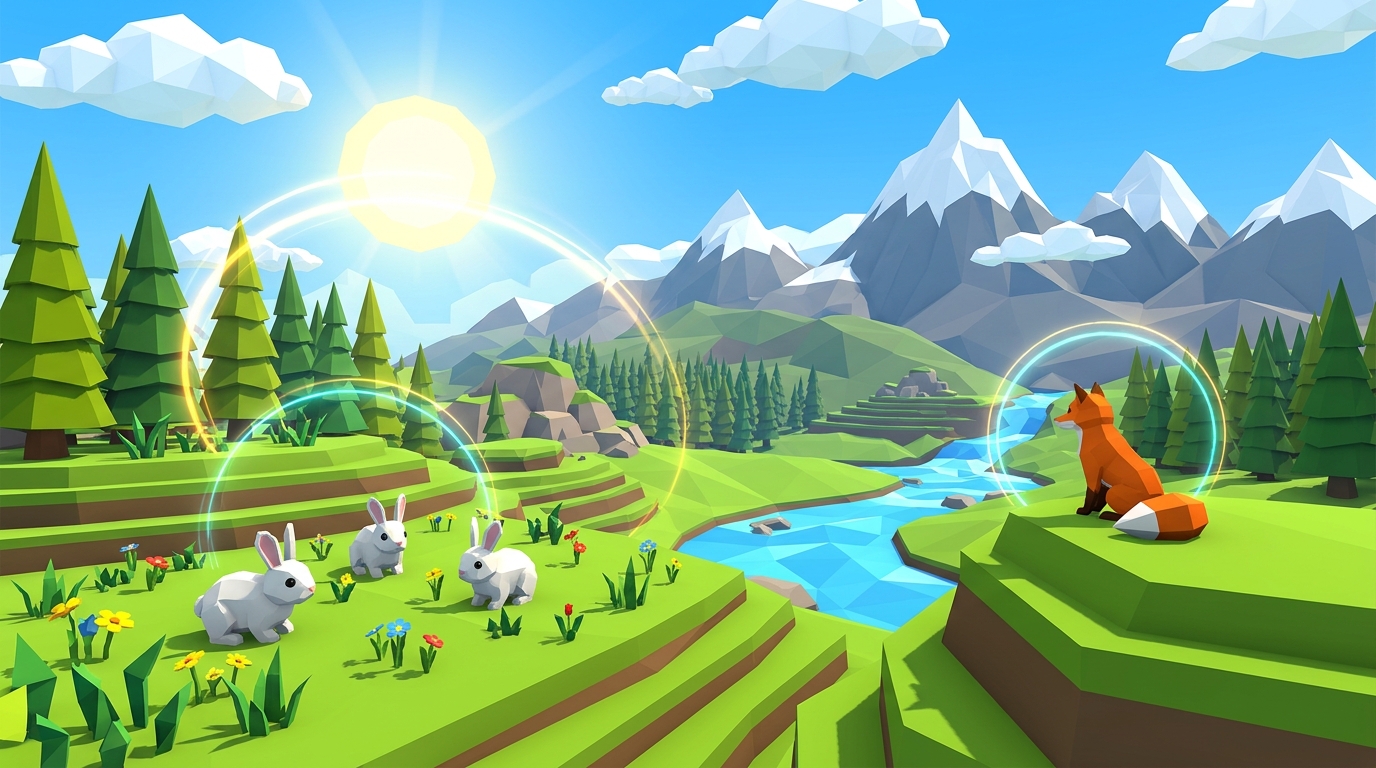
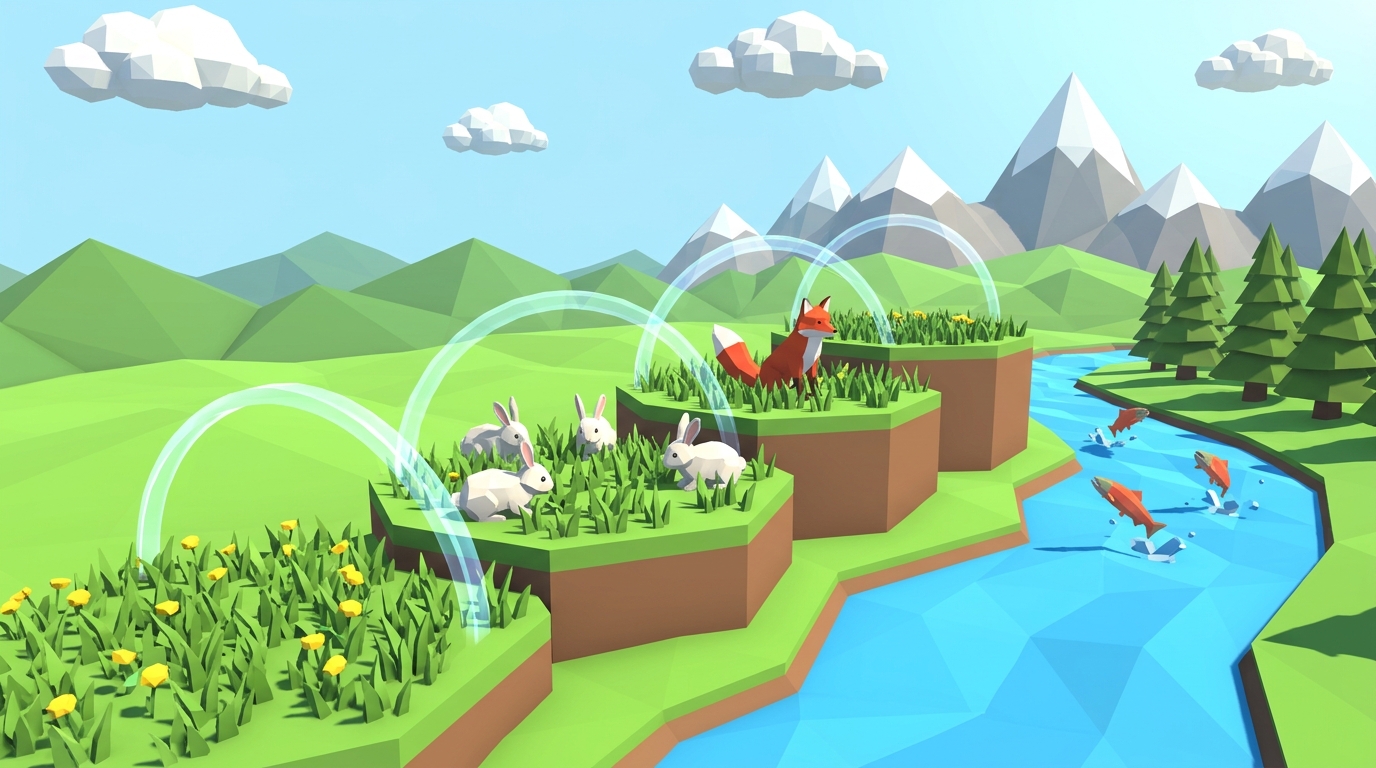
| Habitat Diversity | How many different creatures live in a garden? | Square-foot garden biodiversity count | Observe rabbits, deer, and plants in 3D |
| Seed Dispersal | How do seeds travel away from parent plants? | Sock walk through tall grass to collect burrs | Discuss plant regrowth in meadow simulation |
How Praxos Fits into 2nd Grade Homeschooling
While Praxos Learning is designed primarily for grades 3 through 8, many homeschool families introduce Level 1 to 2nd graders with parent guidance.
Because the 3D WebGL interface is highly visual, a 2nd grader can adjust the sun and rain sliders, watch plants turn green and produce flowers, and see rabbits hop across the meadow. It turns abstract concepts of plant nourishment into an intuitive visual game.
Launch Level 1 free in your browser with no account needed. Perfect for an engaging 20-minute Friday science session.
Launch Free LabFrequently Asked Questions About 2nd Grade Science
Here are quick answers for parents teaching 2nd grade science at home:
How much time should we spend on 2nd grade science?
Two 20- to 30-minute sessions per week are plenty for 2nd grade. Focus on curiosity and hands-on observation rather than formal worksheets.
Where can I find pacing guides for older grades?
See our complete scopes for 3rd grade science curriculum, 5th grade science curriculum, and inquiry-based science for kids.
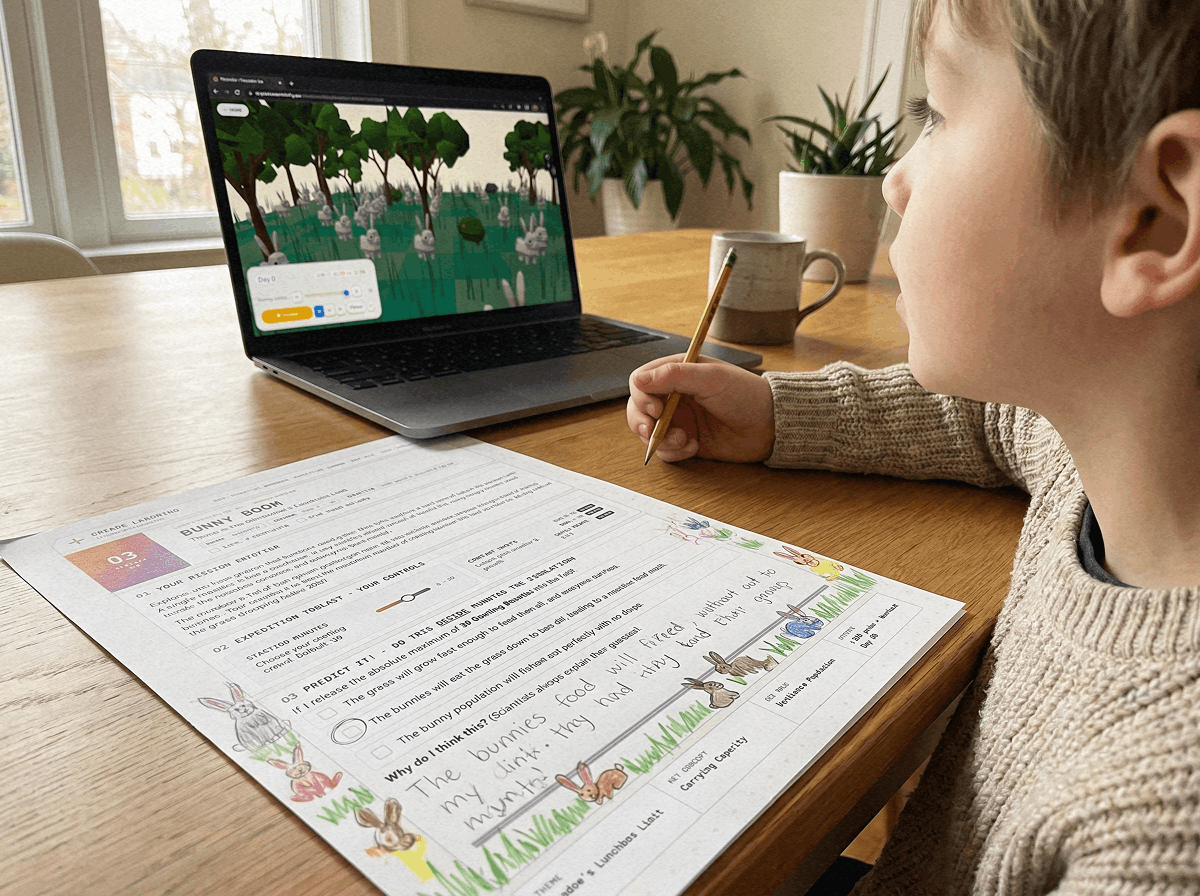
2nd Grade Nature Observation Sheet
A printable drawing and coloring observation sheet for 2nd graders to record plant growth and animal sightings.