Why Educators Loved the Classic Feed the Dingo Game
Originally produced by WGBH for PBS KIDS Plum Landing, "Feed the Dingo: An Australian Desert Ecosystem Game" achieved legendary status in elementary and middle school science classrooms. The premise was delightfully straightforward yet ecologically profound: players managed a 12-day desert habitat challenge, placing producers, herbivores, carnivores, and apex dingoes onto an ecological tile map.
What made Feed the Dingo so effective was its unforgiving ecological logic. If a student placed too many thorny devil lizards without enough spinifex grass and desert ants to sustain them, the lizards starved within two turns. If they placed dingoes without sufficient quolls and bilbies, the apex predators vanished. The game provided immediate, tangible feedback on the necessity of high biodiversity.
However, as classroom hardware shifted to modern Chromebooks and curricula adopted NGSS three-dimensional learning standards, educators have sought modern alternatives that build on Feed the Dingo core strengths while eliminating outdated technical limitations.
Every top predator depends on a broad base of producers. When students fail to support the bottom of the food web, the top inevitably collapses.
Common Limitations of Classic 2D Grid Ecosystem Games
While classic 2D educational games paved the way, modern science teaching requires deeper computational modeling:
1. Discrete Turn-Based Steps vs. Continuous Time: In Feed the Dingo, events occurred in discrete 12-day chunks. Real ecosystems operate under continuous time equations where births, hunting, and starvation occur simultaneously.
2. Static Grid Tiles vs. Dynamic 3D Spatial Physics: Modern WebGL allows students to observe organisms physically foraging, seeking shelter in terrain, and establishing territory.
3. Browser Compatibility and Legacy Code: Many older Flash-era educational games suffer from scaling bugs, sluggish audio playback, or broken mobile touch controls on high-resolution Chromebook displays.
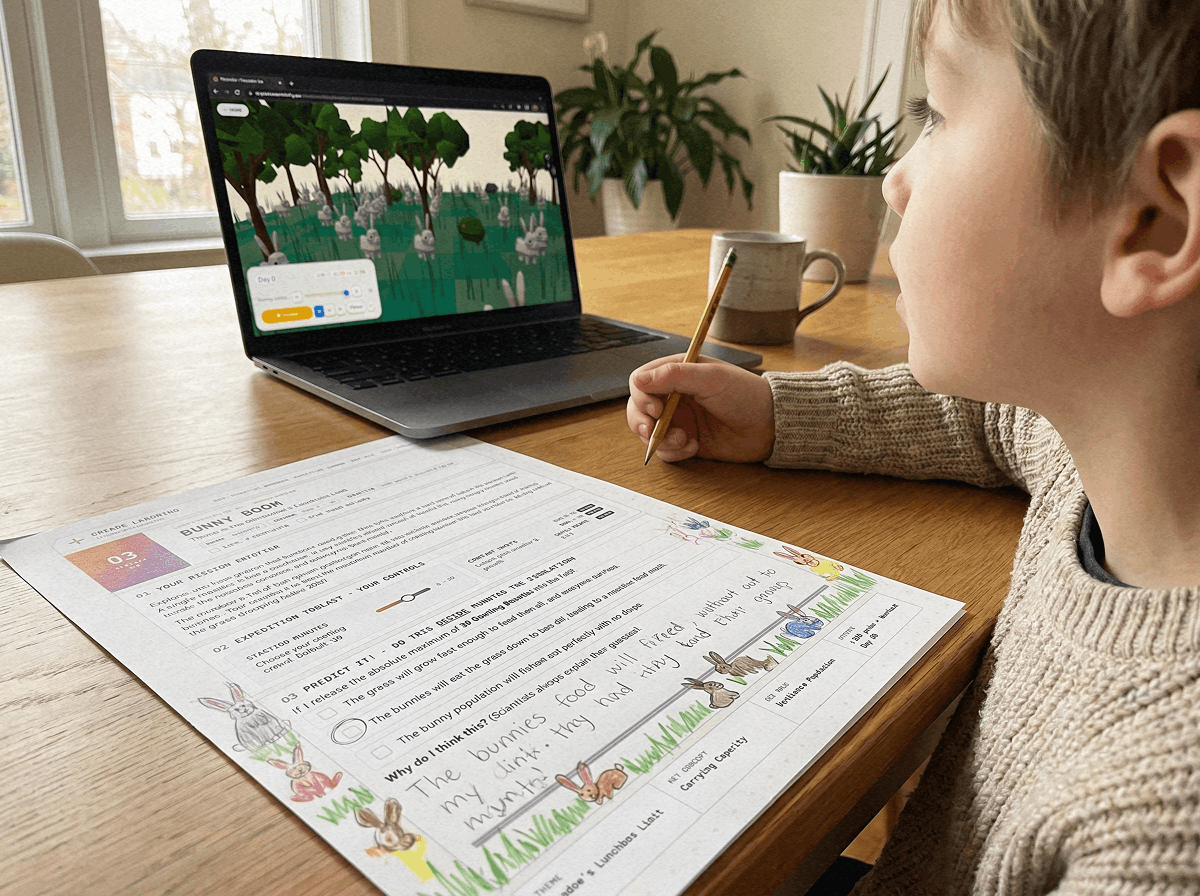
4. Lack of Physical Lab Documentation: Older browser games rarely included structured companion printables that bridge digital play with handwriting and graphing in science notebooks.
Top 4 Modern Alternatives to Feed the Dingo (Ranked)
We evaluated modern educational ecology tools to find the best successors to Feed the Dingo:
Praxos 3D Interactive Ecosystem Sandbox
3D WebGL Real-Time Physics & Classroom Chromebooks
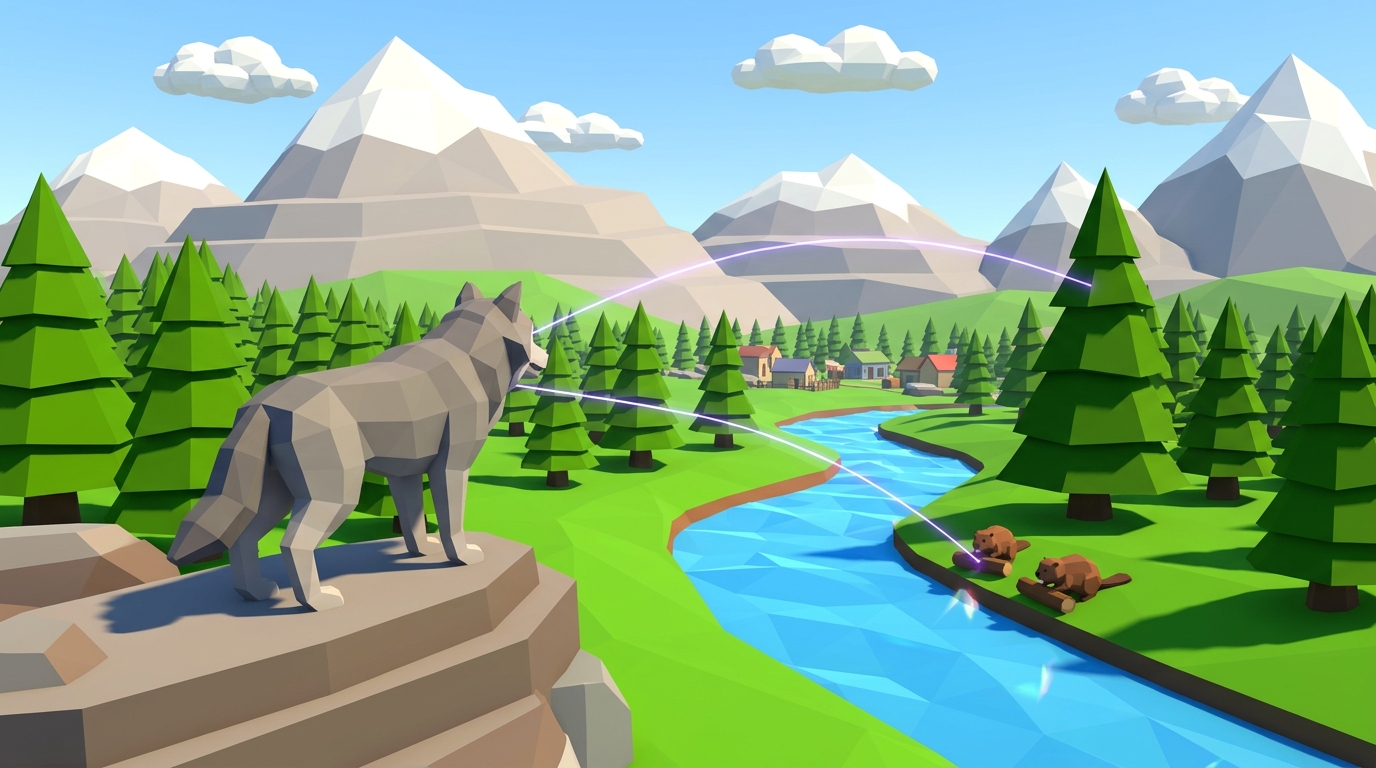
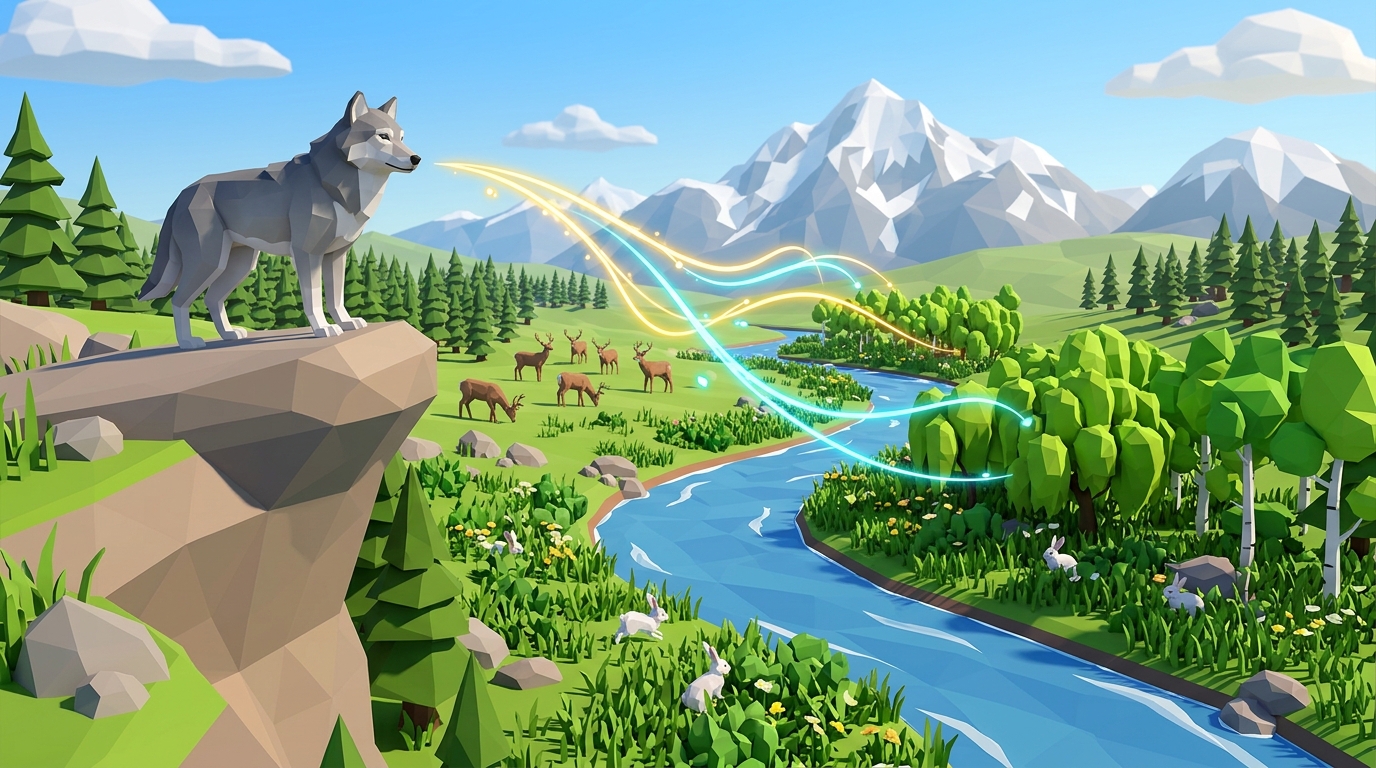
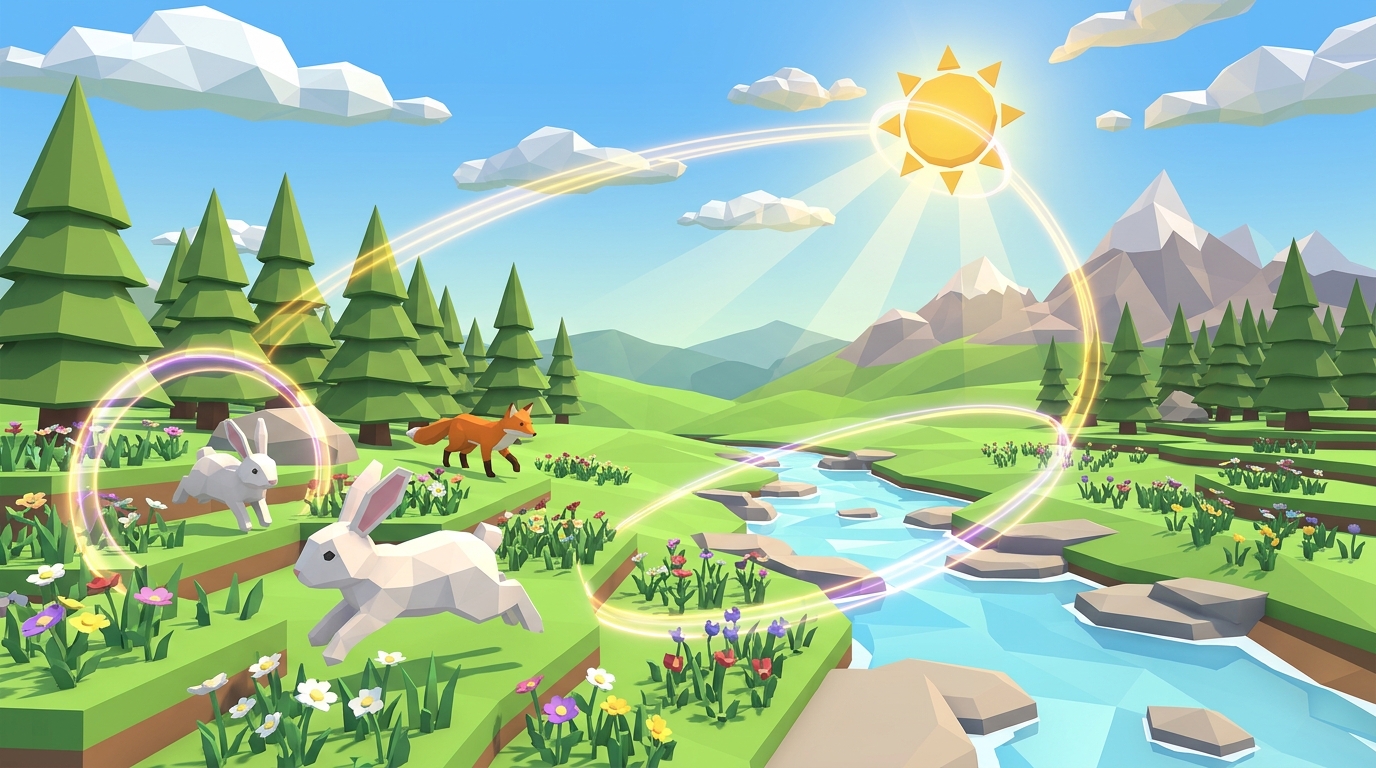
Praxos takes the core balancing mechanic of Feed the Dingo and brings it into a stunning 3D low-poly WebGL world. Students balance plant biomass, rabbit primary consumers, and fox predators over 10 progressive levels. Includes real-time slider controls and a 24-page printable companion logbook.
- ✓Smooth real-time 3D simulation with zero plugins or downloads
- ✓Continuous population curves replacing turn-based day steps
- ✓Printable 24-page science journal with graphing and hypothesis templates
- ✓Direct NGSS MS-LS2 curriculum alignment with zero ads
PBS KIDS Plum Landing: Feed the Dingo (Original)
Introductory Desert Ecology for Younger Students
The original 12-day Australian desert challenge. Great for younger elementary students learning desert food chains, featuring bilbies, red kangaroos, thorny devils, and dingoes.
- ✓Charming 2D animated animal art and desert theme
- ✓Simple drag-and-drop placement mechanics
- ✓Free teacher support materials on PBS LearningMedia
HHMI BioInteractive: Gorongosa Food Web Builder
African Savannah Food Webs & Advanced Biomass
A data-driven interactive tool based on real Gorongosa National Park ecological surveys. Students build complex African savannah food webs using real camera-trap animal data.
- ✓Authentic field biology data and animal cards
- ✓Deep analysis of trophic cascades and herbivore diets
- ✓Ideal for advanced middle and high school students
NetLogo Web: Wolf-Sheep-Grass Predation Model
Agent-Based Ecological Systems Modeling
A classic agent-based simulation where individual virtual agents roam a grid, reproduce, and consume resources according to customizable mathematical rules.
- ✓Real-time population line graphs alongside agent canvas
- ✓Inspectable and editable underlying code rules
- ✓Demonstrates emergent carrying capacity cycles
Comparison Matrix: Feed the Dingo vs. Modern 3D Ecosystem Simulators
See how the classic PBS title compares with modern WebGL tools:
| Feature | Feed the Dingo (PBS KIDS) | Praxos 3D Ecosystem Lab |
|---|---|---|
| MODERN WEBGLGraphics & Technology | 2D Sprite Grid (HTML5 Port) | Real-time 3D Low-Poly WebGL Engine |
| Time Model | Turn-based 12-day survival round | Continuous real-time seconds and simulated months |
| Variable Controls | Fixed daily organism drop quotas | Live dynamic sliders for sunlight, rain, and predator density |
| Printable Curriculum | Online HTML teacher guides | 24-page student lab journal with graphing templates |
| School Device Compatibility | Standard browser | Optimized 60fps for classroom Chromebooks |
Frequently Asked Questions About Feed the Dingo Alternatives
Common questions from teachers transitioning from classic classroom web games:
Is Feed the Dingo still playable in modern web browsers?
What makes Praxos a strong alternative for middle school science?
Can students play Praxos without creating accounts?
How long does a typical Praxos simulation lab session last?
Free Supporting Science Curriculum and Classroom Tools
Continue your classroom exploration with these free teaching guides:
Review top digital tools in our best free food web games online catalog.
Run inquiry labs using our interactive food web activity guide.
Test population equations in our food web simulation online guide.
Explore virtual lab alternatives in our food web simulation phet alternative review.
Create your educator account on our teacher dashboard.
Printable energy pyramid calculation tables, trophic level matching sheets, and hypothesis logs designed for all 10 simulation missions.
GET FREE MISSION LOGBOOK (PDF)24-Page Expedition Science Journal
A printable lab logbook with biodiversity tracking checklists, predator-prey balance tables, and ecosystem stability scoring grids.