Why Teachers Search for a PhET Food Web Simulation
Founded by Nobel laureate Carl Wieman at the University of Colorado Boulder, PhET Interactive Simulations is world-renowned for its intuitive, research-backed virtual science labs. Millions of STEM educators rely on PhET because their simulations adhere to strict educational principles: zero advertisements, zero mandatory accounts, highly responsive variable sliders, and an open inquiry sandbox format.
When middle school life science teachers arrive at the ecology unit, many search Google for "food web simulation phet" expecting to find a comprehensive virtual lab covering trophic levels, food chains, and energy flow. However, they quickly discover that PhET does not offer a dedicated food web simulation.
PhET flagship biology simulation is "Natural Selection," which brilliantly illustrates genetics, fur color mutations, and predator camouflage in rabbits. But it is fundamentally a genetics simulation, not an ecological food web model. It does not allow students to adjust primary producer biomass, balance multi-tier trophic cascades, or study ecosystem energy transfer.
While PhET excels at physics, chemistry, and genetics, middle school life science teachers need a dedicated multi-trophic food web laboratory.
Genetics Simulators vs. Multi-Trophic Food Web Simulators
Understanding the distinction between genetics simulations and food web simulations is critical for curriculum planning:
1. Focus of Natural Selection Simulators (e.g., PhET): Focuses on microevolutionary allele frequencies, dominant versus recessive traits, and phenotypic fitness within a single species over generations.
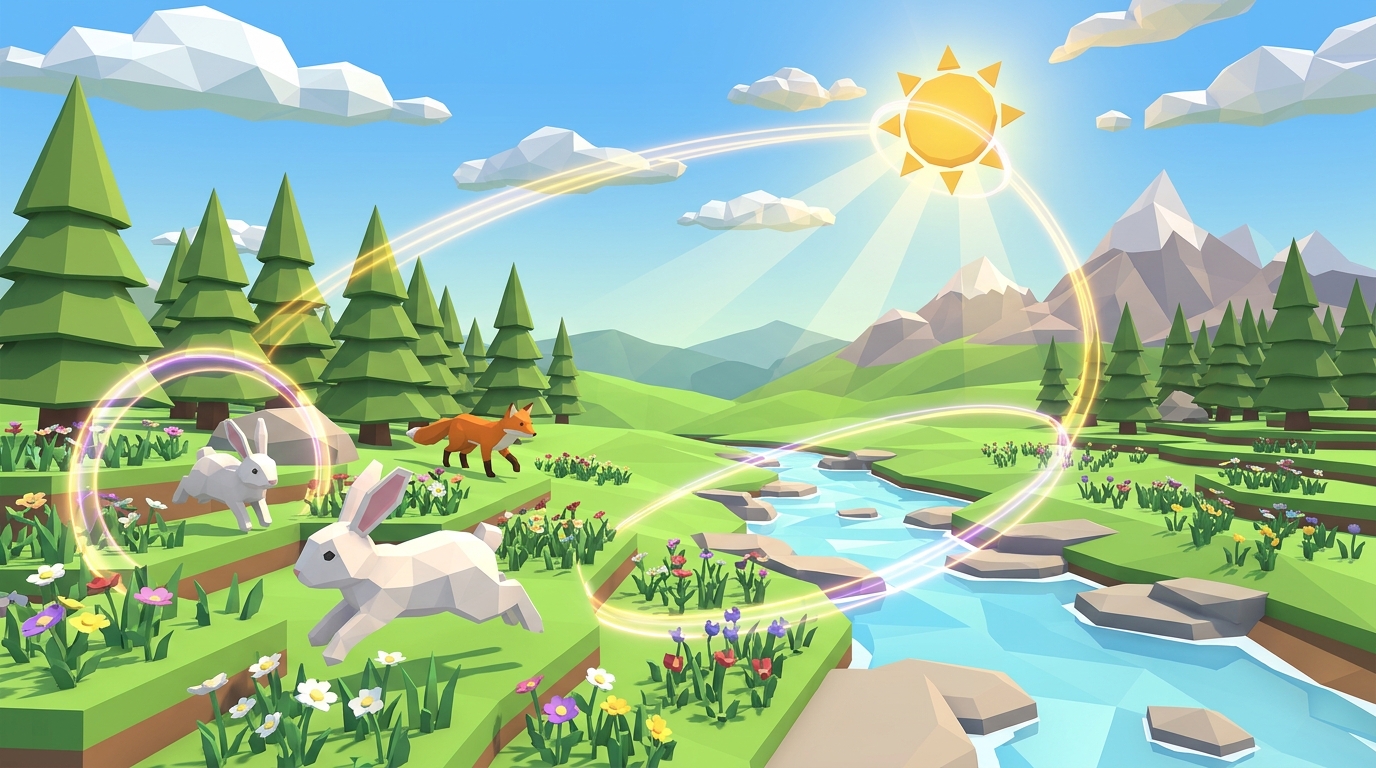
2. Focus of Multi-Trophic Food Web Simulators (e.g., Praxos): Focuses on macroecological systems, trophic energy transfer across 4 distinct feeding levels, abiotic resource limits (sunlight, rain), and multi-species carrying capacity.
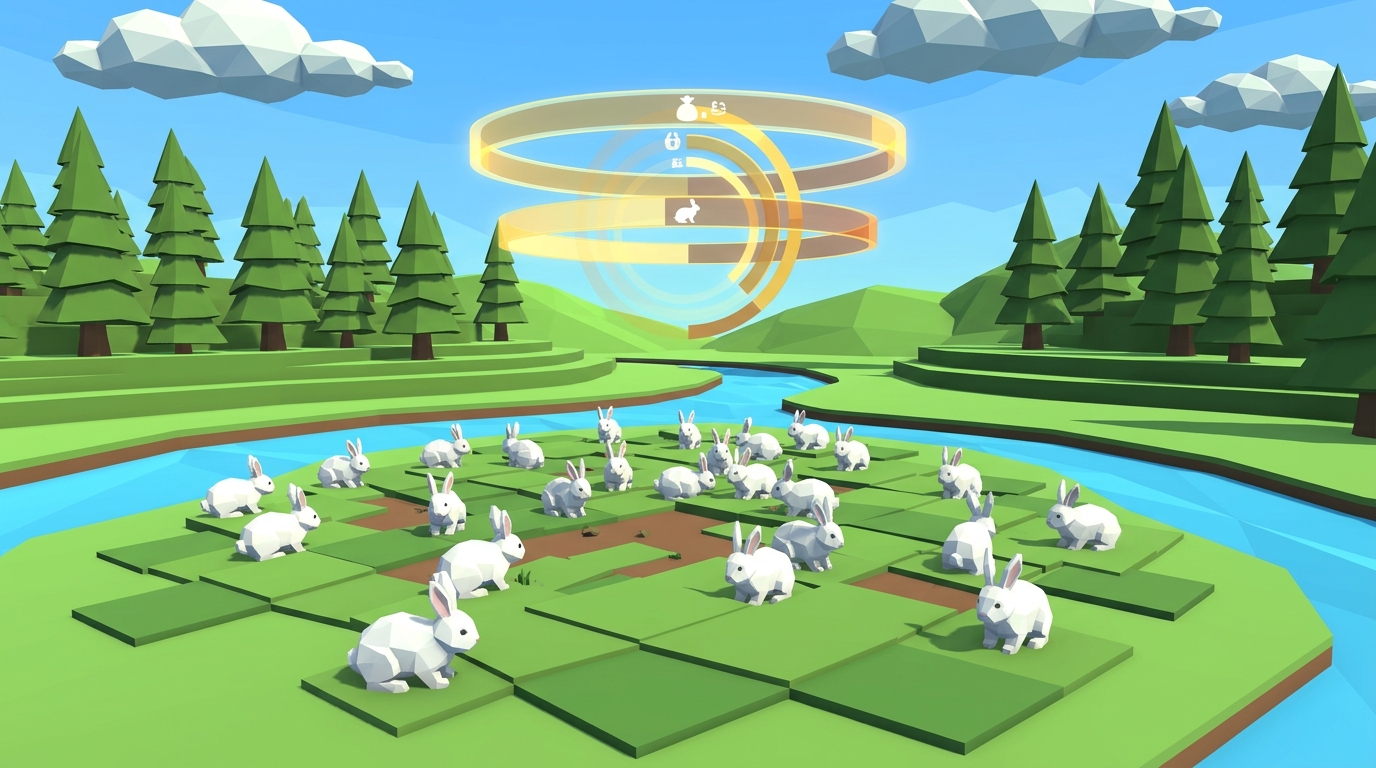
While genetics simulations answer "which rabbit variant survives," a food web simulation answers "how many rabbits can this meadow support before the vegetation collapses and starves the predator population?" Both are essential, but they teach completely different NGSS standards.
Key Features of a PhET-Quality Food Web Virtual Lab
Praxos was built following the very principles that make PhET simulations beloved by STEM educators:
Zero Login Friction: Students open the browser link and begin experimenting immediately with zero accounts, passwords, or data collection.
Unconstrained Parameter Sliders: Students manipulate real variables including sunlight, rainfall, herbivore quotas, and predator introduction rates in real time.
Real-Time Visual and Quantitative Feedback: As students adjust sliders, they see both physical 3D organism behavior and numeric biomass telemetry simultaneously.
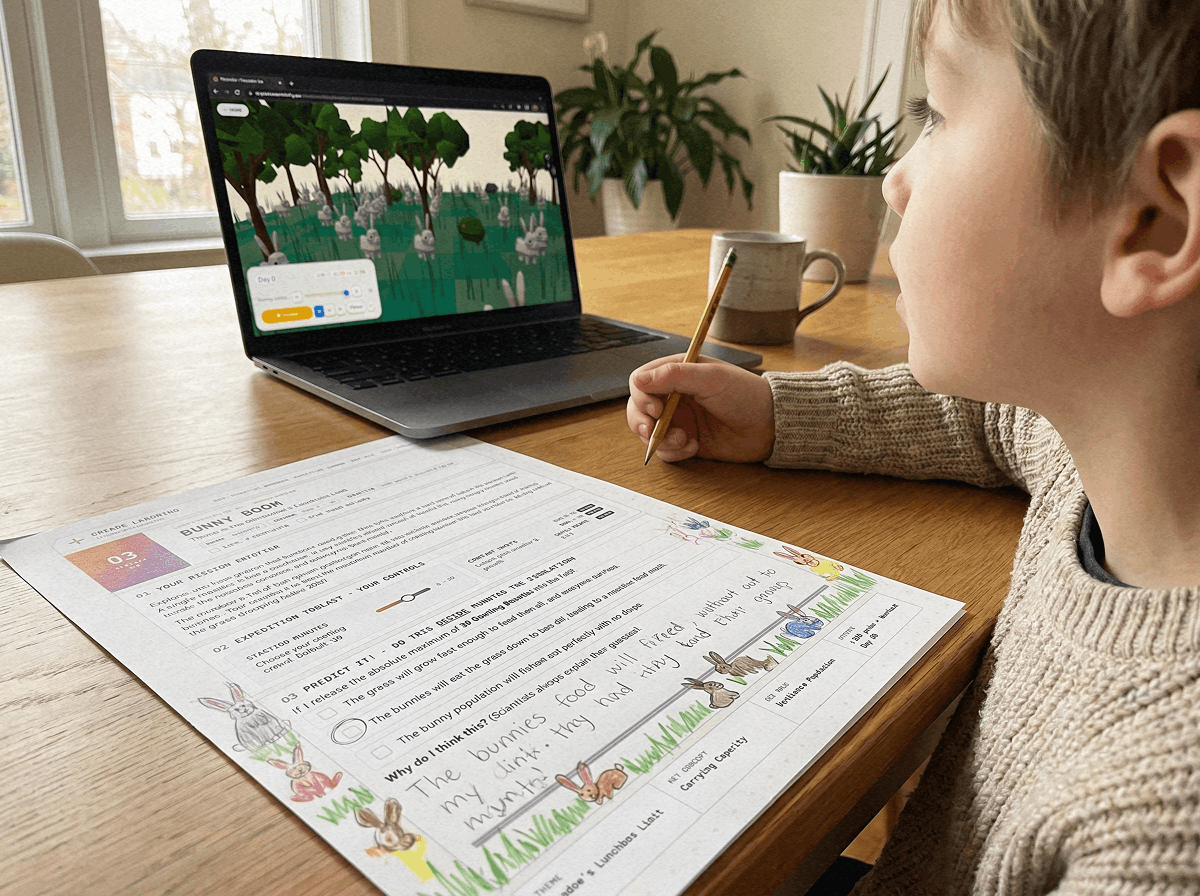
Printable Student Lab Logbooks: Pairs the screen experience with physical handwriting and graphing via the free 24-page Expedition Science Journal.
PhET Natural Selection vs. Praxos 3D Food Web Virtual Lab
Here is how the two complementary life science tools compare side by side:
| Feature | PhET Natural Selection | Praxos 3D Ecosystem Lab |
|---|---|---|
| LIFE SCIENCE FITPrimary Subject | Genetics, Mutations & Natural Selection | Food Webs, Trophic Cascades & Energy Transfer |
| NGSS Standard Target | MS-LS4-4 & MS-LS4-6 (Biological Evolution) | MS-LS2-1, MS-LS2-2 & MS-LS2-3 (Ecosystem Dynamics) |
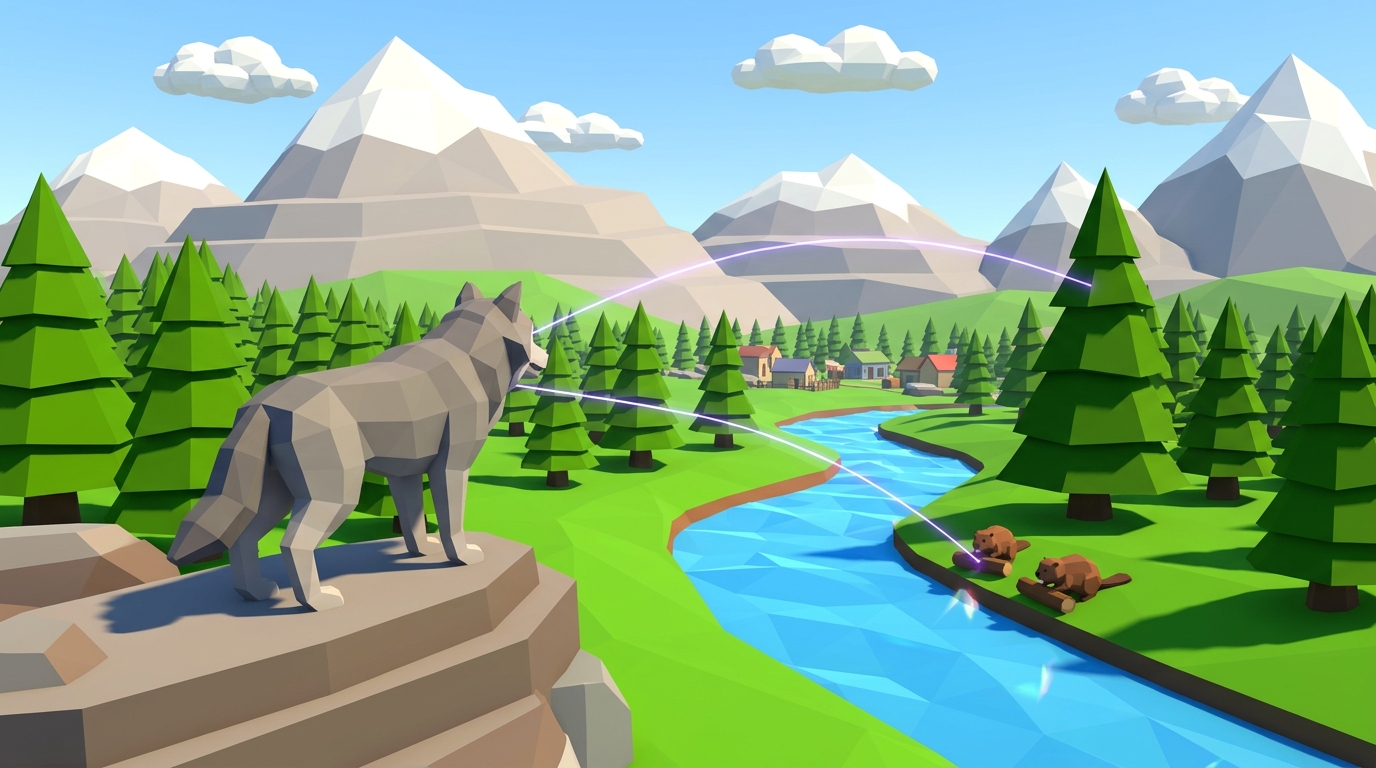
| Trophic Levels Modeled | Single prey species (rabbits) with wolf pressure | Producers, primary consumers, secondary consumers, apex predators |
| Abiotic Controls | Limited environmental toggles | Full real-time sunlight, precipitation, and terrain sliders |
| 3D WebGL Rendering | 2D Sprite Canvas | Full 3D Low-Poly Three.js Engine |
Frequently Asked Questions About PhET Food Web Simulations
Common questions from educators seeking virtual life science labs:
Does PhET plan to release a dedicated food web simulation?
Can Praxos be used alongside PhET in a middle school science unit?
Are there any costs or subscriptions required for Praxos?
How do students record data from the Praxos simulation?
Free Supporting Science Curriculum and Classroom Tools
Explore additional free resources for your science classroom:
Review top digital tools in our best free food web games online catalog.
Run inquiry labs using our interactive food web activity guide.
Test population equations in our food web simulation online guide.
Find classic ecosystem challenges in our feed the dingo game alternatives article.
Set up your classroom roster on our educator dashboard.
Printable energy pyramid calculation tables, trophic level matching sheets, and hypothesis logs designed for all 10 simulation missions.
GET FREE MISSION LOGBOOK (PDF)24-Page Expedition Science Journal
A printable lab notebook featuring hypothesis sheets, food web energy transfer calculation charts, and population graphing grids for classroom labs.