The High Cost of Homeschool Science: Why Parents Overspend on Boxed Kits
For many homeschool families, science is the single most expensive subject in their annual budget. Between boxed textbook sets ($150 to $300), monthly subscription experiment kits ($360 to $600 per year), and local co-op lab fees ($400 to $800), parents often spend over $1,000 per child each year.
Yet despite this heavy financial investment, subscription boxes frequently disappoint: single-use plastic components break, chemical reagents cannot be reused if an experiment fails, and children rarely retain the underlying scientific principles once the novelty of the craft wears off.
Building an affordable homeschool science curriculum does not mean sacrificing academic rigor. By combining free interactive 3D browser simulations, printable student lab journals, and everyday household materials, you can create a world-class STEM experience for less than $60 per year.
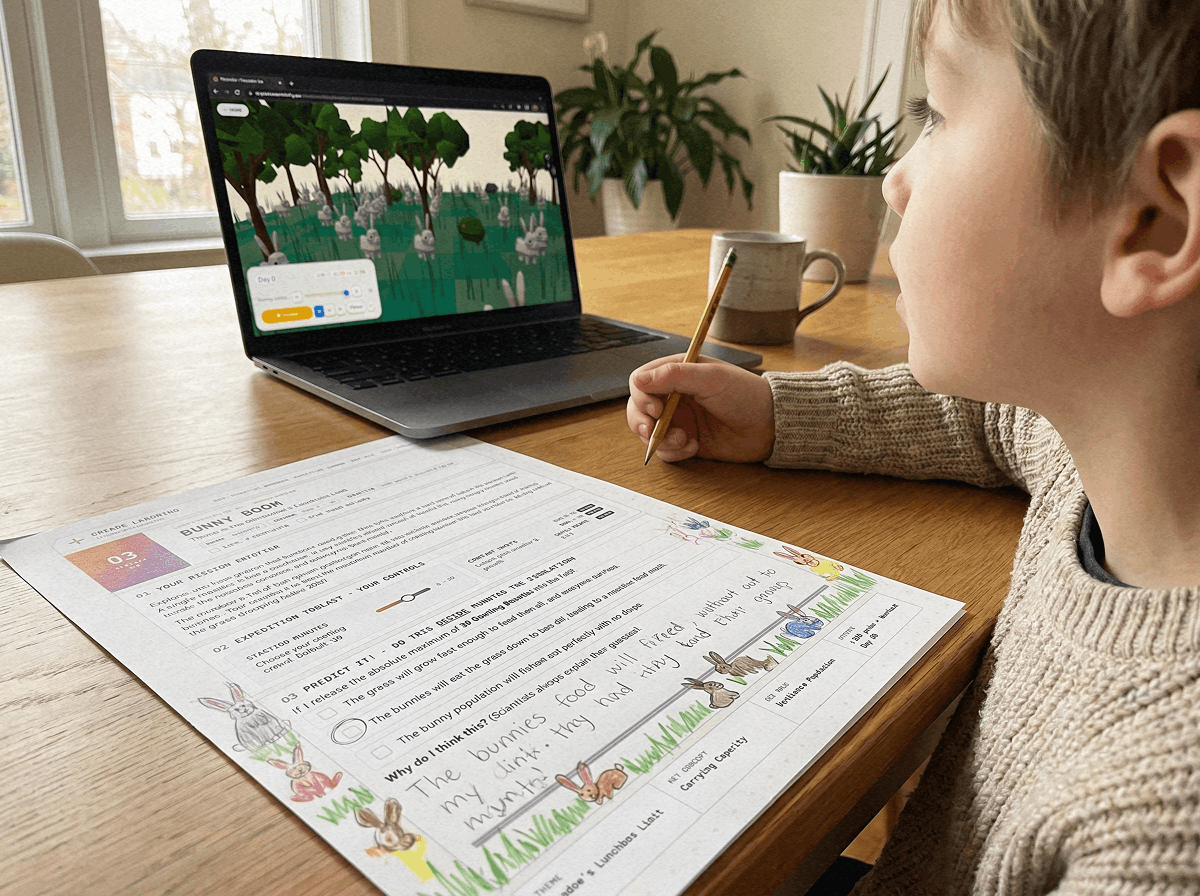
The most cost-effective homeschool science model pairs free interactive digital lab simulations (for infinite zero-mess hypothesis testing) with inexpensive printed lab notebooks (for handwriting data and permanent portfolio documentation).
Comparison Matrix: 5 Homeschool Science Curriculum Models Compared by Cost & Value
To help you allocate your homeschool budget effectively, here is how the five most common elementary and middle school science formats compare across annual cost, hidden fees, and learning depth:
| Curriculum Format | Average Annual Cost | Hidden Consumable Fees | Mess & Prep Time | Scientific Inquiry Depth |
|---|---|---|---|---|
| EXPENSIVEMonthly Subscription Kits (e.g. KiwiCo, Mel Science) | $360 - $600 / year | High (single-use reagents, extra sibling kits) | High (kitchen cleanup, spills, broken parts) | Low to Moderate (craft assembly over variable isolation) |
| TRADITIONALTraditional Boxed Textbooks (e.g. BJU, Abeka) | $150 - $300 / year | Moderate (separate lab manuals and tests) | Low (reading-heavy, workbook drills) | Low (memorization over active experimentation) |
| LIVING BOOKSCharlotte Mason Living Books & Nature Lore | $50 - $120 / year | Low (library books, basic sketchbooks) | Low (outdoor walks, field journaling) | Moderate (great observational habit, light on math) |
| CO-OPLocal Homeschool Co-op Lab Classes | $400 - $800 / year | Moderate (facility fees, shared lab kits) | Low for parent (handled by teacher) | Moderate (dependent on volunteer instructor) |
| BEST VALUEHybrid 3D Simulation + Printable Journal (Praxos) | Free to $59 / year | Zero (unlimited digital trials, free PDF journals) | Zero (no cleanup, open-and-go browser lab) | High (NGSS MS-LS2 systems modeling & hypothesis testing) |
How to Build a Complete 36-Week High-Impact Science Curriculum for Under $60
You do not need an expensive boxed curriculum package to provide a comprehensive, year-long science education. Here is a proven 36-week scope and sequence built for grades 3-8 on a $60 total budget:
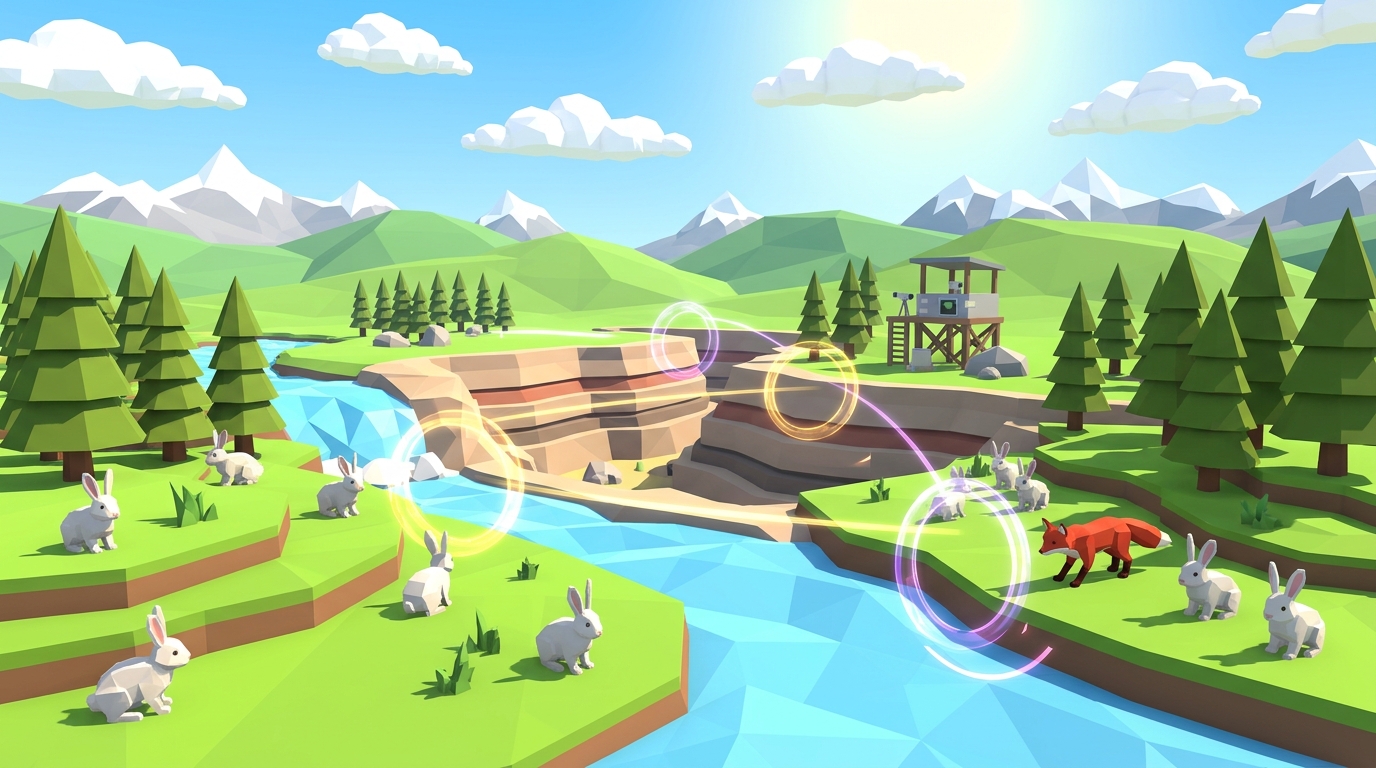
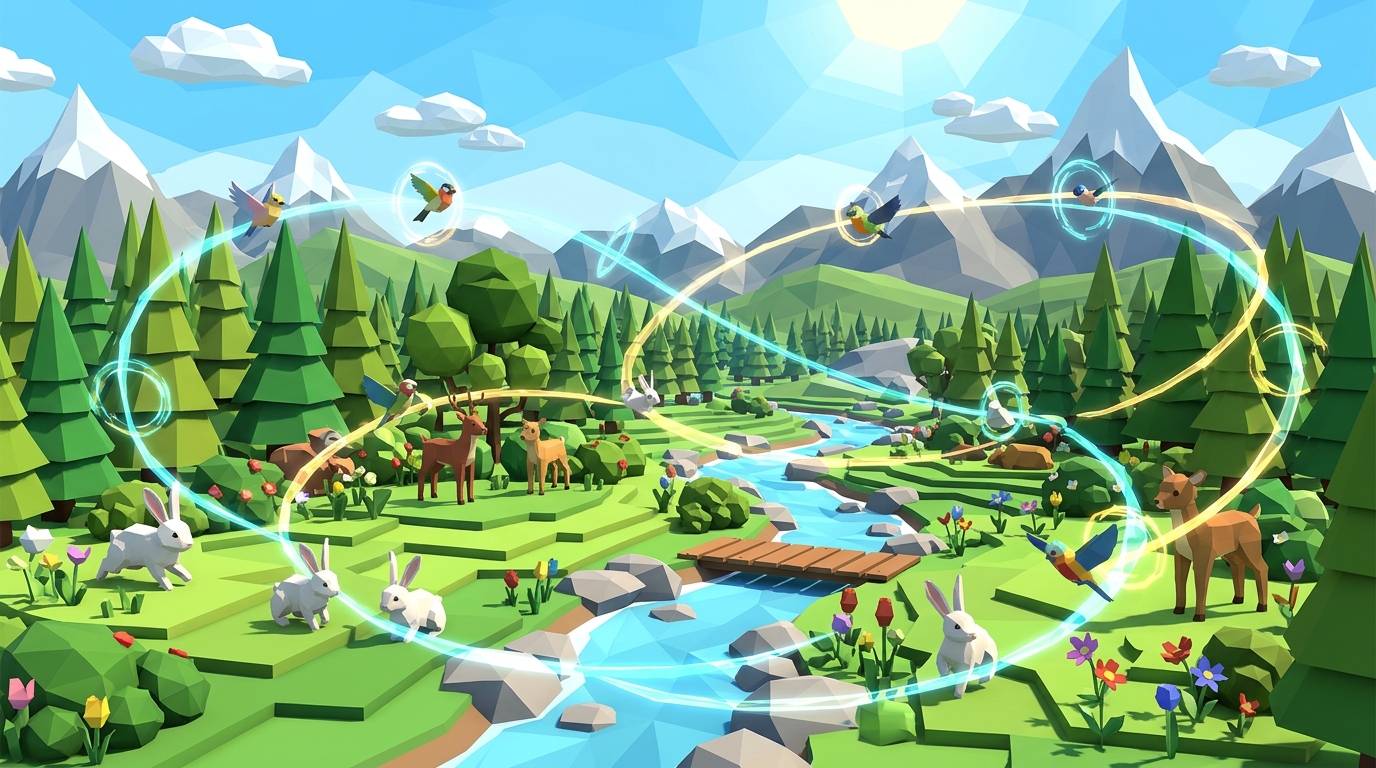
Block 1: Ecology & Systems Thinking (Weeks 1-10 / Cost: $0). Use the free 10-level Praxos Ecosystem Simulation alongside the printable 24-page Expedition Journal. Students master food webs, photosynthesis, carrying capacity, trophic cascades, and dynamic equilibrium.
Block 2: Earth Science & Nature Studies (Weeks 11-20 / Cost: $15). Check out local field identification guides from your public library. Spend $15 on watercolor paper and colored pencils for outdoor biome observation, weather tracking, and rock cycle identification.
Block 3: Physical Science & Simple Machines (Weeks 21-30 / Cost: $15). Explore gravity, friction, pulleys, levers, and kinetic energy using cardboard boxes, rubber bands, marbles, and household tools. Total materials cost is under $15.
Block 4: Independent STEM Project & Portfolio Mastery (Weeks 31-36 / Cost: $10). Have your student formulate an original hypothesis, design a controlled trial in the 3D sandbox or backyard, and compile their data into a tri-fold poster board for family presentation.
Total Annual Investment: $40 to $60 for an entire academic year of high-rigor, memorable science.
For more strategies on structuring your home curriculum on a budget, explore my companion guides on best homeschool science curriculum, family style science curriculum, printable science worksheets homeschool, and free homeschool science curriculum.
5 Practical Budget Hacks for Homeschool Science Parents
1. Replace Fragile Glassware with 3D Browser Simulations: Traditional chemistry and biology labs require expensive beakers, microscopes, and slides that break easily. Interactive digital simulations let kids test extreme variables with zero financial risk and zero equipment damage.
2. Print Reusable Lab Journals in Spiral-Bound Notebooks: Instead of purchasing expensive full-color workbooks every semester, print free high-resolution lab PDFs at home and bind them into a single durable year-long student portfolio.
3. Utilize Public Library Science Spines: Never purchase hardcover reference encyclopedias at full retail price. Your local library provides free access to thousands of DK Eyewitness, National Geographic, and science narrative living books.
4. Teach Family-Style Across Sibling Grade Bands: Avoid buying three separate curricula for children in 3rd, 5th, and 7th grades. Gather siblings around one central 3D simulation trial and differentiate their written logbook tasks.
5. Reinvest Savings into State Park Passes: Reallocate the hundreds of dollars saved on boxed curriculum kits into an annual family state or national park pass for authentic, hands-on field biology.
Frequently Asked Questions About Affordable Homeschool Science
Practical questions from budget-conscious homeschool parents and educators.
Can a free or inexpensive curriculum meet state homeschool science requirements?
Do inexpensive science programs prepare students for high school AP courses?
How do I homeschool science on a budget if I am not a science teacher?
Is the 10-level Praxos ecosystem curriculum completely free?
Start Your Free 10-Level Ecology Unit in 3D
Deliver world-class science education without spending hundreds of dollars on boxed kits.
Start Level 1 instantly in your browser with zero registration. Unlock all 10 simulation missions and download the complete 24-page Expedition Science Journal 100% free with email.
Step inside Level 01: Solar Spark to run your first zero-cost, high-impact science lab.
START LEVEL 1 FREEFree 24-Page Expedition Science Journal & Budget Unit Plan (PDF)
A complete 10-mission student lab logbook, experiment tracking grids, and 36-week budget homeschool science pacing schedule.