The False Dilemma: Screen Time vs. Paper Worksheets
In modern homeschool parenting, families frequently feel caught between two extremes: the exhaustion of endless screen time and the drudgery of fill-in-the-blank paper worksheets.
When children only interact with digital devices, they often slip into passive button-mashing without forming genuine hypotheses. Conversely, when children only complete traditional multiple-choice paper worksheets, they memorize definitions for a test but fail to develop dynamic scientific intuition.
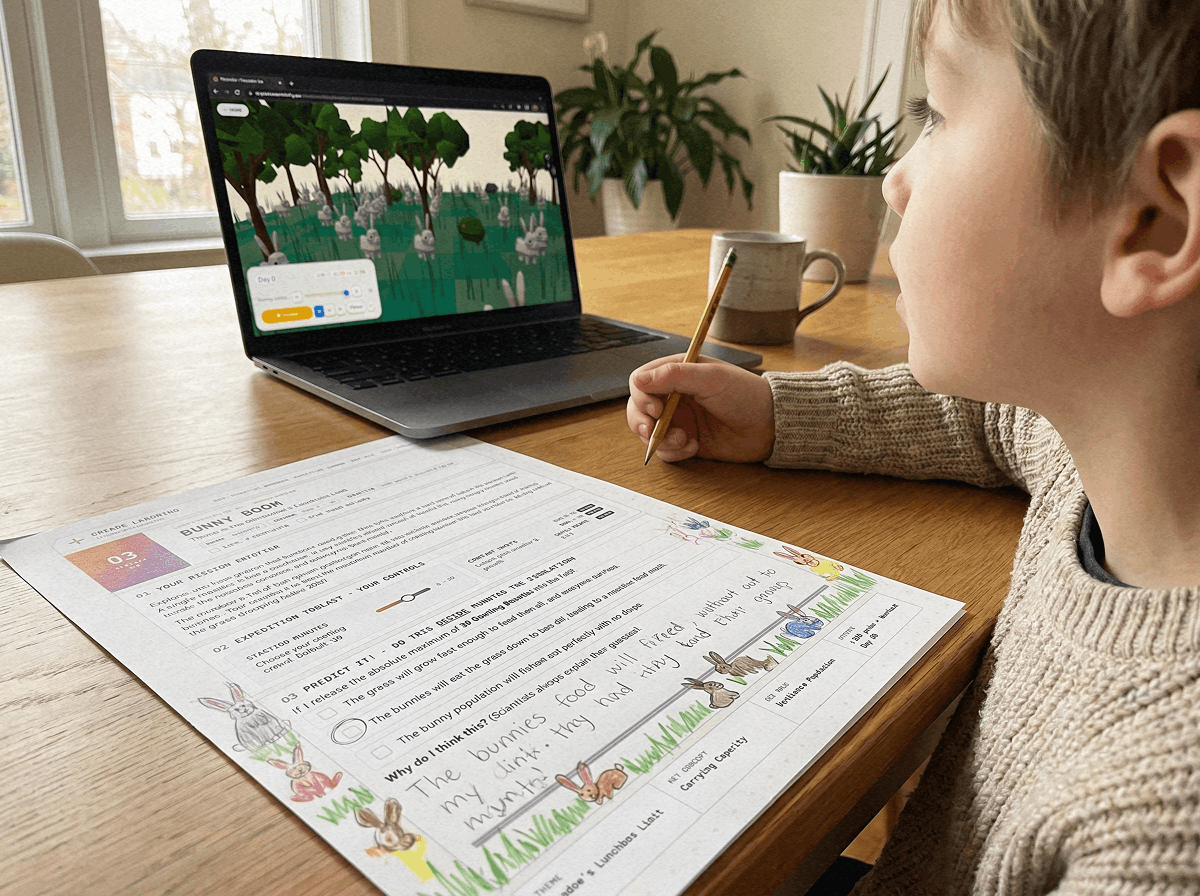
The solution is not choosing between paper and screens; it is uniting them through dual-mode inquiry. In my curriculum design, physical paper serves as the student thought anchor (where hypotheses are written and graphs are plotted by hand), while the 3D digital simulation serves as the laboratory engine (where complex multi-variable trials execute deterministically in seconds).
Dual-mode learning pairs physical pencil-first hypothesis writing with interactive 3D simulation testing. Physical writing engages fine-motor memory and forces mental commitment, while digital modeling provides instant cause-and-effect feedback without lab mess.
Homeschool Science Kits vs. Printable Worksheets & 3D Simulations
Many homeschool parents assume that purchasing expensive monthly subscription kit boxes is the only way to provide hands-on science. However, comparing subscription boxes with dual-mode printable logbooks and 3D simulations reveals striking pedagogical differences:
| Feature / Dimension | Subscription Box Kits ($30-50/mo) | Dual-Mode Printable Journal + 3D Simulation |
|---|---|---|
| EXPERIMENTATIONIteration & Mistake Recovery | One-and-done consumable reagents; cannot easily repeat failed trials | Infinite digital trials; test extreme hypotheses instantly with zero waste |
| ZERO MESSPrep Time & Cleanup Burden | Messy kitchen setups, specialized disposal, parent supervision required | Zero prep; print the journal page and open your web browser |
| PORTFOLIOData Tracking & Portfolio Proof | Often produces disposable plastic crafts with no written record | Creates a permanent, structured 24-page student science portfolio |
| SYSTEMS THINKINGMulti-Variable Systems Modeling | Limited to simple single-reaction physical chemistry or mechanics | Models complex ecological food webs, trophic cascades, and population curves |
| ACCESSIBILITYAnnual Cost for Family | $360 to $600 per year per child | 100% Free Core Tier (10 levels + 24-page journal free with email) |
Inside the 24-Page Expedition Science Journal: What Effective Worksheets Look Like
An effective science worksheet is not a quiz; it is an active scientific tool. Inside the Praxos Expedition Science Journal, every printable page directly correlates to a specific simulation mission:
1. Mission Log 1 (Solar Spark): Students record baseline sunlight and precipitation values, drawing vegetative biomass growth curves before testing them in the simulator.
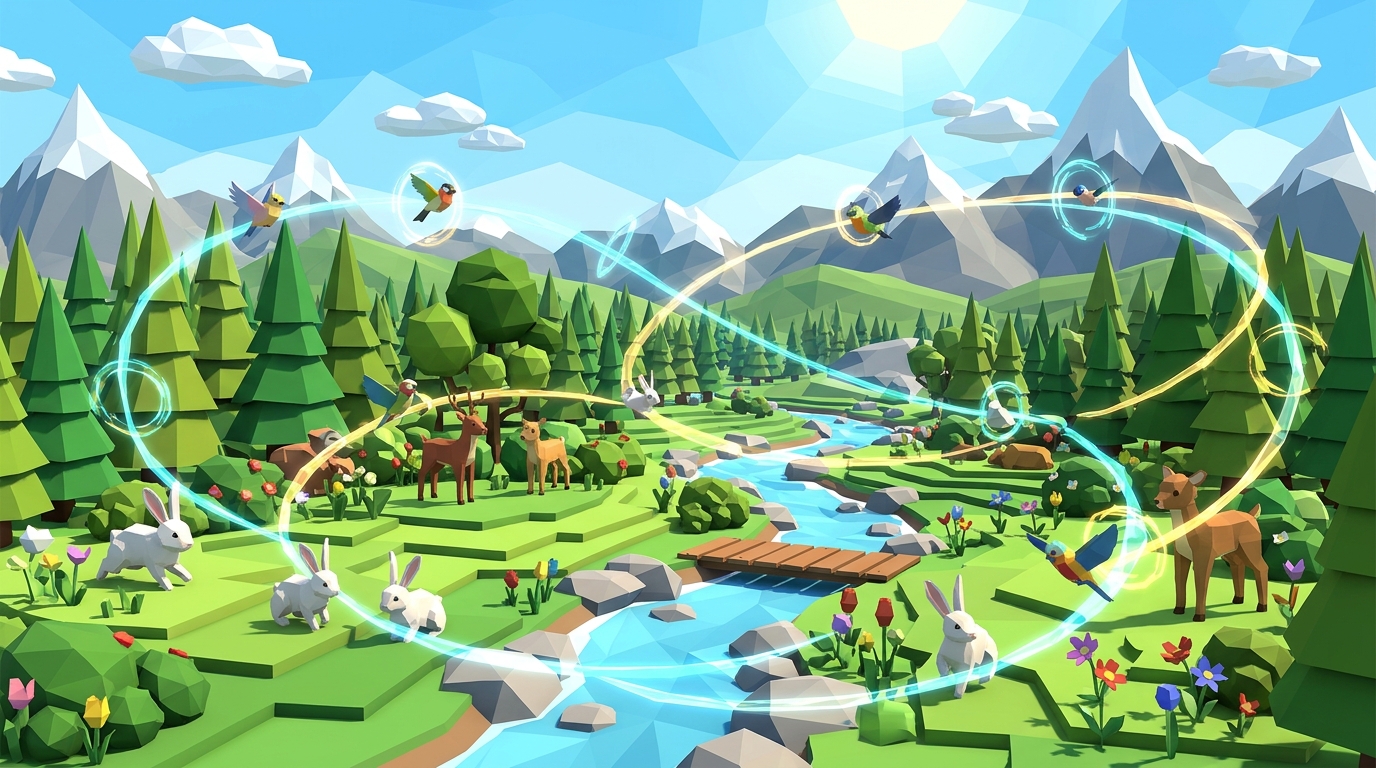
2. Mission Log 2 (Meadow Equilibrium): Features blank food web arrow templates where students map energy flow between grass, grasshoppers, meadowlarks, and hawks.
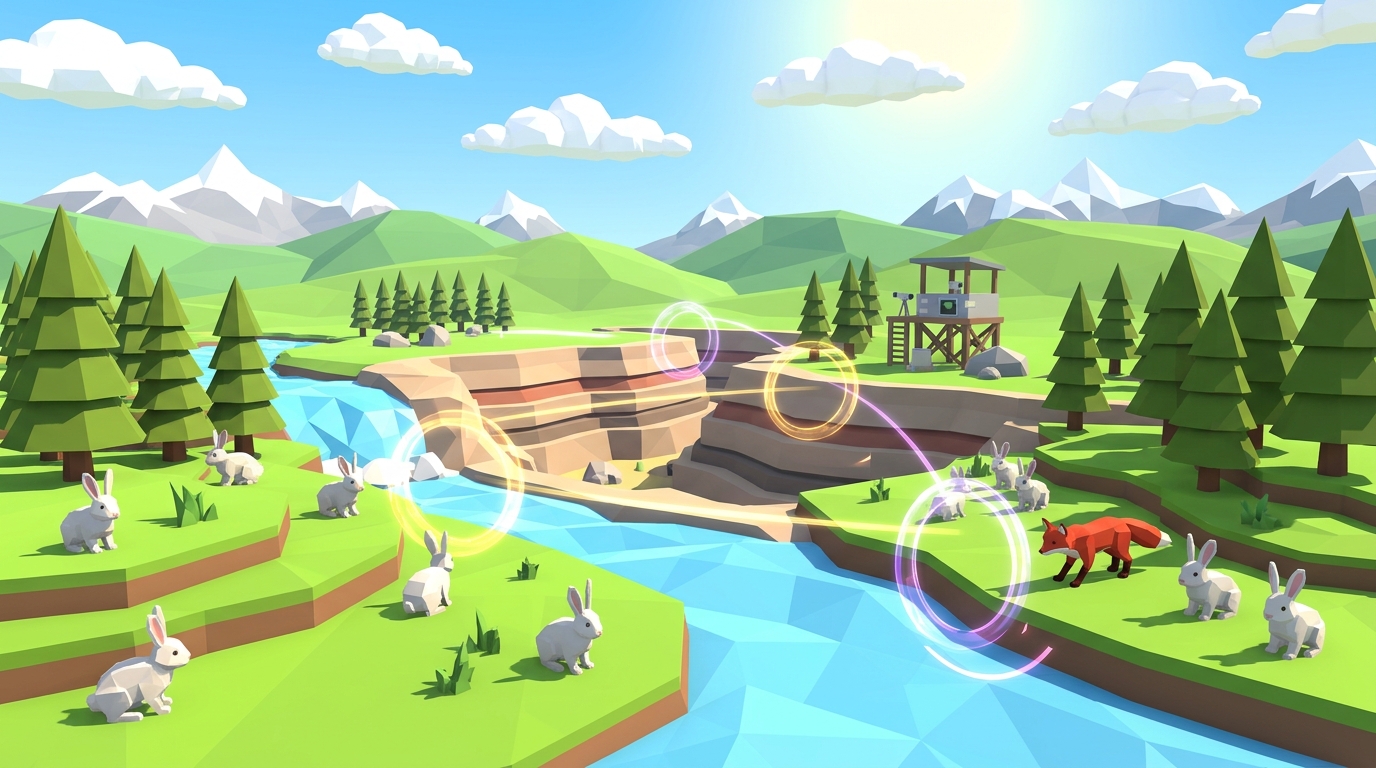
3. Mission Log 3 (Bunny Boom & Carrying Capacity): Includes coordinate axes where students plot rabbit population over 50 simulated days, identifying exponential growth and carrying capacity plateaus.
4. Mission Log 4 (The Gray Shadow & Trophic Cascades): Students predict the ripple effects of introducing an apex predator, recording elk, willow, and beaver numbers across three distinct ecosystem states.
5. Mission Log 5-10: Advanced systems thinking reflection sheets, feedback loop diagrams, and student experimental error analysis pages.
To explore how these worksheets integrate with broader life science themes, review my guides on feedback loops explained for kids, best homeschool science curriculum, food chain activities for kids, and how to make a food chain.
How to Implement the Pencil-First Routine in 30 Minutes
You can implement the dual-mode method in your homeschool with this straightforward 4-step classroom routine:
Step 1: Read the Mission Objective (5 Min). Print the corresponding mission sheet from the 24-page journal and discuss the central inquiry question.
Step 2: Commit to a Hypothesis on Paper (5 Min). Before touching the device, the student writes their prediction in ink or pencil: "If I double the starting herbivores without increasing grass, the population will crash within 20 days."
Step 3: Run the 3D Digital Trial (15 Min). Open the browser simulation. The student manipulates sliders, observes 3D animal behaviors, and logs real-time numbers on their paper chart.
Step 4: Synthesize & Reflect (5 Min). The student compares their initial prediction with actual trial data, calculating variance and answering the conclusion prompt.
When a student writes a prediction on paper, they develop cognitive ownership over the experiment. A digital trial is no longer a video game; it is the moment of truth for their hypothesis.
Frequently Asked Questions About Printable Science Worksheets
Practical guidance for homeschool educators and parents.
Are the printable science worksheets and simulation missions free?
What age group is the Expedition Science Journal designed for?
Do I need special software or downloads to use the worksheets and labs?
How do printable science logbooks help with homeschool portfolio reviews?
Download the Free 24-Page Science Journal & Launch Level 1
Equip your young scientist with a physical lab journal and launch an interactive 3D ecology laboratory.
Start Level 1 instantly in your browser with zero registration. Unlock all 10 simulation missions and download the complete 24-page Expedition Science Journal 100% free with email.
Step inside Level 01: Solar Spark to test your paper predictions against real-time 3D ecosystem dynamics.
START LEVEL 1 FREEExpedition Science Journal (24-Page Printable PDF)
Complete companion lab journal with 10 mission logs, food web arrow templates, population line graphs, and scientific method reflection pages.