The Volcanic Paradox: Why Millions of People Live in the Danger Zone
Throughout human history, one puzzling question has challenged historians, geologists, and ecologists alike: why do over 800 million people worldwide choose to live directly in the shadow of active, dangerous volcanoes?
From the terraced rice paddies climbing the steep flanks of Mount Merapi in Indonesia, to the ancient vineyards thriving on the slopes of Mount Vesuvius in Italy, to the coffee plantations surrounding Guatemala's Volcán de Fuego, human civilizations have stubbornly rebuilt under smoking calderas for millennia. The answer lies in the profound ecological chemistry of volcanic tephra and basalt.
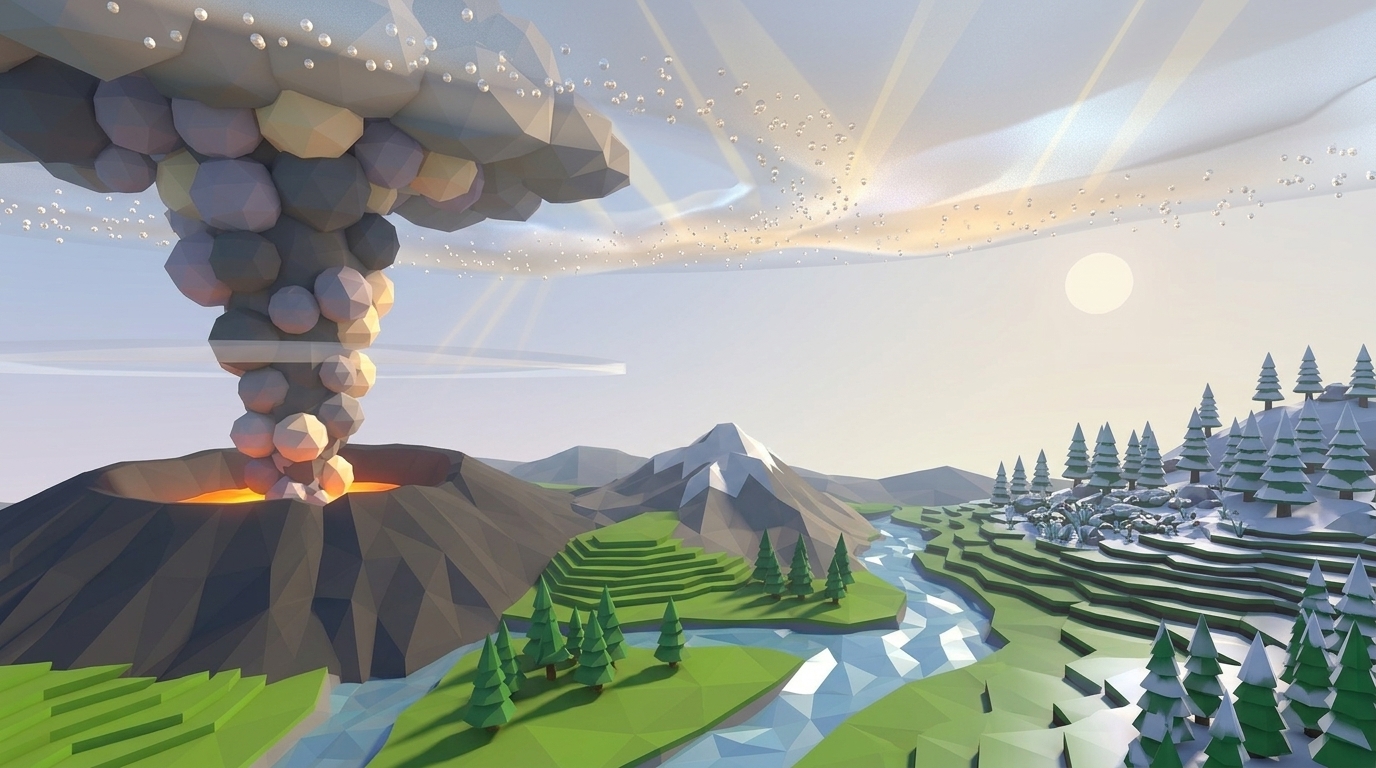
While a volcanic eruption is an immediate agent of total destruction, obliterating forests, burying river valleys, and sterilizing square kilometers of terrain under boiling pyroclastic flows, it is also Earth's most powerful natural soil rejuvenator. Volcanic soils, known scientifically as andosols, cover less than 1% of the Earth's ice-free land surface, yet they support more than 10% of the world's human population because they represent the most naturally fertile, mineral-rich agricultural ground on the planet.
In Level 15 of Volcano Island, students bridge pure geophysics with ecological life science. They explore primary ecological succession: the extraordinary multi-stage biological journey that transforms a smoking, sterile volcanic wasteland into a towering, biodiverse climax rainforest.
Volcanic eruptions deliver catastrophic short-term disruption, but provide a massive long-term mineral subsidy. Fresh basalt and ash replenish worn-out continental soils with vital phosphorus, potassium, and magnesium, fueling decades of supercharged ecological productivity.
The Chemistry of Volcanic Ash: Mineral Wealth in Crushed Glass
A widespread misconception among elementary and middle school students is that volcanic ash is like fireplace soot or campfire charcoal: soft, flaky, burnt wood. In reality, volcanic ash is finely pulverized geological rock and volcanic glass, shattered into microscopic shards smaller than two millimeters across during violent gas decompression inside the volcanic vent.
Because this glass cooled instantaneously from molten magma, its chemical elements are preserved in an amorphous, uncrystallized state. Fresh volcanic tephra contains an extraordinarily high concentration of essential plant nutrients and vital elements:
1. Phosphorus (P₂O₅): Essential for plant cellular energy (ATP), root establishment, and robust seed formation.
2. Potassium (K₂O): The primary regulator of plant osmotic pressure, stomatal opening, and disease resistance.
3. Calcium (CaO) and Magnesium (MgO): Structural building blocks of plant cell walls and the core central atom in every single chlorophyll molecule required for photosynthesis.
4. Iron (Fe) and Trace Micronutrients: Manganese, zinc, copper, and sulfur required for enzymatic activity.
However, there is an immediate biological catch. When volcanic ash first blankets a mountainside, these valuable nutrients are locked tight inside the solid silicate glass lattice. Fresh ash is slightly acidic (pH 4.5 to 5.5 due to condensed sulfur dioxide and hydrochloric acid gases) and has zero nitrogen or organic humus. Complex plants like oak trees or pine conifers cannot absorb raw silicate rock. Unlocking this mineral storehouse requires a biochemical partnership between rain and microscopic pioneer organisms.
| Substrate Type | Dominant Minerals | Weathering Mechanism | Soil Type Formed | Agricultural Fertility Rating |
|---|---|---|---|---|
| Highest FertilityVolcanic Ash / Basalt Tephra | P, K, Ca, Mg, amorphous glass | Rapid hydration + pioneer acids | Andosol (black volcanic soil) | Extremely High (Top 1% Global) |
| Granite Bedrock (Continental) | Quartz, feldspar, mica | Slow freeze-thaw + carbonic acid | Podzol / Alfisol (sandy loam) | Moderate to Low (Acidic) |
| Sedimentary Sandstone | Inert crystalline quartz (SiO₂) | Physical mechanical abrasion | Entisol / Arenosol (pure sand) | Very Low (Nutrient Starved) |
| Limestone / Carbonate Rock | Calcium carbonate (CaCO₃) | Chemical dissolution by rain | Rendzina / Mollisol (calcic) | Moderate (Alkaline, low P) |
The Four Stages of Primary Succession: From Bare Basalt to Climax Canopy
Primary succession differs fundamentally from secondary succession (such as recovery after a forest fire or abandoned farmland). In secondary succession, rich soil, seeds, and root networks already exist beneath the surface. In primary succession, life must start from absolute zero on sterile, abiotic rock. This dramatic transformation unfolds across four distinct ecological stages:
Stage 1: The Sterile Moonscape (Epochs 0 to 15)
The blast zone is 100% abiotic. Ground temperatures swing wildly from scorching daytime sun to freezing nights because bare basalt absorbs heat quickly and radiates it away instantly. There is zero organic matter, zero water-holding capacity, and rainwater simply runs off the surface in erosive rivulets.
Stage 2: The Pioneer Vanguard (Epochs 15 to 35)
Microscopic spores of lichens (a symbiotic partnership between a fungus and an alga) and bryophyte mosses arrive on mountain updrafts. These humble organisms do not need soil or roots; they cling directly to bare rock. Lichens secrete organic oxalic and carbonic acids that etch microscopic pits into the basalt, dissolving mineral bonds and extracting bioavailable calcium, potassium, and phosphorus. As pioneer mosses die and decay, their organic matter mixes with weathered rock dust, building the very first thin millimeters of fertile humus.
Stage 3: Herbaceous Colonizers and Nitrogen Fixers (Epochs 35 to 60)
With topsoil reaching a critical 40% maturity threshold, pioneer ferns (like bracken), windblown grasses, and nitrogen-fixing pioneer shrubs (such as wild lupines and Sitka alder) take root. Lupines harbor symbiotic Rhizobium bacteria in their root nodules that convert inert atmospheric nitrogen into bioavailable nitrates. This nitrogen injection supercharges soil fertility, allowing deep-rooted woody shrubs to anchor the loose slope against erosion.
Stage 4: The Climax Canopy Forest (Epochs 60 to 80)
Decades of accumulated leaf litter, decomposed moss, and weathered tephra synthesize into true andosols: pitch-black volcanic soils famous for high porosity and extreme water retention (holding up to 300% of their dry weight in water). Coniferous pines, Douglas firs, and broadleaf deciduous trees establish a dense, towering forest canopy that intercepts sunlight and anchors a self-sustaining planetary ecosystem.
The Science Behind the Sliders: Level 15 Mission Handbook
In Level 15: Ash to Life, students step into the role of an ecological restoration engineer. You are handed a desolate 20-degree volcanic slope freshly coated in sterile gray tephra ash and black basaltic rubble. The mission objective is to cultivate at least 75% lush vegetative canopy cover and elevate the soil fertility index above 60% within 80 simulation epochs.
Achieving this goal requires balancing a delicate ecological trade-off between chemical weathering and physical soil erosion:
Rainfall / Weathering Rate (Target: 50% to 60%)
Precipitation is the indispensable chemical catalyst for mineral breakdown. Rainwater absorbs atmospheric carbon dioxide to form mild carbonic acid (H₂CO₃), which dissolves the volcanic silicate glass lattice and releases potassium, phosphorus, and calcium ions into the substrate. However, if rainfall is set too high (above 80%) before a dense root network is established, torrential surface runoff creates devastating mudslides (lahars), washing the loose tephra ash down into the ocean and leaving bare, impenetrable bedrock behind.
Pioneer Colonization Density (Target: 65% to 75%)
Controls the initial inoculation density of windblown lichen and moss spores. Pioneer moss acts as a living geotextile blanket: its microscopic rhizoids weave through loose ash particles, mechanically binding the tephra in place and preventing erosion. Simultaneously, biological respiration from moss mats releases organic acids that accelerate chemical rock weathering by up to 500% compared to abiotic rainfall alone.
Secondary Succession Unlock (Automatic at 40% Soil Fertility)
Larger plants (ferns, shrubs, and pine saplings) cannot survive in raw ash and remain locked until the soil fertility index crosses 40% (typically around Epoch 35). Once unlocked, students can deploy deep-rooted vegetation to absorb freed mineral reserves, elevating canopy cover from 20% to over 80%.
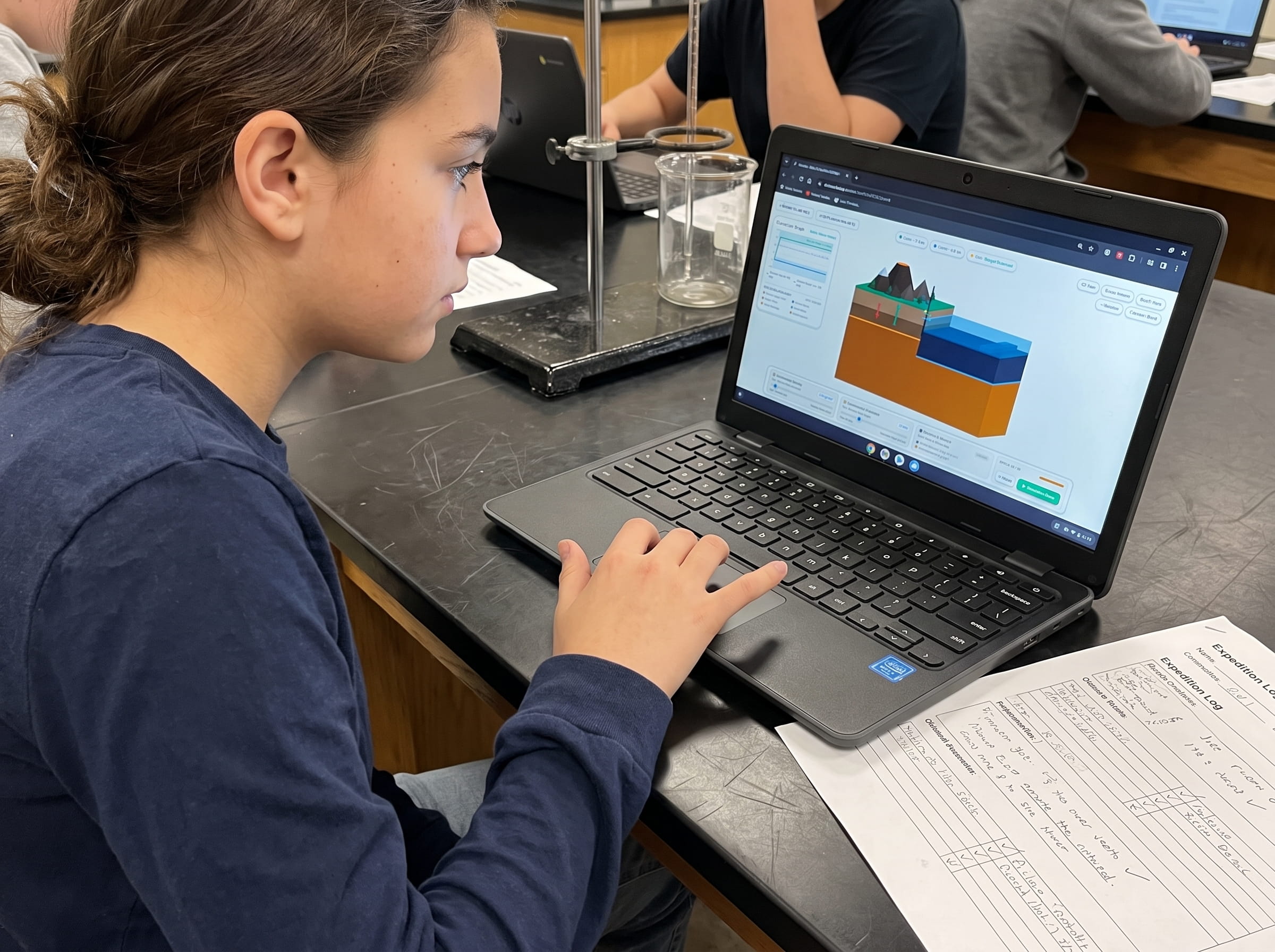
Level 15 Simulation: Volcanic Soil & Succession Lab
Turn a barren volcanic moonscape into a lush climax forest. Balance precipitation, pioneer moss density, and soil maturation thresholds to establish 75% canopy cover without triggering catastrophic mudslide erosion.
Step-by-Step Lab Protocol: Greening the Blast Zone
Follow this tested four-step experimental procedure in the Level 15 simulation lab to guide the sterile volcanic mountain from desolate moonscape to thriving climax forest:
Diagnose the Default Stagnation
Start Level 15 with default settings (Rainfall: 20%, Pioneer Density: 10%). Press Play. Notice that with sparse pioneer moss and arid conditions, rock weathering proceeds at an agonizing crawl. By Epoch 40, soil fertility reaches only 14%, secondary plants remain permanently locked, and the slope remains an empty gray wasteland.
Inoculate Dense Pioneer Moss Mats
Reset the simulation. Boost Pioneer Colonization Density to 70%. This carpets the upper volcanic terrace with hardy bryophyte moss and crustose lichens that stabilize loose ash against wind and runoff.
Optimize Gentle Chemical Weathering Rainfall
Increase the Rainfall slider to 55%. This provides sufficient carbonic moisture to hydrolyze volcanic glass without exceeding the shear strength of the slope. Avoid setting rain to 90% or 100%, which triggers catastrophic mudslides.
Cross the Maturation Threshold and Plant the Canopy
Press Play and watch the synchronized trend graph. At Epoch 35, the gold soil fertility curve crosses 40%, sounding the Succession Unlock chime. Deploy ferns and conifers across the enriched black andosol terraces. By Epoch 80, vegetative canopy cover surges to 82% and soil fertility hits 68%, completing the Phase 3 capstone mission with a stellar three-star rating.
Frequently Asked Questions: Earth Science Curriculum FAQ
These five questions explore the intersection of volcanology, soil science, and ecological succession for middle school science classrooms:
What is the main difference between primary and secondary succession?
If volcanic ash contains natural fertilizers, why does it kill plants during an eruption?
How did life return to Mount St. Helens after the 1980 eruption?
Why are volcanic andosols called sponge soils?
How does Level 15 complete Phase 3 and prepare students for Phase 4?
Related Earth Science Units & Simulation Lab Resources
Continue your middle school Earth and Space science journey with these companion simulation guides:
Review crustal buoyancy in our crustal buoyancy isostasy simulation Level 1 guide.
Explore deep thermal circulation in our mantle convection tectonics simulation Level 2 guide.
Discover seafloor spreading in our seafloor spreading divergent boundary simulation Level 3 lab.
Investigate subduction abysses in our subduction zones deep trench simulation Level 4 article.
Explore subterranean magma generation in our flux melting magma chamber simulation Level 5 guide.
Study effusive basalt rivers in our shield volcano basaltic lava simulation Level 6 lab.
Examine viscous composite cones in our composite volcano silica viscosity simulation Level 7 guide.
Model supersonic gas decompression in our volcanic eruption plume gas simulation Level 8 guide.
Examine caldera collapses in our caldera collapse crater lake simulation Level 9 lab.
Explore mantle plumes in our hotspot island chain mantle plume simulation Level 10 guide.
Investigate locked transform faults in our locked fault elastic rebound simulation Level 11 guide.
Triangulate earthquake epicenters in our earthquake seismic waves triangulation simulation Level 12 guide.
Analyze open-ocean tsunami shoaling in our megathrust tsunami subduction simulation Level 13 guide.
Master circum-Pacific convergence networks in our ring of fire subduction arc simulation Level 14 guide.
Model stratospheric sulfur aerosols and global dimming in our volcanic winter sulfur aerosols simulation Level 16 guide.
Review complete homeschool science options in our earth science homeschool curriculum guide.
Set up student accounts with zero student logins on our educator dashboard.
24 pages of printable isostatic buoyancy calculation tables, paleomagnetic zebra stripe rulers, and seismogram triangulation exercises designed for grades 3 to 8.
DOWNLOAD EXPEDITION LOGBOOK (PDF)Download Free Volcano Island Field Geologist Logbook (PDF)
24 pages of printable isostatic buoyancy calculation tables, paleomagnetic zebra stripe rulers, and seismogram triangulation exercises designed for grades 3 to 8.