
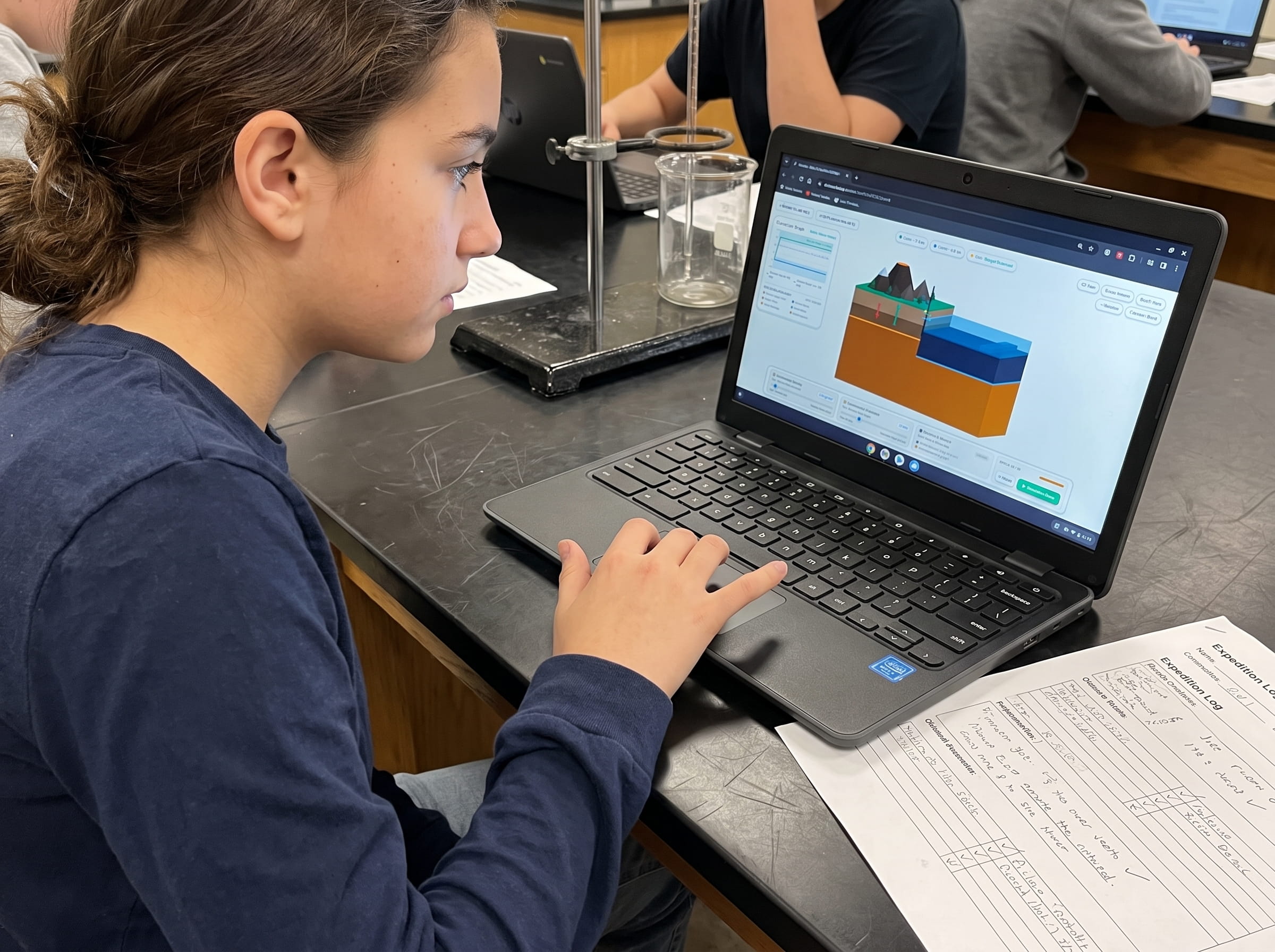
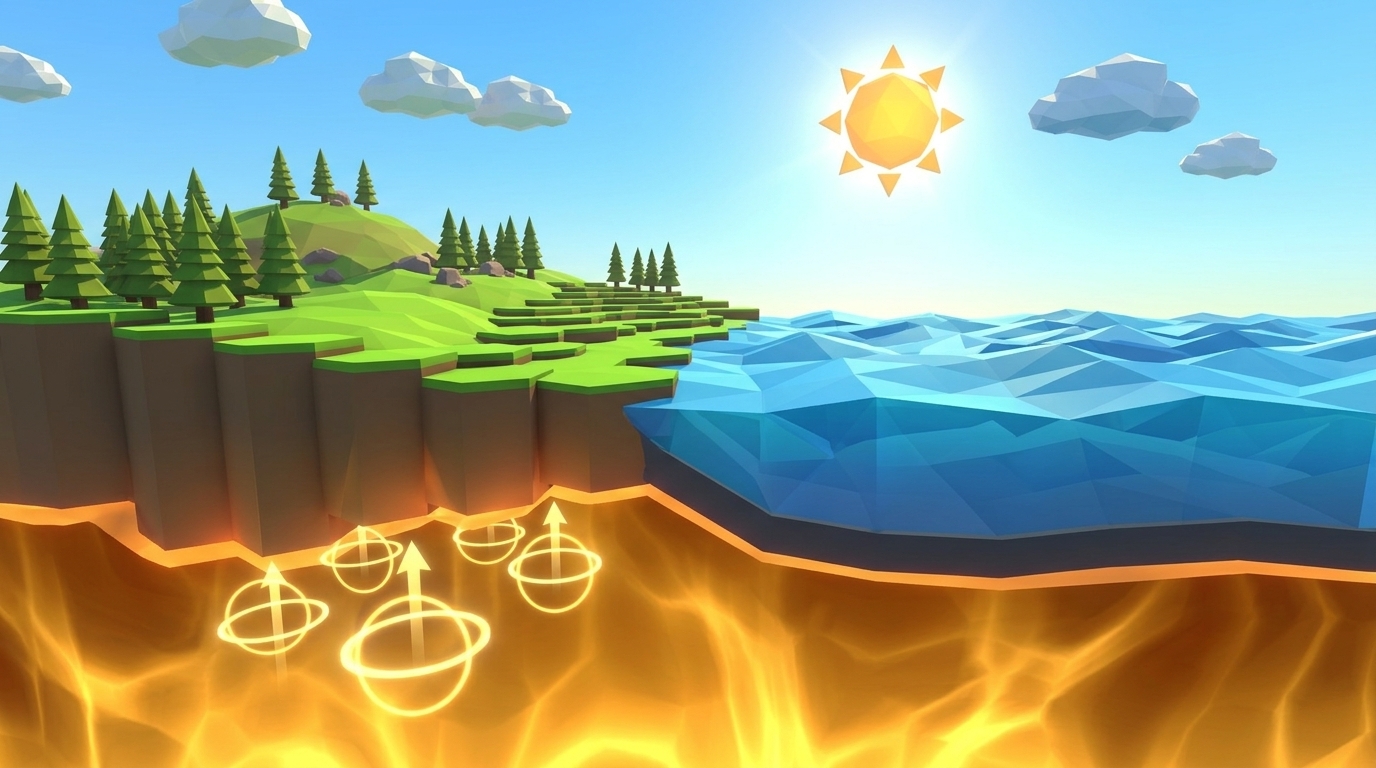
How rock density and thickness govern why light continents float high while dense oceanic basalt sinks to hold the ocean basins.
[ SIM-07 VOLCANO ISLAND // NGSS MS-ESS2 // AGES 8-14 // 20 MISSIONS ]
Interactive Volcano Simulation Game20 Real Earth Science Levels
Slide giant tectonic plates together, balance crustal buoyancy in real-time 3D, and survive explosive volcanic eruptions in a calm browser laboratory. Paired with printable expedition logbooks for zero-prep active discovery.
Crustal BuoyancyPlate TectonicsMantle ConvectionMagma ViscosityStratovolcanoesCaldera CollapseSeismic WavesTsunamis
✓ COPPA COMPLIANT✓ 100% AD-FREE✓ NO SUBSCRIPTION✓ RUNS ON CHROMEBOOK★ 100% FREE TO PLAY
[ DUAL-FORMAT: 3D LAB + EXPEDITION LOG ]LAUNCH 3D LAB →
What Your Child Learns Across 20 Levels
Every mission isolates one real geophysical mechanism and connects it to a hands-on printable expedition logbook exercise. Concepts build sequentially from crustal buoyancy through the 1973 Heimaey Iceland lava diversion case study.
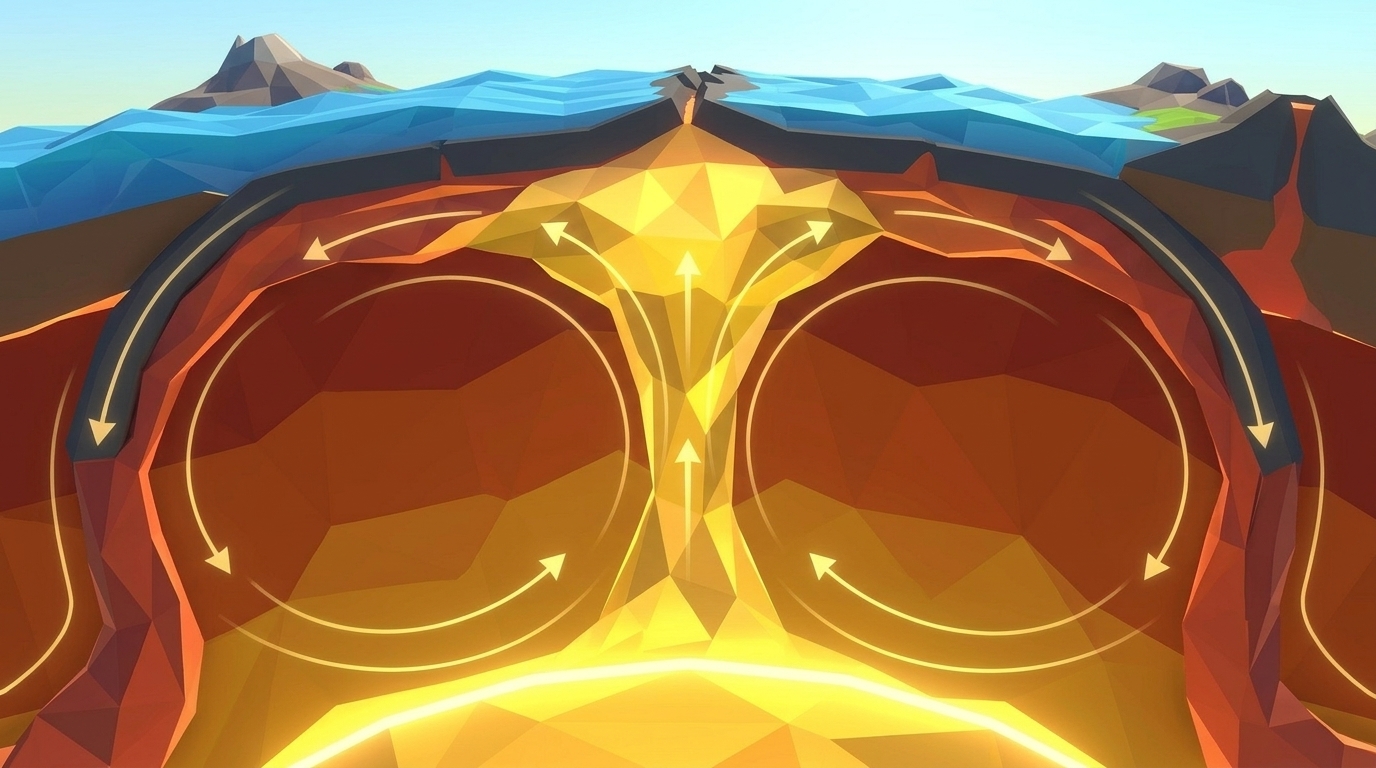
The deep planetary heat engine driving circular convection cells that drag Earth's giant tectonic plates across the globe.
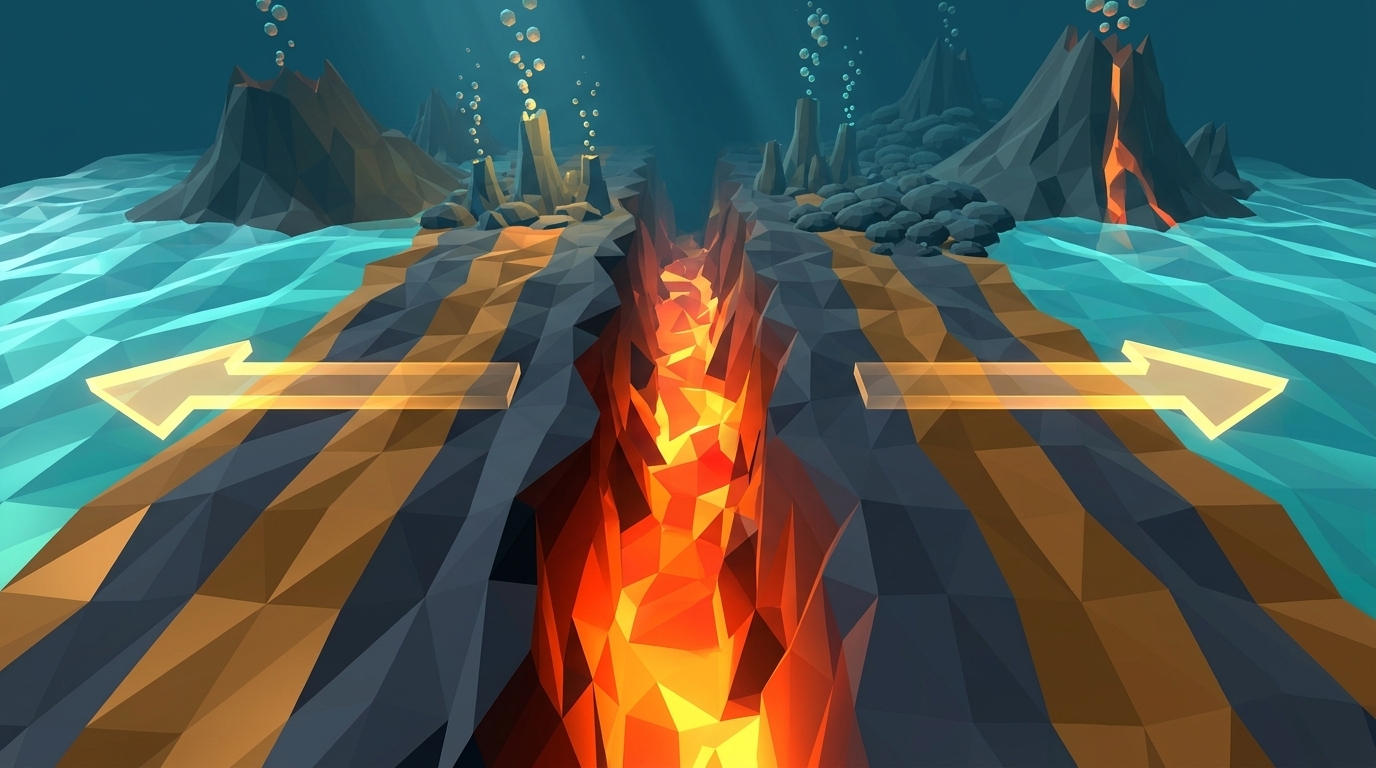
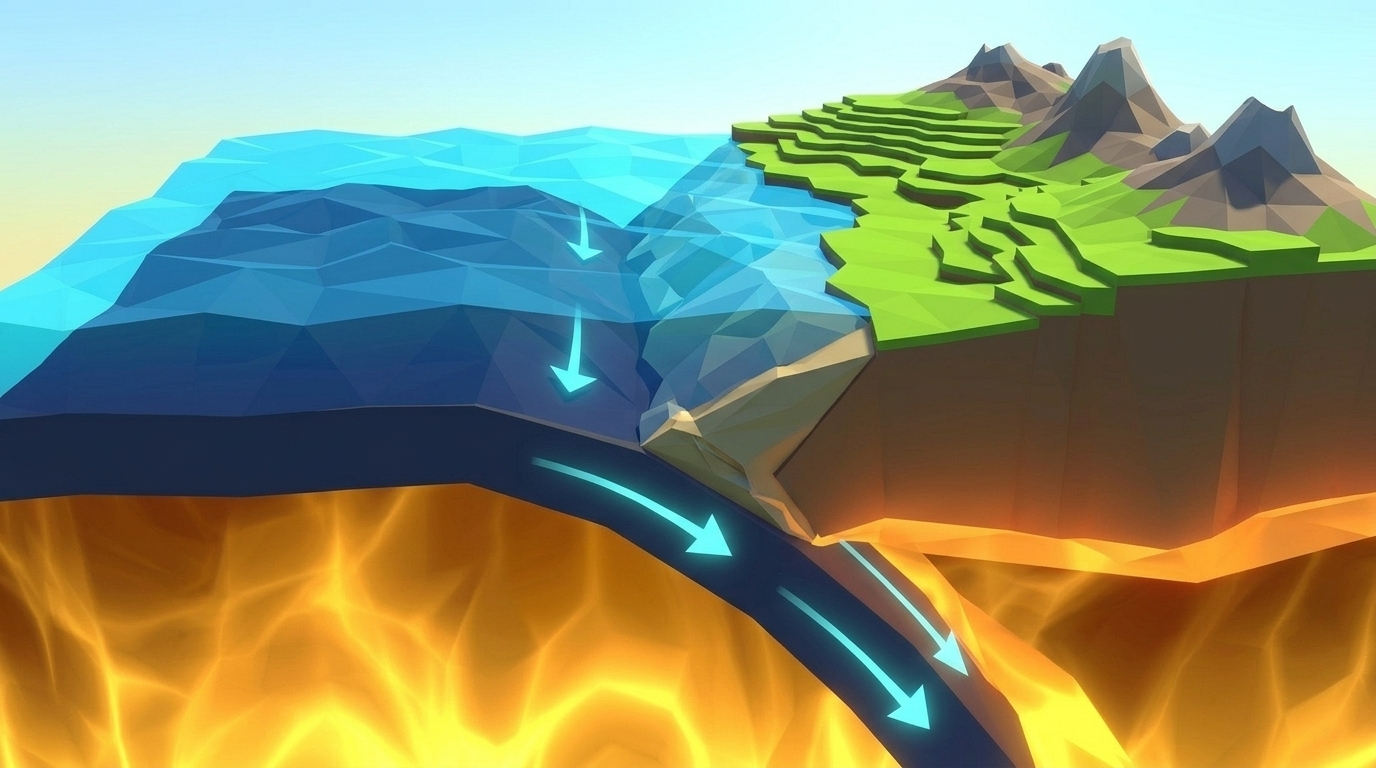
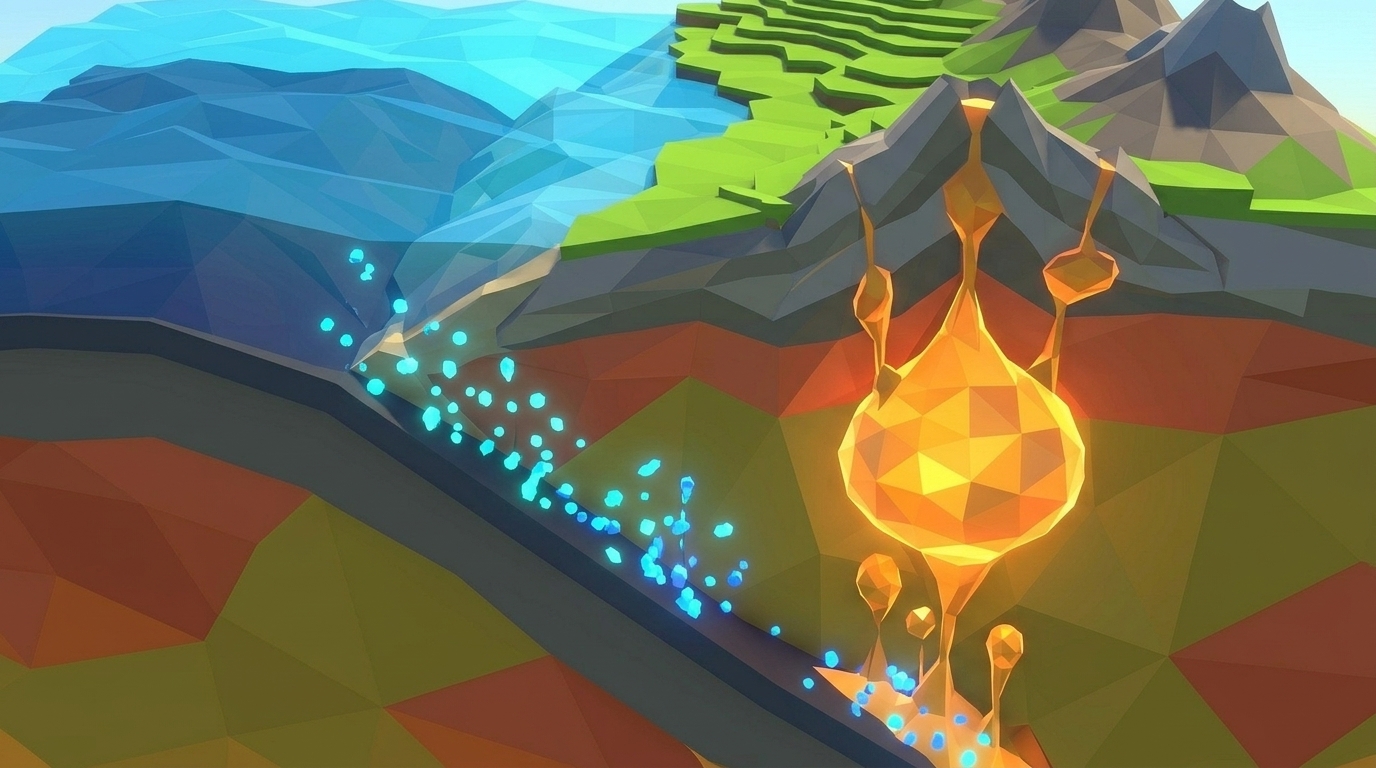
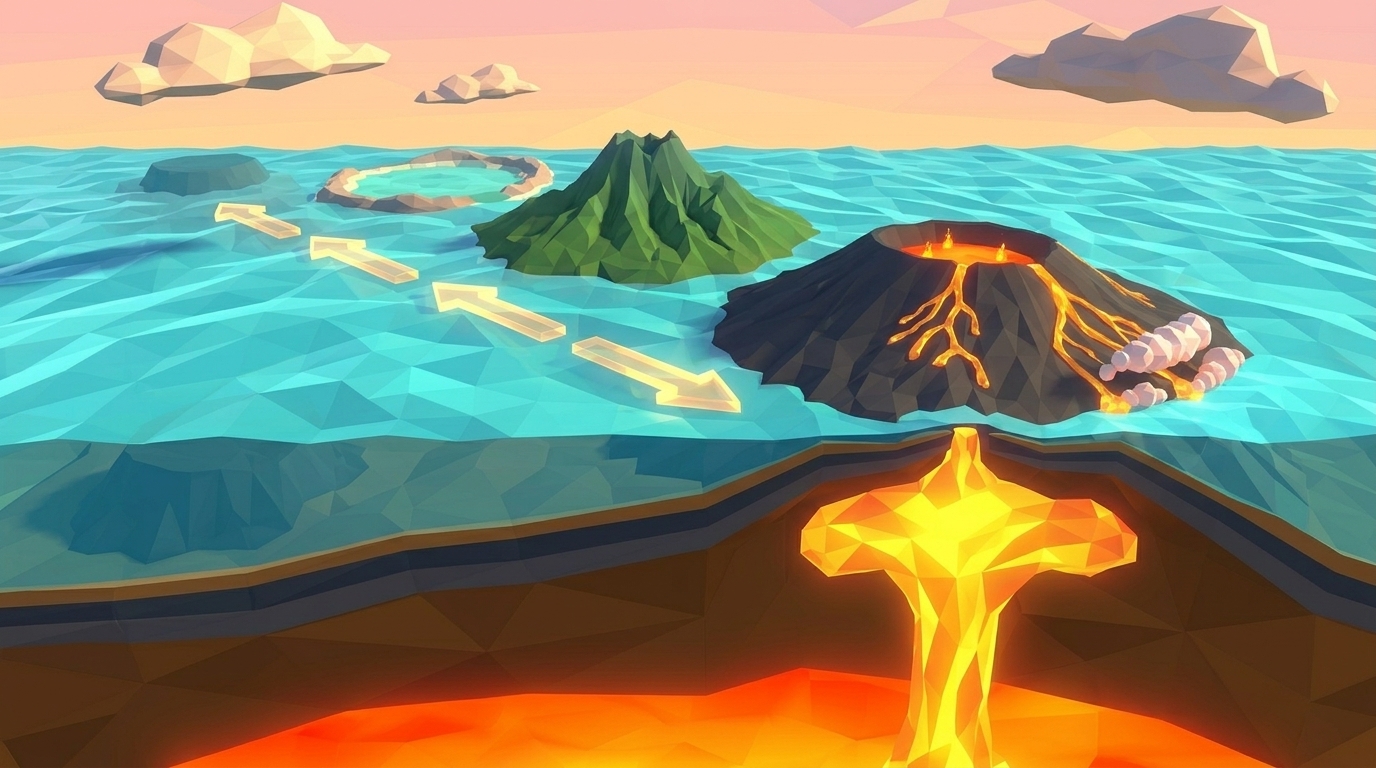
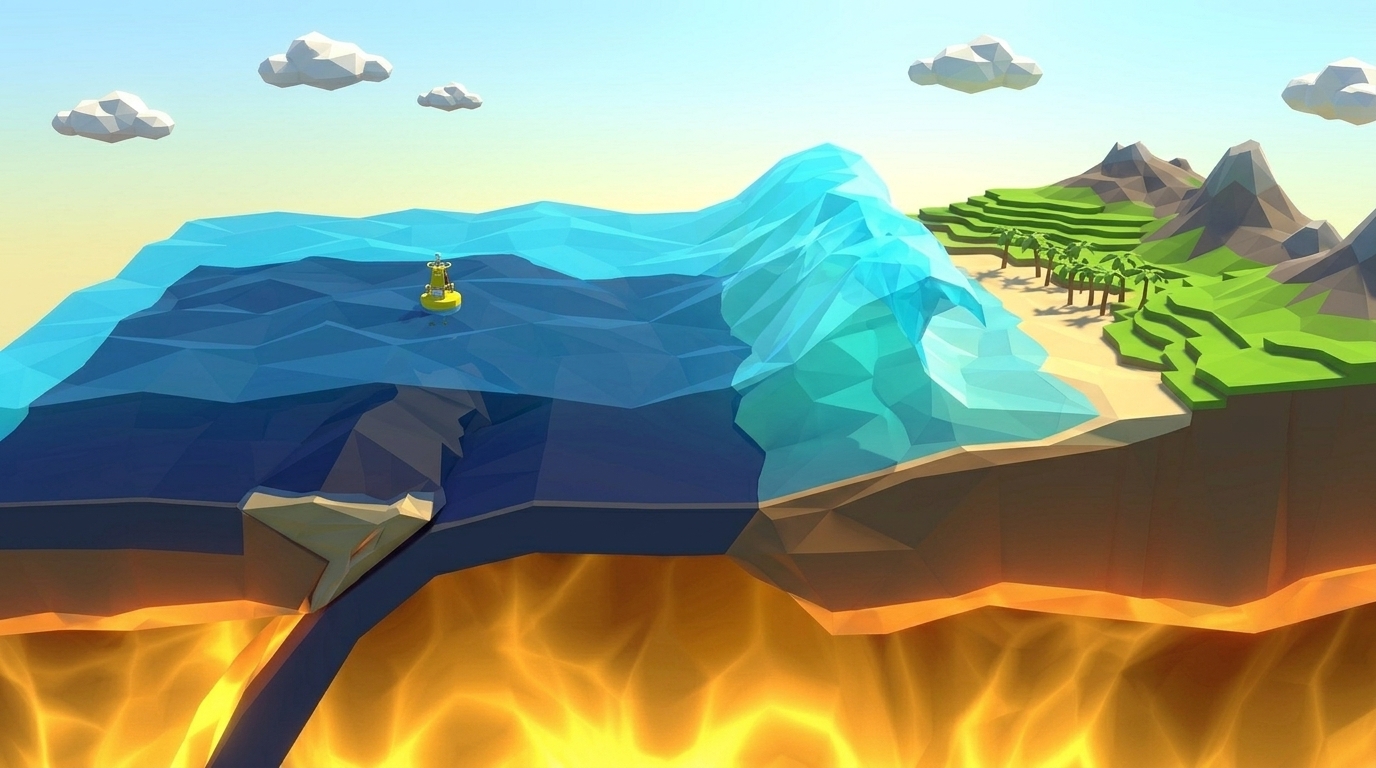
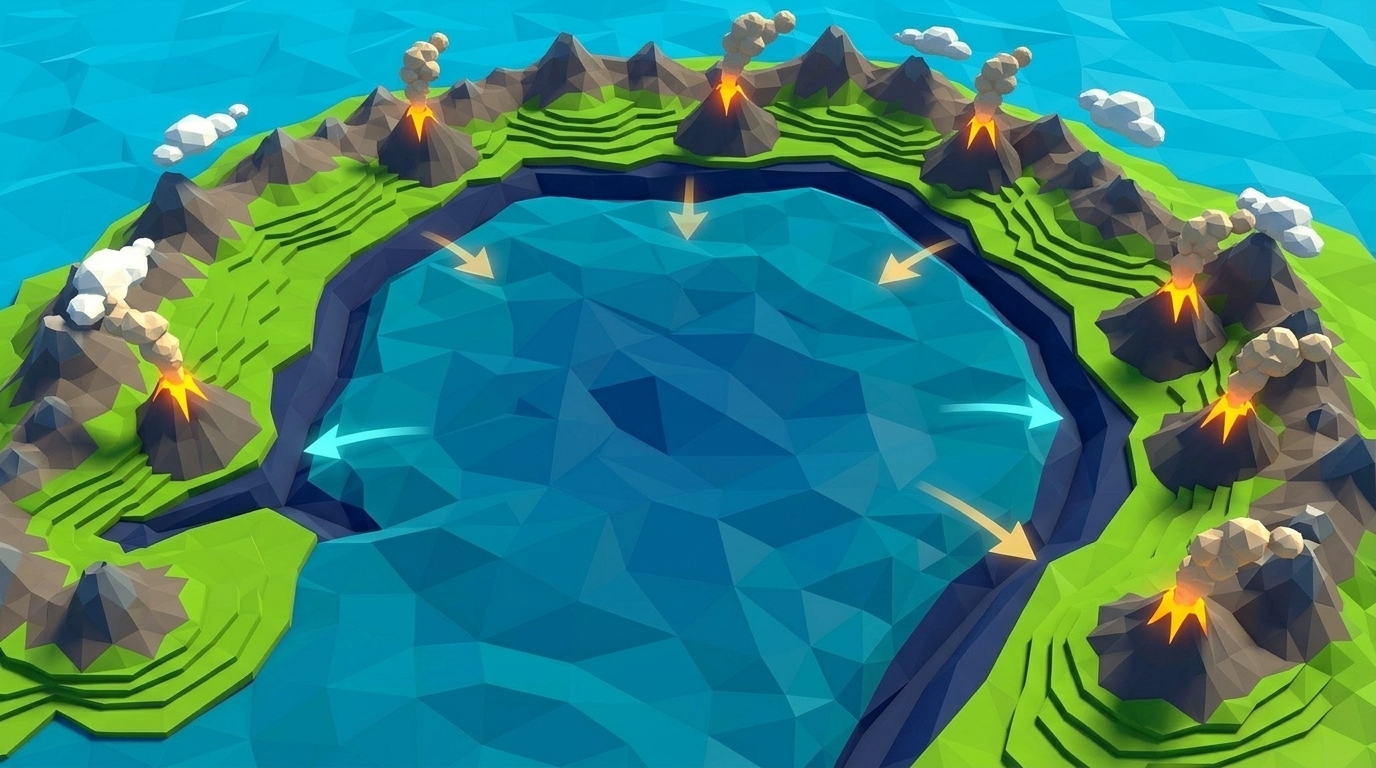
Divergent ridges creating fresh seafloor, convergent trenches consuming ocean slabs, and transform faults locking with elastic strain.
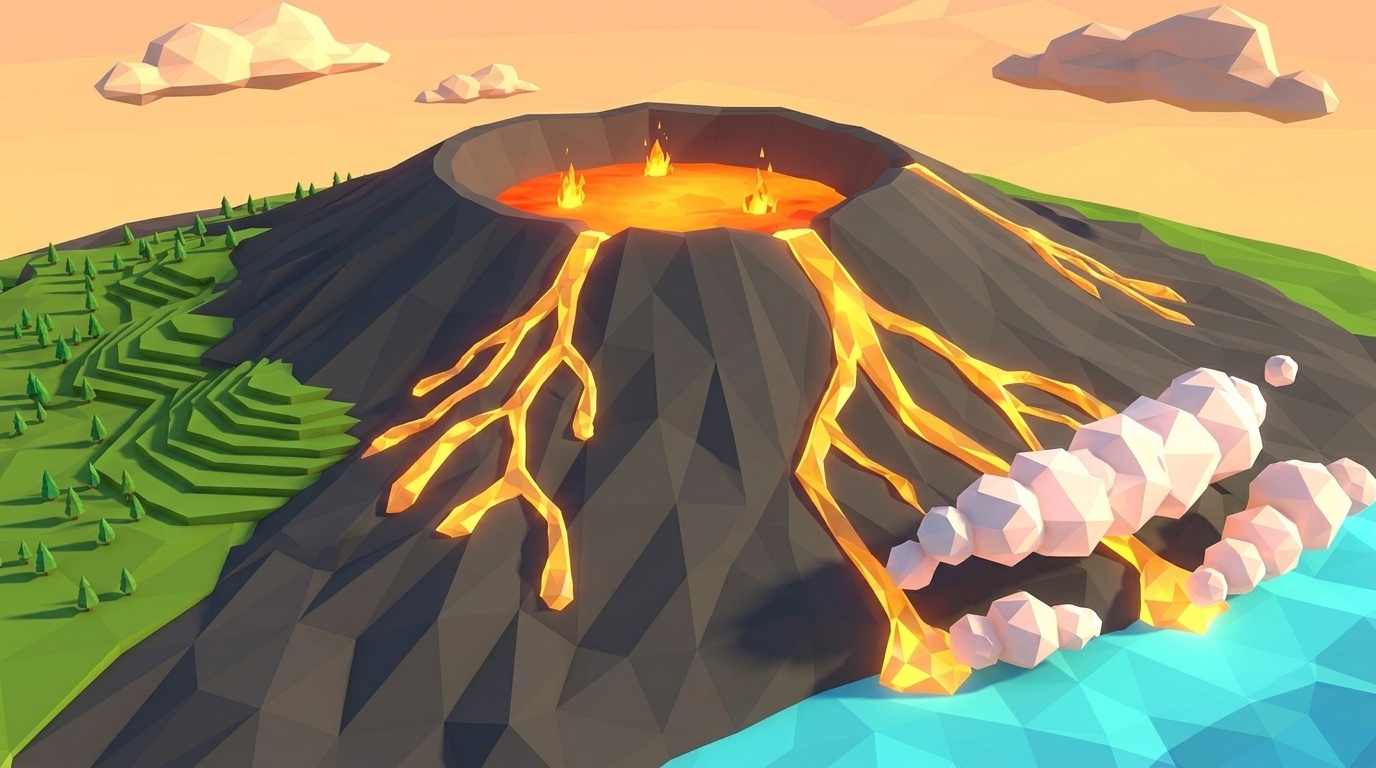
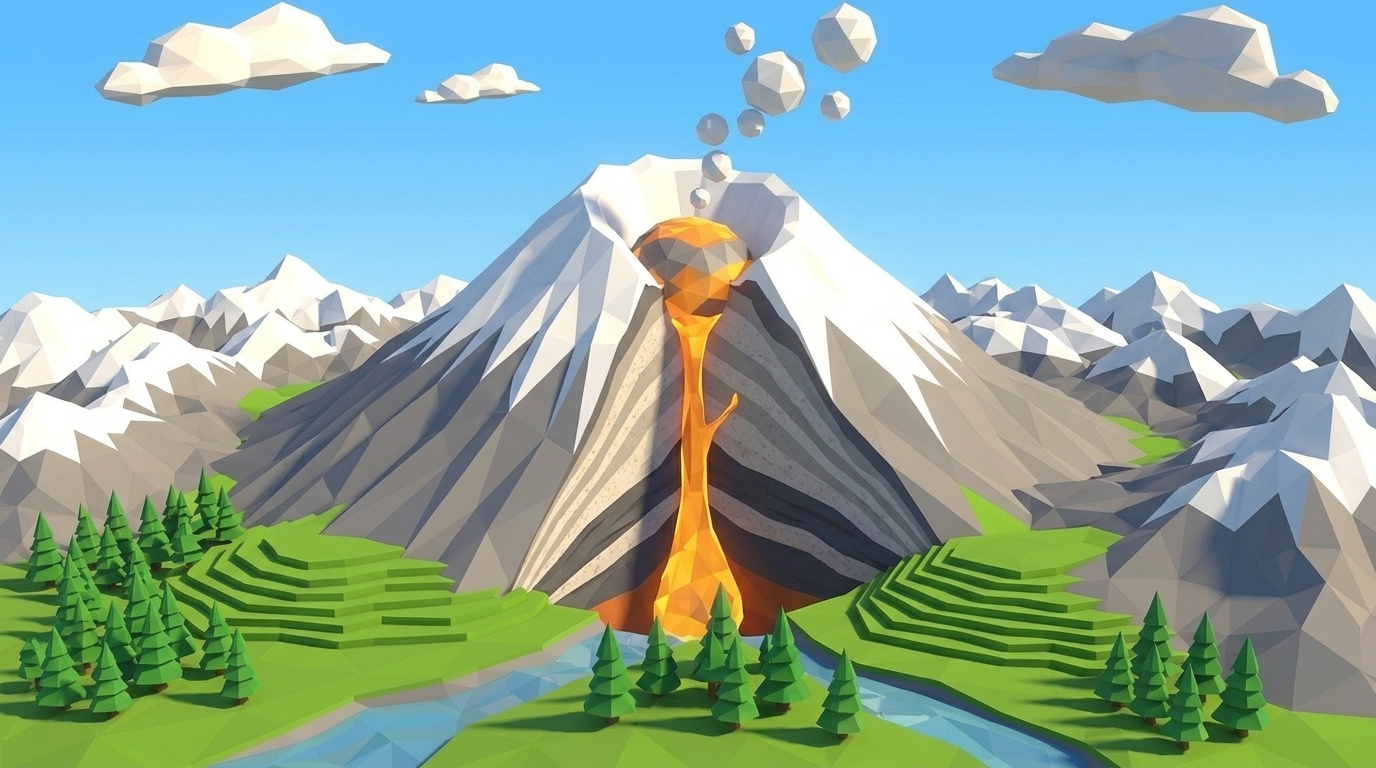
Why runny, low-silica basalt builds gentle Hawaiian shield volcanoes while sticky, high-silica andesite traps gases in explosive stratovolcanoes.
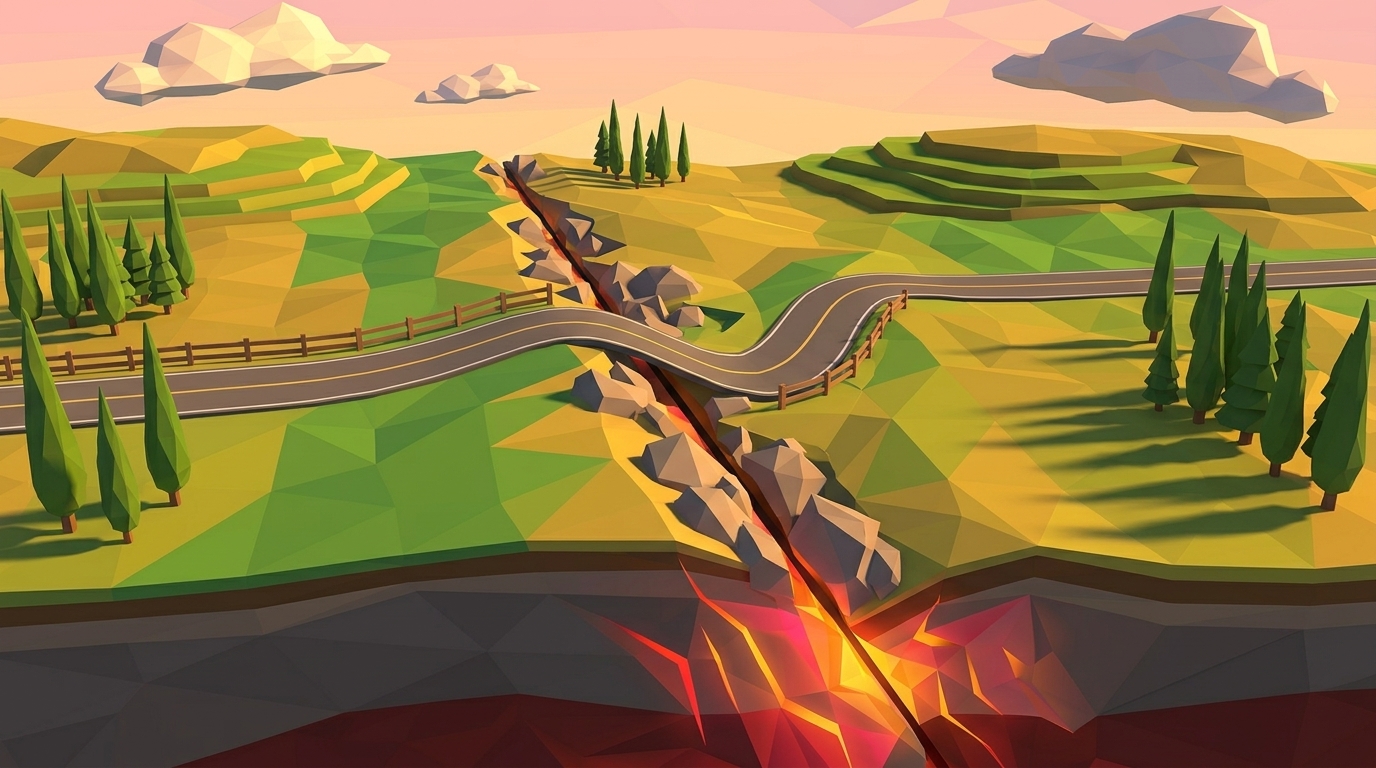
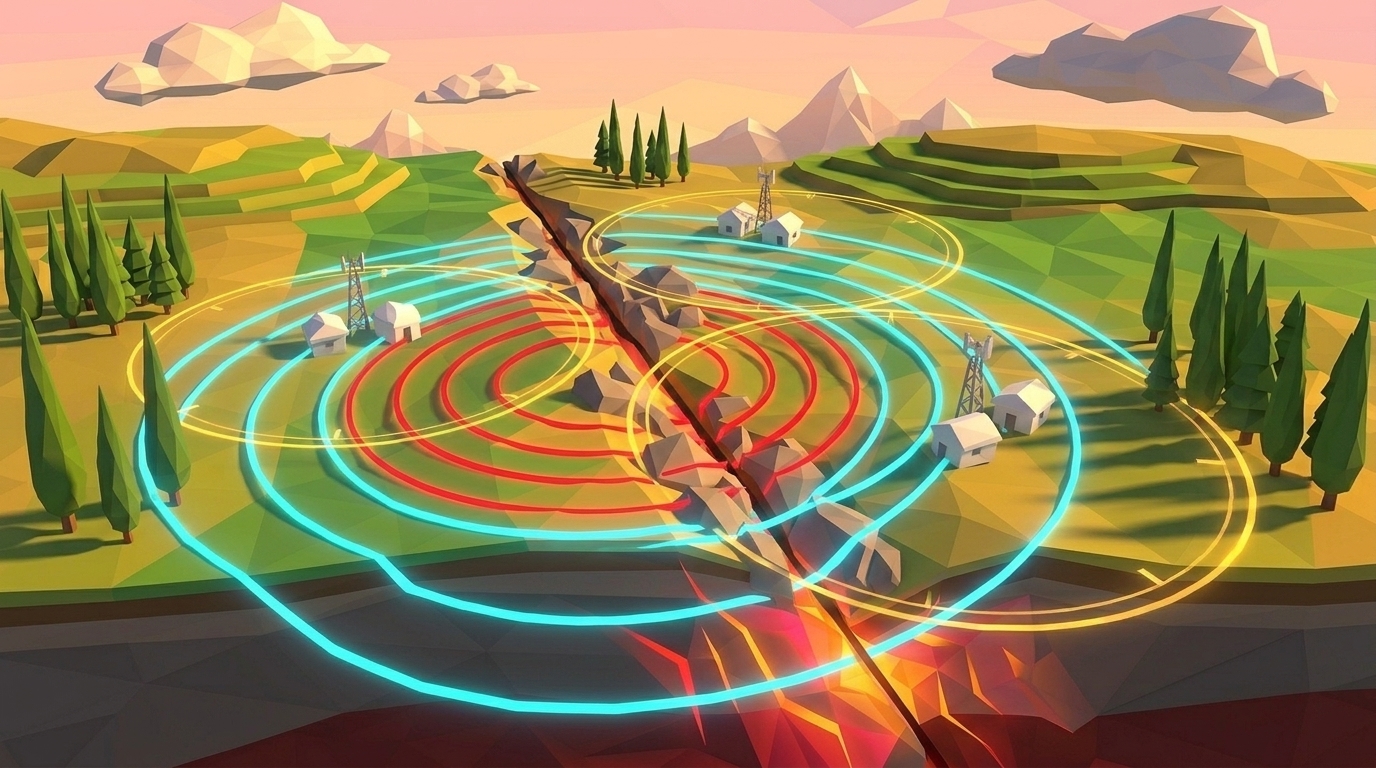
Elastic rebound theory, fault rupture dynamics, and triangulating earthquake epicenters using P-wave and S-wave arrival intervals.
Balancing volcanic construction against erosional decay, managing supervolcano chambers, and deploying engineering solutions to divert hazards.
[ Phase 1: Foundations of the Dynamic Earth (Levels 01-05) ]
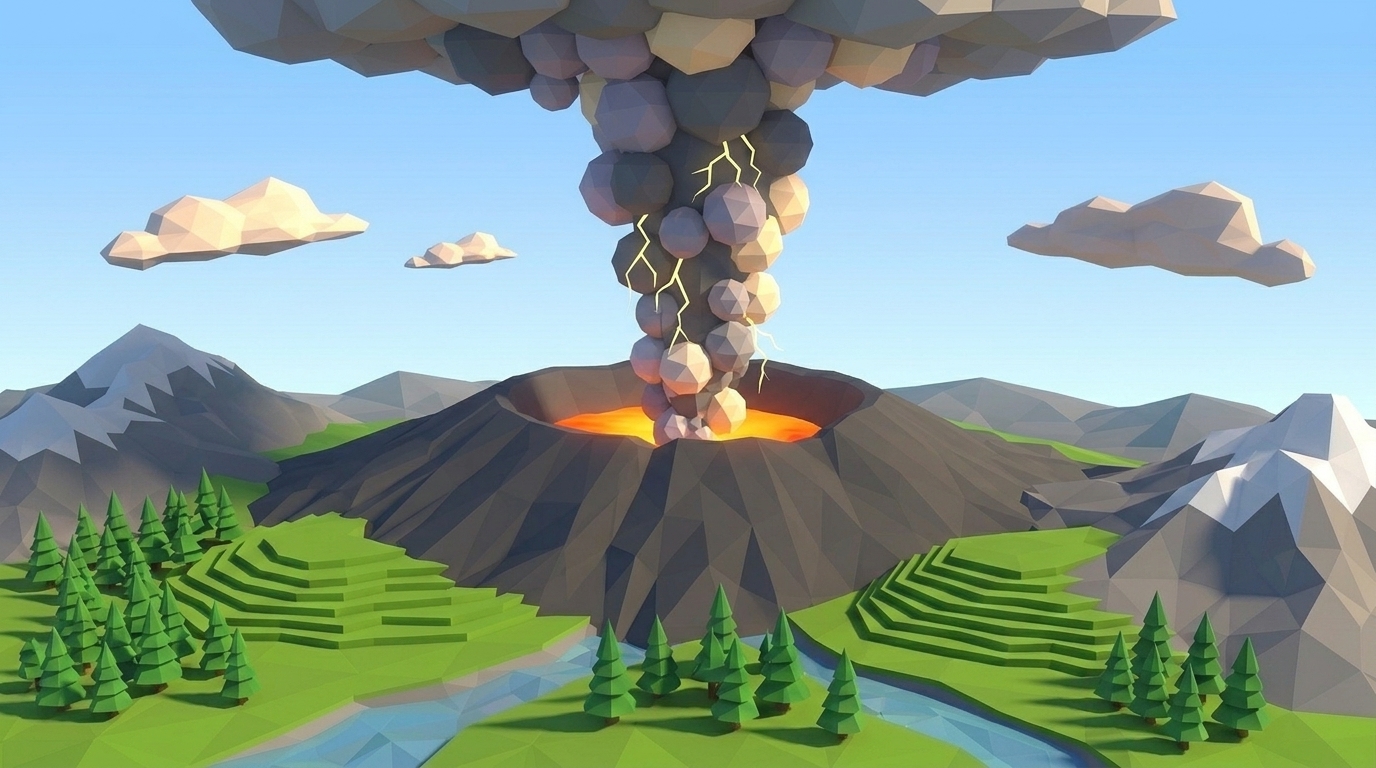
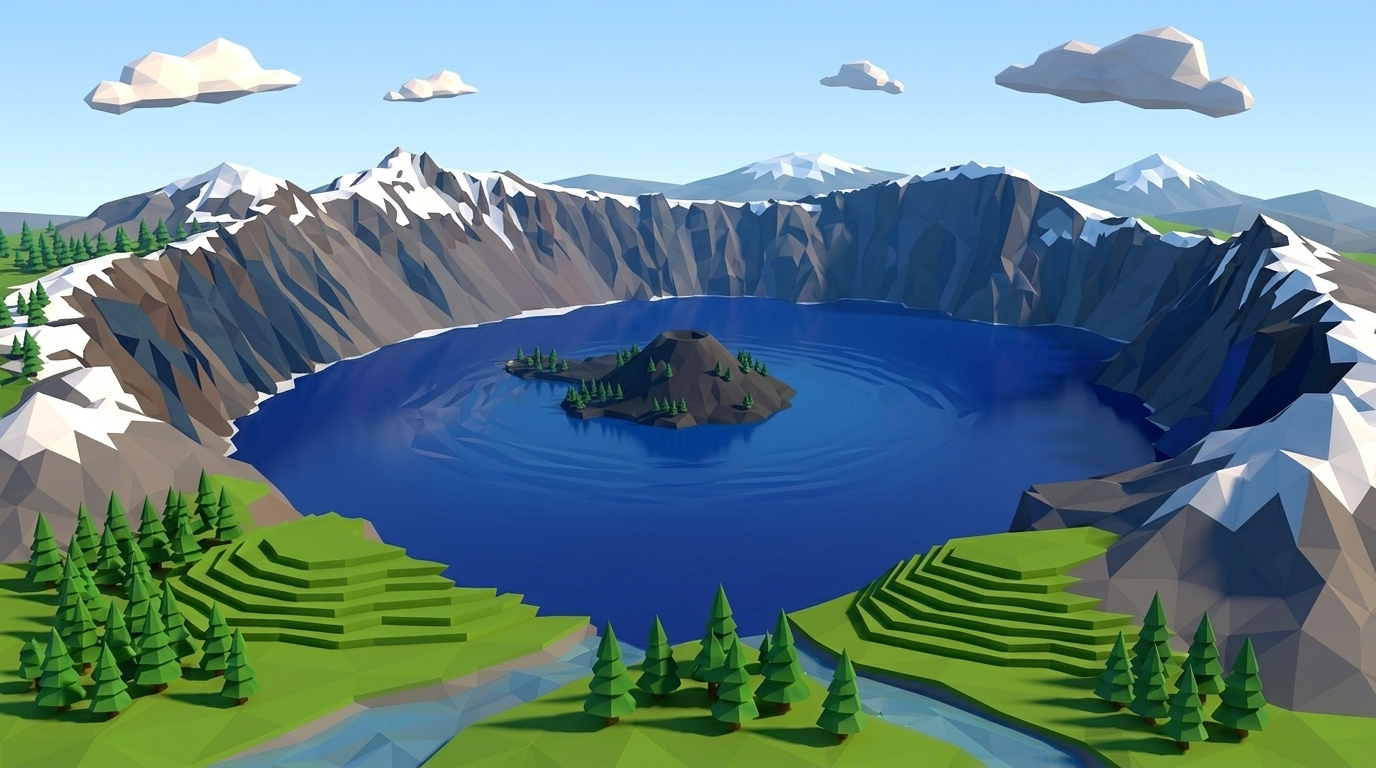
[ Phase 2: Magma Dynamics & Eruption Styles (Levels 06-10) ]
[ Phase 3: Seismic Stress & Fault Rupture (Levels 11-15) ]
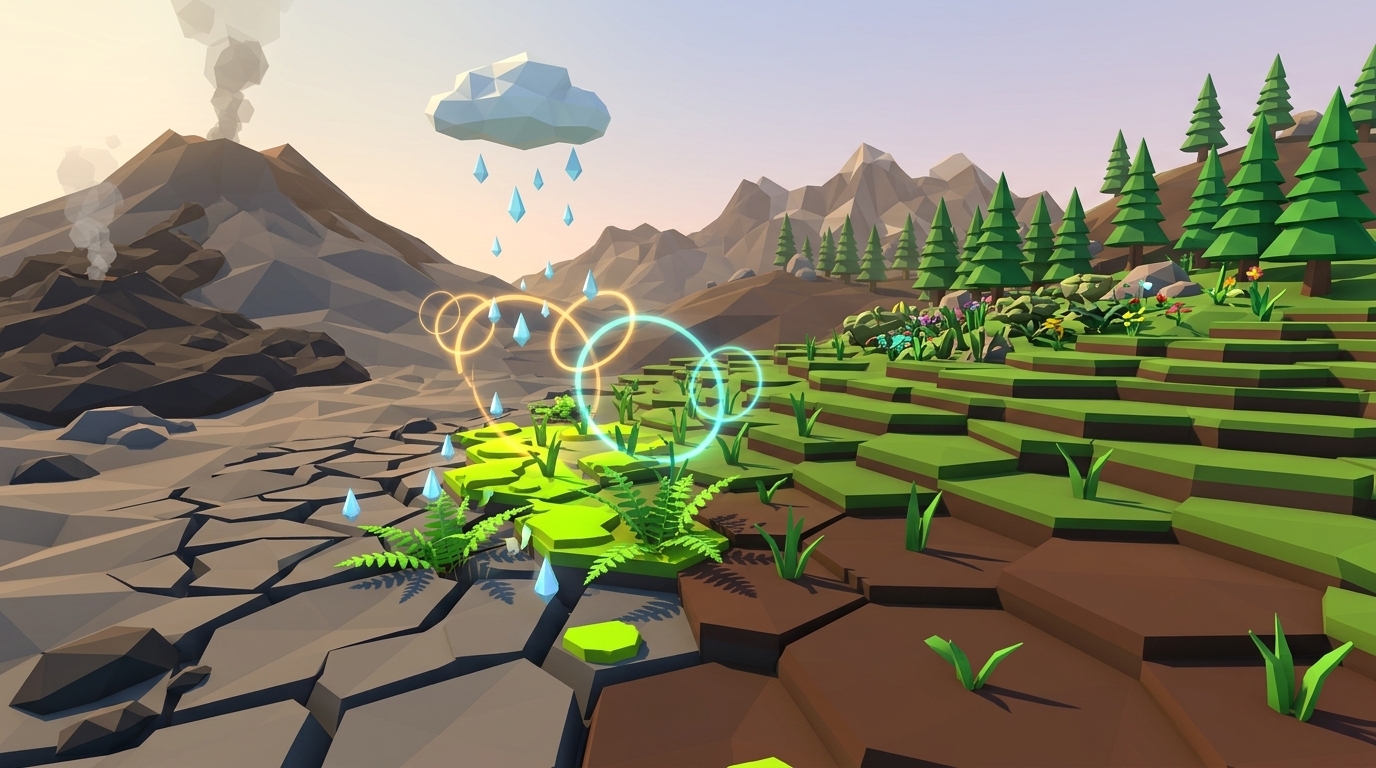
[ Phase 4: Planetary Hazards & Earth Systems Synthesis (Levels 16-20) ]
Hands-On Earth Science in Your Browser
Zero ads. Zero logins. Zero installations. Experience interactive plate tectonics, crustal buoyancy, and live volcano physics directly on any school Chromebook, iPad, or home computer.
[ INSTANT FREE ACCESS ]
Play Level 1: The Floating Crust
- ✓ Level 1 (The Floating Crust) playable instantly with no account
- ✓ Interactive 3D WebGL physics engine running at 60 FPS
- ✓ Aligned to NGSS MS-ESS2 standards for middle school Earth science
- ✓ In-depth science guides available across early access levels
- ✓ Optimized for Chromebook carts, iPads, and low-spec school hardware
100% AD-FREE | ZERO DATA TRACKING | WORKS ON CHROMEBOOK, IPAD, DESKTOP
3D Simulation Plus Printable Expedition Journal
Passive gaming stimulates dopamine without reflection. Praxos pairs every simulation run with a printed paper field logbook, requiring children to write predictions before touching sliders and reflect offline after each mission.
Predict Before You Touch
Children formulate geological hypotheses in the physical expedition logbook before any simulation slider is unlocked.
Deterministic Simulation Run
1 tick equals 1 geological epoch. Controlled parameter experiments enable true scientific reproducibility and data logging at 60 FPS.
Reflect on Paper After the Run
Kids graph buoyancy elevation curves, map paleomagnetic zebra stripes, and sketch tectonic subduction cross-sections offline.
Common Questions
How many levels are completely free?
Level 1 (The Floating Crust) is 100% free with no account, signup, or credit card required. Future levels and accompanying science guides are rolling out in early access.
What age group is this designed for?
Volcano Island is designed for students aged 8 to 14 (grades 3 through 8). The 3D browser simulation controls are visual and intuitive for upper elementary students, while the Earth science mechanisms align directly with NGSS middle school standards (MS-ESS2-1, MS-ESS2-2, and MS-ESS2-3).
Does it work on Chromebooks and basic tablets?
Yes. The 3D engine runs at a smooth 60 frames per second on 5-year-old Chromebooks, iPads, and standard laptops. There is nothing to install; it runs entirely in the browser on any device with a modern Chrome or Safari browser.
How can I use Volcano Island in my classroom or homeschool?
Launch Level 1 directly in any browser for an interactive 15 to 20-minute plate tectonics lab station. Students manipulate crust thickness and density in real time, observing how isostasy shapes continents and ocean basins.
Is this aligned with NGSS science standards?
Yes. Every level is mapped to specific Next Generation Science Standards: MS-ESS2-1 (cycling of Earth materials and the flow of energy), MS-ESS2-2 (geological processes shaping the surface), and MS-ESS2-3 (evidence of plate tectonics). Each level guide includes full NGSS curriculum alignments.
What is crustal buoyancy and when does my child learn it?
Crustal buoyancy (isostasy) is the principle that Earth's crust floats on the denser mantle like wood blocks in water. In Level 1 (The Floating Crust), children discover why thick, light granitic continents stand high above sea level while dense basalt sinks low to hold the oceans.
[ START TODAY ]
The Most Hands-On Volcano & Tectonics Simulation Game Online
20 missions. 20 real science breakthroughs. 100% ad-free, zero sign-up required, and runs smoothly on school Chromebooks.