The Night the Ground Tore Open: The 1973 Eldfell Eruption
In the early morning hours of January 23, 1973, the quiet fishing community of Vestmannaeyjabær on the small Icelandic island of Heimaey woke to a nightmare. Without any significant seismic warning, a 1.5-kilometer fissure tore open across the eastern edge of the island, barely 1,000 meters from the sleeping town.
Incandescent fire fountains shot molten basaltic lava 150 meters into the Arctic night sky. Within hours, a new volcanic cinder cone named Eldfell (Fire Mountain) was born, raining millions of tons of black tephra ash across rooftops and sending thick, glowing rivers of basaltic aa lava creeping toward the community.
In an extraordinary feat of civilian evacuation, all 5,300 island residents were evacuated safely within five hours onto local fishing vessels sheltered in the harbor. But a catastrophic crisis remained: the primary lava tongue was advancing steadily at 3 to 8 meters per hour directly toward the narrow harbor entrance. The harbor was the economic heartbeat of Iceland, handling over 20% of the entire nation's fishing exports. If the harbor mouth was blocked by solid lava, the town of Heimaey would be permanently uninhabitable, dealing a devastating blow to the entire Icelandic economy.
Unlike remote volcanic eruptions in wilderness zones, the 1973 Eldfell crisis threatened the complete economic destruction of an entire modern maritime society. Instead of abandoning their island forever, the people of Iceland chose to stand their ground and engineer the most daring volcanic defense in human history.
The Audacious Plan of Thorbjörn Sigurgeirsson: Freezing Liquid Rock
How can human beings stop millions of tons of molten rock flowing at 1,100°C? A standard concrete wall or steel barrier would be instantly crushed or melted like butter by the immense hydrostatic thrust of advancing aa lava.
Professor Thorbjörn Sigurgeirsson, an Icelandic physicist at the University of Iceland, proposed a radical concept grounded in fundamental thermodynamics: do not fight the lava with brute structural strength; fight it with heat extraction.
Sigurgeirsson noticed that when sea waves splashed against the leading edge of the lava entering the ocean, the red-hot liquid immediately darkened into a brittle, solid black crust. He reasoned that if emergency crews could pump millions of gallons of cold North Atlantic seawater directly onto the moving lava front, they could extract enough thermal energy to freeze the molten basalt past its solidus crystallization temperature (approximately 1,000°C).
Once frozen, the solid rock front would act as a colossal natural stone barrier, forcing the following molten lava behind it to dam up, thicken vertically, and divert harmlessly to the east into the open sea, away from the harbor channel.
| Material & Parameter | Physical Metric | Scientific Value | Operational Role in Lava Cooling | |
|---|---|---|---|---|
| Basalt Lava Eruption Temp | Initial Thermal State | 1,050°C to 1,150°C | Fluid aa lava actively marching toward harbor | |
| Basalt Solidus Threshold | Freezing Point of Rock | Approx. 1,000°C | Temperature where basalt locks into rigid solid rock | hero |
| Basalt Latent Heat of Fusion | Energy Released on Freezing | ~400,000 J/kg (400 kJ/kg) | Thermal energy that must be extracted to solidify melt | |
| Seawater Temperature | Coolant Reservoir | 4°C to 6°C | Free, unlimited Arctic ocean coolant surrounding the island | |
| Water Latent Heat of Vaporization | Steam Cooling Power | 2,260,000 J/kg (2,260 kJ/kg) | Massive heat absorption when pumped water flashes to steam | danger |
Operation Lava Cooling: Dredgers, Steel Pipes, and Arctic Heroism
What began on February 6 with local firefighters spraying standard fire hoses grew into the largest industrial cooling operation ever attempted. Emergency crews quickly realized that surface spraying only created a paper-thin crust; to halt a 20-meter-thick lava flow, the water had to penetrate deep into the molten interior.
Bulldozer operators braved toxic sulfur fumes and searing radiant heat to push earthen berms onto the cooling lava crust. Teams of workers walked directly onto the smoking, unstable lava fields to lay heavy steel pipelines, drilling holes down into the flow to pump seawater directly into the heart of the molten rock.
When commercial town pumps proved insufficient, Iceland deployed the Sandey, a massive 2,000-ton dredge ship capable of pumping 400 liters of seawater per second. Later, the United States Navy delivered 32 high-capacity pumping stations from the Naval Construction Battalion (Seabees), boosting the total pumping capacity to over 1,000 liters per second (nearly 23 million gallons per day).
For nearly five months, continuous streams of seawater poured over the lava. Immense billowing clouds of white steam towered thousands of feet above Heimaey. In total, over 6.2 million cubic meters (1.6 billion gallons) of ocean water were pumped, extracting an estimated 10^16 Joules of thermal energy and solidifying roughly 2.4 million cubic meters of molten rock into an impenetrable barrier.
Water is the ultimate fire extinguisher because of its enormous latent heat of vaporization. It takes 2,260,000 Joules of energy to turn just one single kilogram of boiling water into steam: over five times more energy than the latent heat of freezing basalt itself. Every liter of water converted to steam froze over four kilograms of red-hot magma.
The Miraculous Result: How a Disaster Improved the Harbor
By early July 1973, the Eldfell eruption ceased. When volcanologists and maritime engineers inspected the harbor, they witnessed an outcome that stunned the international scientific community.
The lava flow had not only been stopped meters before choking the harbor mouth; the massive, solidified wall of new basalt rock had curved around the entrance like an outstretched arm, creating an entirely new 20-meter-high protective headland called Skarfafjara.
Before 1973, Heimaey harbor had been exposed to fierce, treacherous southeasterly winter gales from the open North Atlantic. The newly solidified volcanic seawall formed a natural breakwater that dramatically improved the harbor, making it far safer, calmer, and more sheltered than it had ever been before the eruption.
The town was reclaimed, cleaned of tephra, and rebuilt. Today, geothermal heat from the slowly cooling 1973 lava flows is even extracted to heat municipal homes and buildings, turning a near-fatal natural catastrophe into a permanent source of green civic energy.
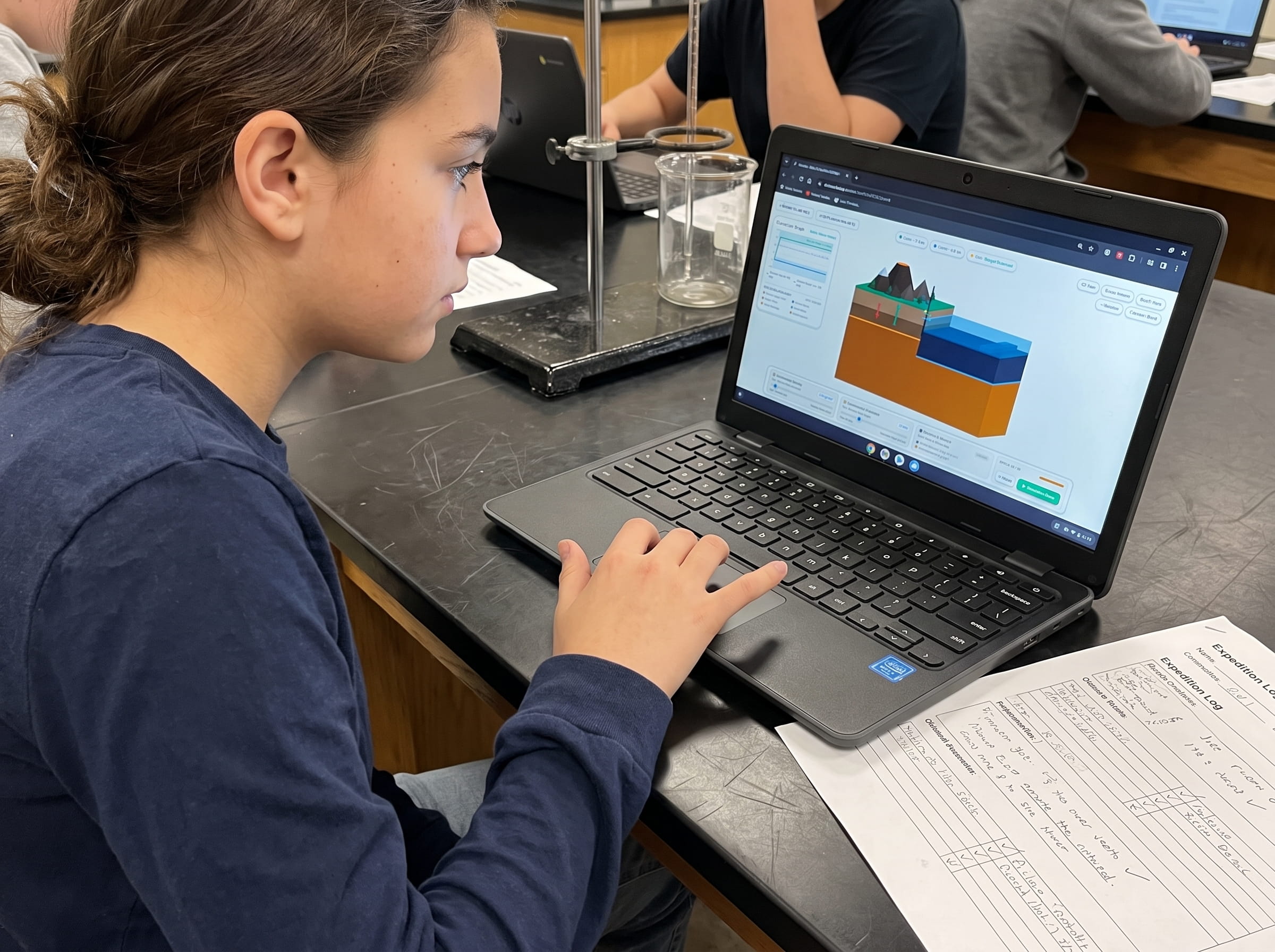
Level 20 Capstone Simulation: Heimaey Lava Diversion Lab
Take command of the 1973 Icelandic emergency defense operations on Heimaey island. Direct seawater pumping stations and bulldozed earthen berms to freeze advancing aa lava and protect the vital fishing harbor.
Lessons in Planetary Disaster Engineering: Can We Stop Lava Today?
The triumph at Heimaey is one of only a handful of successful human interventions against active volcanic hazards in recorded history. Why did it succeed when other efforts failed?
Comparing Heimaey to other historic attempts reveals critical prerequisites for successful volcanic engineering:
1. Lava Rheology and Flow Velocity: Eldfell erupted viscous, sluggish basaltic aa lava advancing at meters per hour. Fast-moving pahoehoe torrents (such as those from Mauna Loa in Hawaii) or pyroclastic density currents from composite volcanoes move at highway speeds (50 to 100+ km/h), making water spraying physically impossible.
2. Unlimited Coolant Proximity: Heimaey is a small island surrounded by millions of cubic kilometers of cold 4°C ocean water. Inland volcanoes (such as Mount Etna in Italy or Nyiragongo in the Congo) lack access to the vast water volumes needed for latent heat extraction.
3. Combined Mechanical Strategies: The Icelanders did not rely on water alone; they combined seawater cooling with heavy bulldozed earthen retention berms to steer the flow away from critical infrastructure, a strategy successfully replicated in 2023 and 2024 to defend the Svartsengi geothermal power plant and the town of Grindavík on Iceland's Reykjanes peninsula.
Level 20 Simulation Guide: The Heimaey Crisis Lab
In Level 20: Save the Real World, students take operational command of the emergency defense center on Heimaey during the critical 100 crisis hours of the 1973 eruption. The simulation recreates the authentic 3D geography of the town, the harbor entrance, and the advancing Eldfell aa lava tongues.
Students control three critical emergency response levers:
1. Seawater Pump Capacity (Range: 0 to 100 pumping stations, Default: 0): Controls the volume of ocean water delivered to the lava front. Target optimal allocation: 72 to 80 pump units (delivering over 800 liters/sec).
2. Spray Targeting Vectors (Harbor Channel Flank vs. Northern Town Flank): Regulates where the emergency pipeline network concentrates cooling. Focusing spray on the Harbor Mouth Flank is essential to prevent channel closure.
3. Defensive Retention Berms (Range: 0 to 5 bulldozed dikes): Strategically positions earthen barriers bulldozed from volcanic ash along northern streets to divert flanking lobes away from residential zones.
At Hour 24, a Harbor Channel Breach Alert sounds: the leading eastern lava tongue surges within 50 meters of the harbor mouth. Students must immediately confirm pipeline deployment to concentrate cooling directly on the leading front. Over the remaining 76 hours, the live coordinate trend graph monitors two critical metrics: Harbor Waterway Width (meters remaining open) and Lava Front Temperature (°C).
To earn three gold stars in Level 20, immediately construct 3 Bulldozed Defensive Berms along the northern street grid. Next, deploy 75 Seawater Pump Stations and aim the Spray Vector directly at the Harbor Mouth Flank. The icy seawater flash-boils into majestic steam clouds, dropping the lava front from 1,120°C to 820°C. The flow solidifies into a towering stone barrier that deflects the remaining lava into the open Atlantic, preserving 86% of the harbor channel.
Student Laboratory Inquiry: The Quantitative Thermodynamics of Lava Freezing
In their Field Geologist Logbook, middle school scientists complete the ultimate capstone quantitative analysis, connecting physical science thermodynamics directly to human disaster mitigation:
Inquiry 1: Latent Heat Extraction Calculation. Basalt has a latent heat of fusion (L_f) of 400,000 Joules per kilogram. Water has a latent heat of vaporization (L_v) of 2,260,000 Joules per kilogram. Calculate the mass of water required to extract enough heat to freeze 10,000 kilograms of molten basalt at its melting point (Q = m_basalt * L_f = 10,000 * 400,000 = 4,000,000,000 Joules. m_water = Q / L_v = 4,000,000,000 / 2,260,000 = approximately 1,770 kilograms of water). Notice that less than 2 tons of water can freeze 10 tons of rock.
Inquiry 2: Pumping Volumetric Flow Rate. If 75 industrial pump stations deliver a combined 900 liters (0.9 m3) of seawater per second, calculate how many cubic meters of water are sprayed over a 24-hour crisis period (0.9 m3/s * 86,400 seconds = 77,760 m3 per day).
Inquiry 3: Harbor Geometry Analysis. If the original harbor channel was 100 meters wide, and the solidified lava seawall occupies 14 meters of the channel before being halted by cooling, calculate the percentage of navigable waterway preserved ( (100 - 14) / 100 * 100% = 86% preserved). Explain why this 86% opening allowed the fishing fleet to continue operations safely.
Frequently Asked Questions About the 1973 Eldfell Lava Cooling
Review common questions and geoscientific facts regarding the 1973 Heimaey eruption, volcanic hazard engineering, and disaster mitigation below:
Did anyone die during the 1973 Eldfell eruption on Heimaey?
Did spraying seawater damage the pipes or equipment?
Could seawater cooling stop a supervolcano like Yellowstone?
What is the complete 20-level learning journey of Volcano Island?
The Complete 20-Level Volcano Island Simulation Suite
Congratulations on completing the entire Volcano Island 20-mission curriculum. Explore the complete interactive library of companion guides and simulation labs below:
Review crustal buoyancy in our crustal buoyancy isostasy simulation Level 1 guide.
Explore deep thermal circulation in our mantle convection tectonics simulation Level 2 guide.
Discover seafloor spreading in our seafloor spreading divergent boundary simulation Level 3 lab.
Investigate subduction abysses in our subduction zones deep trench simulation Level 4 article.
Explore subterranean magma generation in our flux melting magma chamber simulation Level 5 guide.
Study effusive basalt rivers in our shield volcano basaltic lava simulation Level 6 lab.
Examine viscous composite cones in our composite volcano silica viscosity simulation Level 7 guide.
Model supersonic gas decompression in our volcanic eruption plume gas simulation Level 8 guide.
Examine caldera collapses in our caldera collapse crater lake simulation Level 9 lab.
Explore mantle plumes in our hotspot island chain mantle plume simulation Level 10 guide.
Investigate locked transform faults in our locked fault elastic rebound simulation Level 11 guide.
Triangulate earthquake epicenters in our earthquake seismic waves triangulation simulation Level 12 guide.
Analyze open-ocean tsunami shoaling in our megathrust tsunami subduction simulation Level 13 guide.
Master circum-Pacific convergence networks in our ring of fire subduction arc simulation Level 14 guide.
Study primary ecological succession in our volcanic soil succession ash simulation Level 15 guide.
Model stratospheric sulfur aerosols in our volcanic winter sulfur aerosols simulation Level 16 guide.
Deploy sensor grids and forecast eruptions in our volcano monitoring early warning simulation Level 17 guide.
Manage colossal continental reservoirs in our supervolcano magma chamber caldera simulation Level 18 guide.
Design autonomous living biomes in our volcanic island architect cad sandbox simulation Level 19 guide.
Review complete homeschool science options in our earth science homeschool curriculum guide.
Set up student accounts with zero student logins on our educator dashboard.
24 pages of printable isostatic buoyancy calculation tables, paleomagnetic zebra stripe rulers, and seismogram triangulation exercises designed for grades 3 to 8.
DOWNLOAD EXPEDITION LOGBOOK (PDF)Download Free Volcano Island Field Geologist Logbook (PDF)
24 pages of printable isostatic buoyancy calculation tables, paleomagnetic zebra stripe rulers, and seismogram triangulation exercises designed for grades 3 to 8.